Traveling to the World Wonder by train is one of the most scenic and comfortable ways to visit Peru’s most famous archaeological site. Imagine sitting beside panoramic windows as the train winds through the beautiful Sacred Valley, following the Urubamba River past towering mountains, traditional villages, and lush cloud forests.
For travelers who prefer not to hike the Inca Trail, taking the train to Machu Picchu is the easiest way to reach the ancient Inca citadel. And with different train companies, departure stations, and service categories available, there’s an option for almost every travel style and budget.
But which Machu Picchu train should you choose? Is PeruRail or Inca Rail better? Where do the trains depart, how much do tickets cost, and how far in advance should you book?
In this complete guide, we’ll explain everything you need to know about taking the train to Machu Picchu, including the different train services, routes, schedules, ticket prices, and practical tips to help you plan your journey.
How Does the Train Route to Machu Picchu Work?
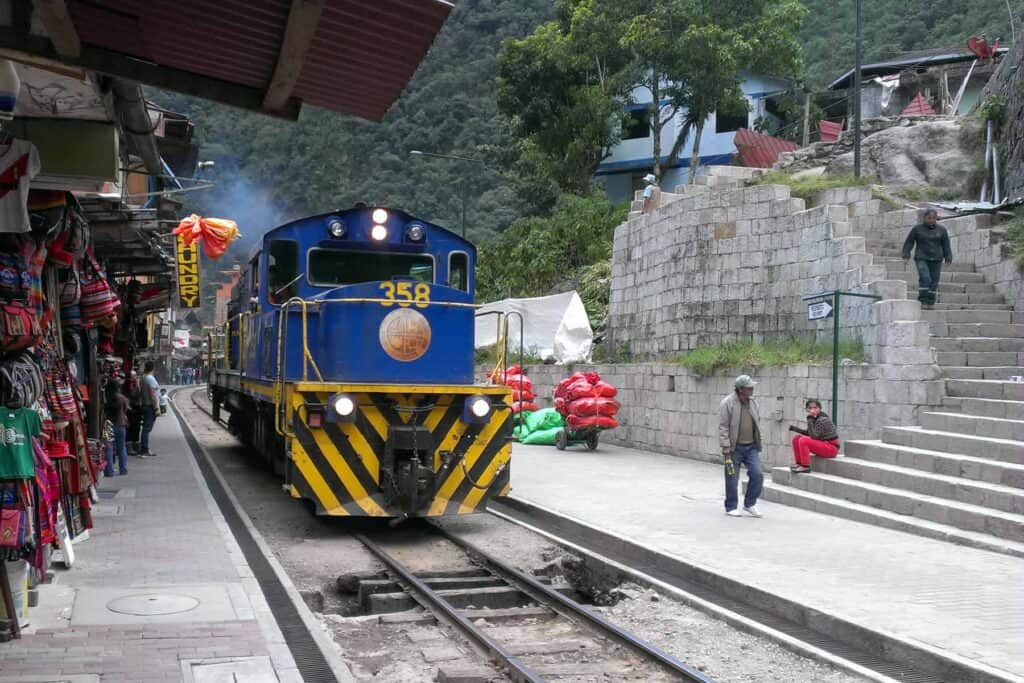
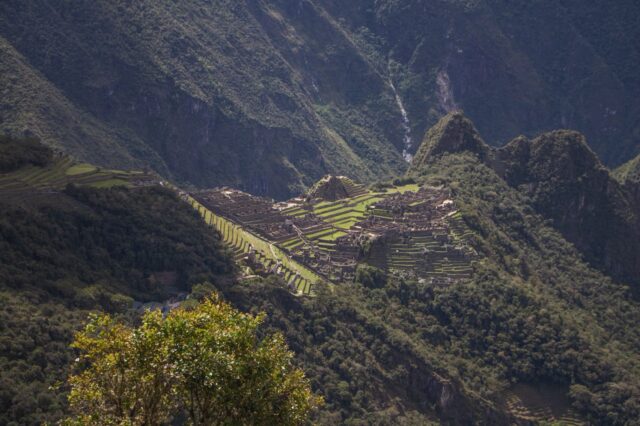
First, it’s important to understand that the train doesn’t take you directly to the Machu Picchu archaeological site.
Instead, all regular tourist trains arrive at Machu Picchu Pueblo, better known as Aguas Calientes, the small town located at the foot of the mountain.
From Aguas Calientes, you’ll need to take a shuttle bus or walk uphill to reach the entrance of Machu Picchu.
The most common train journey follows this route:
Cusco → Ollantaytambo → Aguas Calientes → Machu Picchu
Many travelers begin with a road transfer from Cusco to Ollantaytambo, where they board a train to Aguas Calientes.
However, depending on the season and train schedule, you may also find departures from stations closer to Cusco.
The railway journey is a highlight in itself. As you travel along the Urubamba River, the scenery gradually changes from the dry mountain landscapes of the Sacred Valley to the green vegetation of the cloud forest surrounding Machu Picchu.
Where Does the Train to Machu Picchu Depart From?
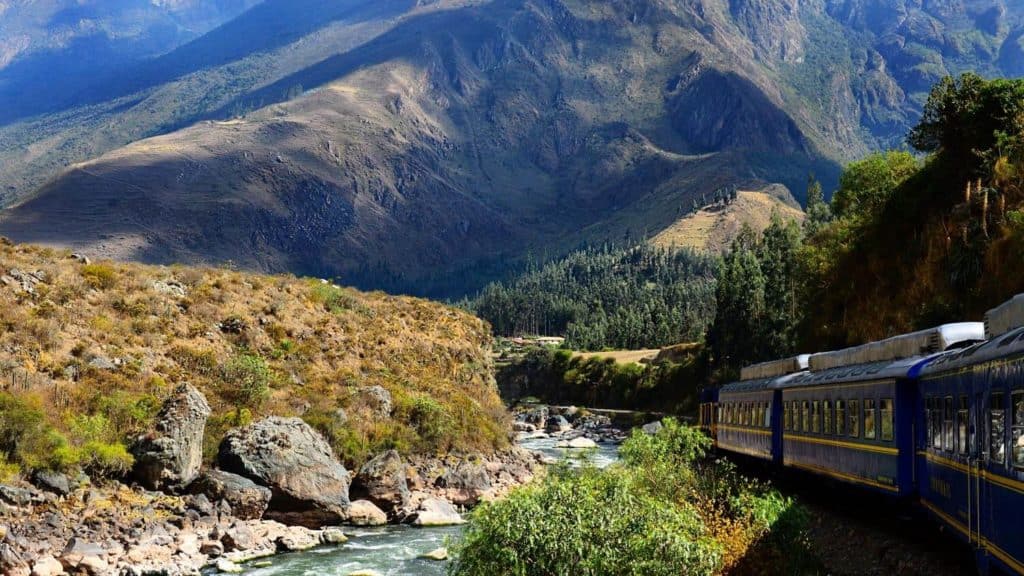
There are several train stations serving the route to Machu Picchu, and choosing the right one can make a big difference when heading to Machu Picchu.
Ollantaytambo Train Station
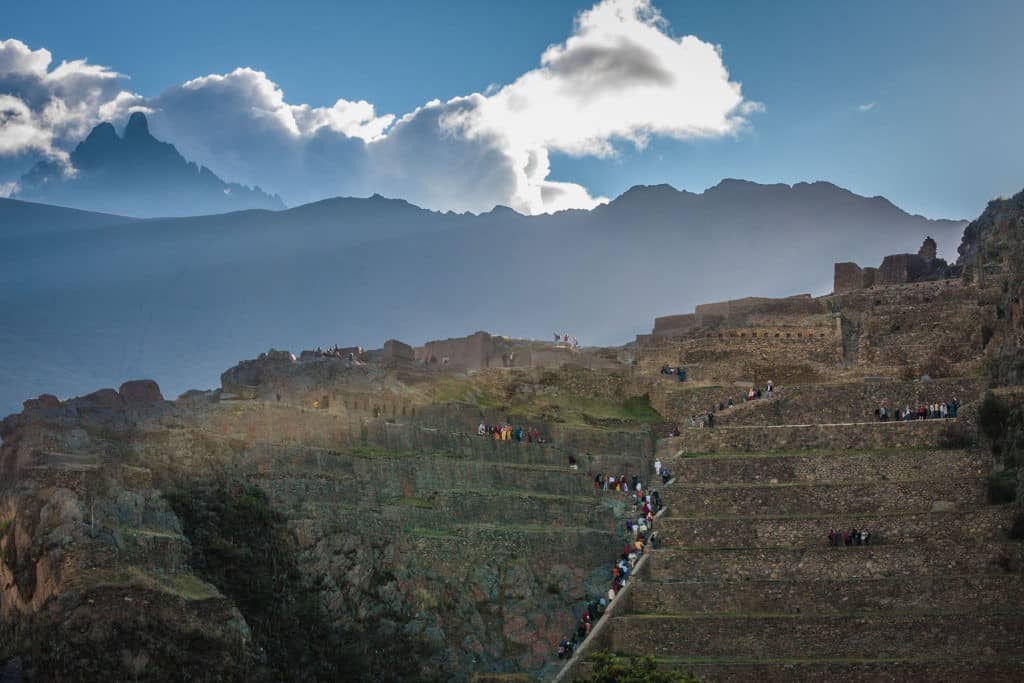
Ollantaytambo is the most popular departure point for trains to Machu Picchu.
Located in the Sacred Valley, approximately 1.5–2 hours by road from Cusco, this historic Inca town is an important transportation hub for travelers visiting Machu Picchu.
From Ollantaytambo, the train journey to Aguas Calientes takes approximately 1 hour and 30 minutes to 1 hour and 45 minutes, depending on the service.
Both PeruRail and Inca Rail operate trains from this station.
One of the advantages of departing from Ollantaytambo is the flexibility to combine your train journey with a visit to the Sacred Valley.
You could spend the morning exploring archaeological sites, traditional villages, or the impressive Ollantaytambo ruins before continuing to Machu Picchu. Check out our Sacred Valley tour for more inspiration!
Poroy Train Station
Poroy is located outside Cusco and serves selected PeruRail departures to Machu Picchu.
The train journey from Poroy to Aguas Calientes generally takes around 3.5 hours.
For travelers who want to experience a longer scenic train journey, this can be an attractive alternative to departing from Ollantaytambo.
However, services from Poroy are not available on every date or schedule, and operations can vary seasonally.
San Pedro Train Station
San Pedro Station is located close to Cusco’s historic center, making it a convenient option for travelers staying in the city.
Selected PeruRail services operate from this station, allowing passengers to begin their railway journey in Cusco rather than traveling to Ollantaytambo by road.
The journey to Aguas Calientes takes approximately 4–5 hours, depending on the service.
Availability varies, so always check the current schedule before planning your trip.
Wanchaq Station and the Bimodal Service
Wanchaq Station in Cusco is another important departure point, particularly for passengers booking a bimodal service.
Unlike a regular train journey, a bimodal service combines transportation by bus and train.
Travelers begin in Cusco by bus before transferring to a train at a designated station in the Sacred Valley.
The exact transfer station depends on the operator, service, and current railway operations.
Wanchaq station is also the point of departure for services to Puno.
What Is the Bimodal Train Service to Machu Picchu?

When booking train tickets, you may notice the term bimodal service.
This simply means that your journey includes two forms of transportation: bus and train.
For example, with selected PeruRail services, passengers depart from Wanchaq Station in Cusco by bus and continue to Ollantaytambo or Pachar, where they transfer to the train.
The train then follows the railway through the Sacred Valley to Aguas Calientes.
Bimodal services are particularly common when direct railway operations from Cusco are restricted, although some combined services also operate at other times of the year.
The important thing to remember is that a ticket advertised as departing from Cusco doesn’t necessarily mean you’ll spend the entire journey on a train.
Before booking, always check:
- Your actual departure location in Cusco
- Whether the journey includes a bus transfer
- The station where you’ll board the train
- The total journey duration
- Your scheduled arrival time in Aguas Calientes
This will help you avoid confusion on your travel day.
PeruRail vs. Inca Rail: Which Train Is Better?

Two main companies operate tourist trains to Machu Picchu: Peru Rail and Inca Rail.
Both companies offer comfortable transportation through the Sacred Valley, but their train categories, onboard experiences, and prices differ.
PeruRail offers several options ranging from its standard Expedition service to the luxurious Hiram Bingham train.
Inca Rail also provides different travel experiences, including its Voyager, 360°, Prime, and First Class services.
Neither company is necessarily better for everyone. The best choice depends on your budget, preferred departure time, and the type of experience you want.
| Feature | PeruRail | Inca Rail |
|---|---|---|
| Standard service | Expedition | The Voyager |
| Panoramic experience | Vistadome | The 360° |
| Enhanced premium experience | Vistadome Observatory | The Prime |
| Luxury experience | Hiram Bingham | The First Class |
| Private experience | Selected luxury arrangements | The Private |
| Main destination | Aguas Calientes | Aguas Calientes |
Let’s look at the different options in more detail.
PeruRail Trains to Machu Picchu
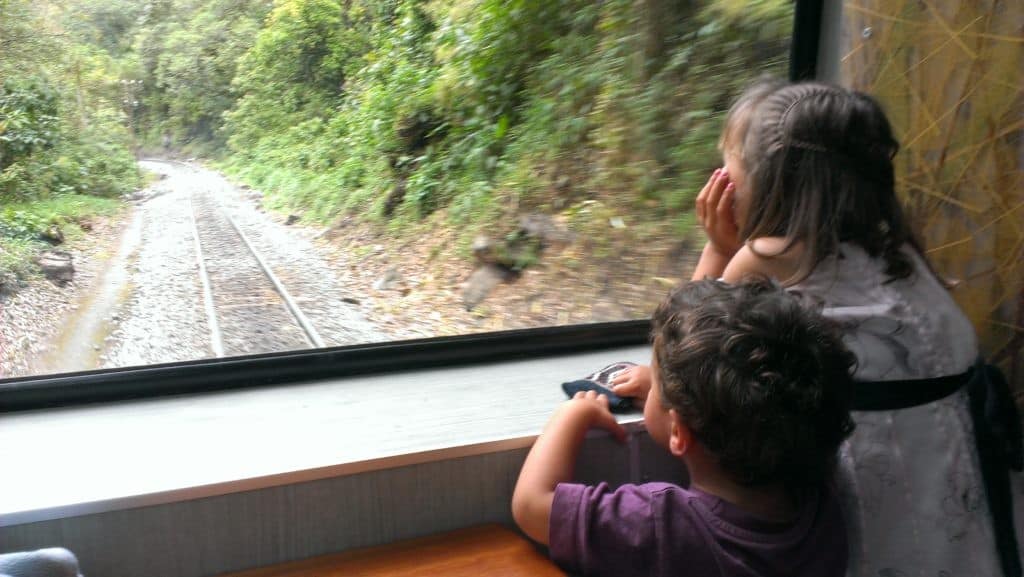
PeruRail is one of the main railway operators serving Machu Picchu and offers several train categories for different budgets and preferences.
1. PeruRail Expedition Train – A Comfortable and Affordable Option
The PeruRail Expedition is generally the company’s most economical tourist train service to Machu Picchu.
It offers comfortable seating, large windows, and interiors inspired by Andean culture.
Although it doesn’t include the premium amenities of the more expensive trains, passengers still enjoy the same spectacular landscapes along the Urubamba River.
The Expedition is a great option for travelers who want a comfortable journey without spending too much on additional onboard services.
Best for: Budget-conscious travelers, families, and visitors who want a practical and comfortable train journey.
2. PeruRail Vistadome Train – Panoramic Views of the Sacred Valley
The PeruRail Vistadome offers an upgraded experience with large panoramic windows extending toward the roof.
This design provides wider views of the surrounding mountains, river, and valleys.
Depending on the specific service, passengers may also enjoy refreshments and cultural entertainment onboard.
The Vistadome is particularly popular with travelers who want to make the most of the scenery without choosing the most expensive luxury option.
Best for: Nature lovers, photographers, and travelers who appreciate panoramic views.
3. PeruRail Vistadome Observatory – An Immersive Scenic Journey
The Vistadome Observatory takes the panoramic experience a step further.
In addition to its large windows, the train features an observation carriage that allows passengers to enjoy the surrounding landscape from a different perspective.
Depending on the service, passengers can also enjoy live music, cultural entertainment, and onboard refreshments. Services often also include fashion parades!
This is an excellent option for travelers who consider the train journey an important part of their Machu Picchu experience.
Best for: Travelers looking for panoramic views, cultural entertainment, and a more memorable train ride.
4. Belmond Hiram Bingham Train – Luxury Travel to Machu Picchu in Style
For travelers seeking a luxurious journey, the Hiram Bingham is one of the most exclusive ways to reach Machu Picchu.
Operated as a Belmond luxury experience, the train combines elegant interiors, refined dining, attentive service, and live entertainment.
Its classic design and sophisticated atmosphere make the journey feel like a special occasion.
Packages may also include additional services such as transfers, guided visits, and Machu Picchu entrance arrangements, depending on the selected offering.
Best for: Luxury travelers, special occasions, and visitors looking for an exclusive railway experience.
Inca Rail Trains to Machu Picchu
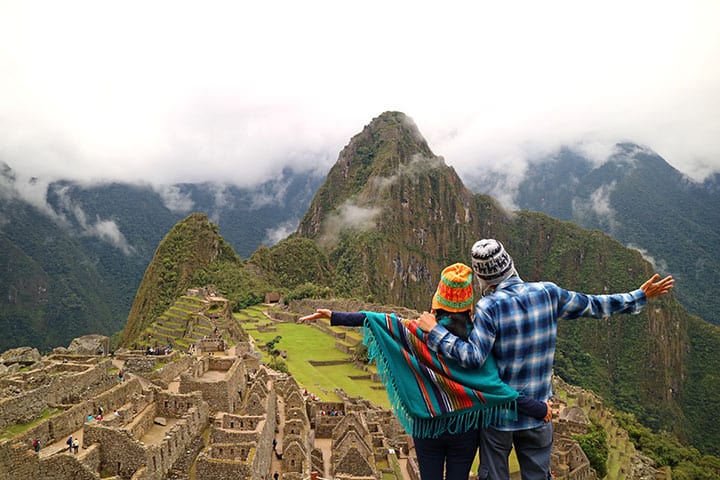
Inca Rail is the other major tourist train operator serving Machu Picchu.
Its services range from comfortable standard trains to premium experiences with panoramic windows, dining, and additional onboard amenities.
1. The Voyager – A Practical and Comfortable Train
The Voyager is Inca Rail’s standard train category.
It offers comfortable seating, large windows, and an atmosphere inspired by the culture of the Andes.
Snacks and drinks may be available for purchase onboard.
For travelers who simply want a comfortable and scenic drive to Machu Picchu, The Voyager is an excellent choice.
Best for: Travelers seeking an accessible, comfortable train journey.
2. The 360° – Panoramic Windows and Scenic Views
The 360° is designed for travelers who want to enjoy the spectacular landscapes of the Sacred Valley.
The train features panoramic windows and an observation carriage, providing excellent opportunities to admire the scenery.
Depending on the service, the experience may include refreshments, live music, and cultural elements inspired by Andean traditions.
Best for: Travelers who love scenic journeys and want a more immersive experience.
3. The Prime – Comfort and Andean Culture
The Prime offers an elevated train experience with elegant interiors, comfortable seating, and additional onboard services.
It combines scenic views with cultural elements and refreshments inspired by local Andean ingredients.
This service is suited to travelers who want something more refined than a standard train without necessarily choosing the most exclusive option.
Best for: Travelers seeking additional comfort and a premium atmosphere.
4. The First Class – An Exclusive Railway Experience
Inca Rail’s First Class service offers a luxurious way to travel through the Sacred Valley.
Passengers can enjoy elegant interiors, attentive service, and a premium dining experience while admiring the surrounding landscapes.
The atmosphere is designed to make the journey itself a memorable part of the visit to Machu Picchu.
Best for: Luxury travelers, couples celebrating a special occasion, and visitors looking for an elevated experience.
5. The Private – A Personalized Journey
For travelers seeking maximum exclusivity, Inca Rail also offers a private train experience.
This option is designed for private groups, families, or travelers who prefer a personalized journey with dedicated services.
Availability, inclusions, and arrangements depend on the requested experience.
Best for: Private groups, families, and travelers seeking a fully customized railway journey.
How Much Does the Train to Machu Picchu Cost?

Train ticket prices vary considerably depending on the company, train category, travel date, and departure time.
Standard services such as PeruRail Expedition and Inca Rail’s Voyager are generally the most affordable options.
Panoramic services such as Vistadome and The 360° usually cost more, while luxury trains such as the Hiram Bingham and First Class can be significantly more expensive.
As a broad planning estimate, standard tourist train tickets to Machu Picchu may start at approximately USD 50–80 one way, while premium services can cost considerably more.
Luxury railway experiences may cost several hundred dollars or more per person, depending on the services included.
These are indicative price ranges, not fixed fares.
For the most accurate prices, check the official booking websites:
Remember that a regular train ticket generally does not include your ticket to Machu Picchu or the shuttle bus from Aguas Calientes to the archaeological site.
How Much Luggage Can You Take on the Machu Picchu Train?
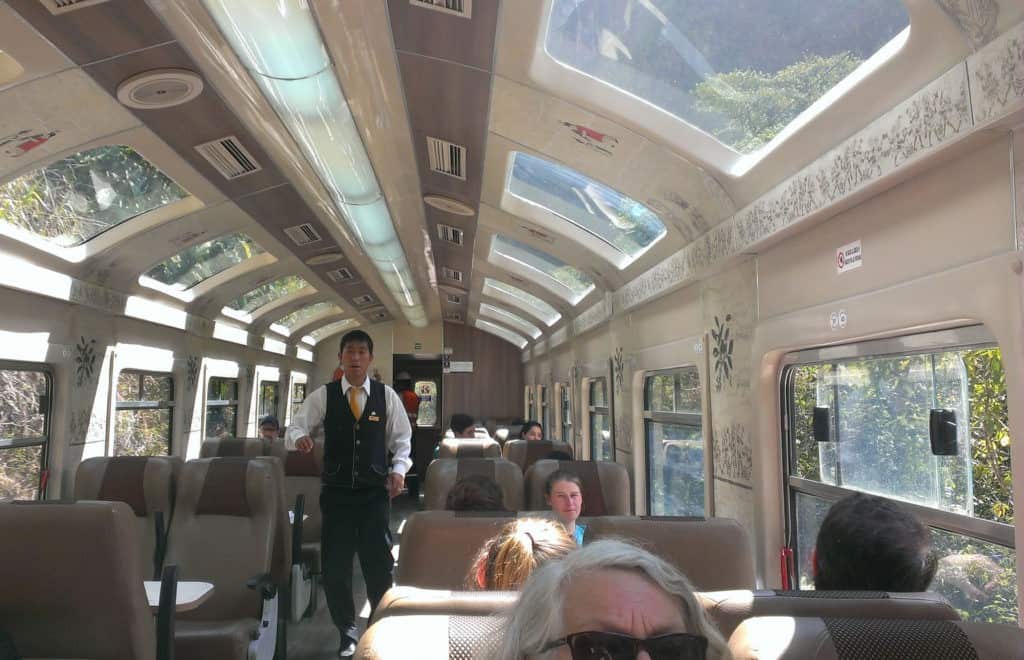
Luggage restrictions are an important consideration when traveling to by train.
Unlike regular long-distance trains, tourist trains to Aguas Calientes have limited luggage space.
PeruRail’s standard Machu Picchu tourist services generally allow one piece of hand luggage weighing up to 8 kilograms, with maximum combined dimensions of 115 centimeters.
Inca Rail also applies hand-luggage restrictions, with allowances depending on the selected service and ticket conditions.
If you’re planning to spend one or two nights in Aguas Calientes, we recommend traveling with a small overnight bag rather than a large suitcase.
Most hotels in Cusco and the Sacred Valley can arrange luggage storage for guests returning after their Machu Picchu visit.
Always check the latest luggage conditions with your train operator before traveling, especially if you have oversized bags or special equipment.
What Is the Train Journey to Machu Picchu Like?

One of the most beautiful aspects of traveling to by train is watching the landscape change along the way.
Departing from Ollantaytambo, the railway follows the Urubamba River through the Sacred Valley.
At first, you’ll see towering Andean mountains, agricultural terraces, and traditional villages.
As the train continues toward Aguas Calientes, the valley becomes narrower, the vegetation grows denser, and the landscape gradually transforms into lush cloud forest.
Depending on the season, you may see waterfalls, mist-covered mountains, and the rushing waters of the Urubamba River.
The journey is particularly enjoyable on trains with panoramic windows, although even standard services offer beautiful views.
If you enjoy beautiful scenery, try to travel during daylight hours so you can appreciate the landscapes.
Can You Visit Machu Picchu by Train in One Day?
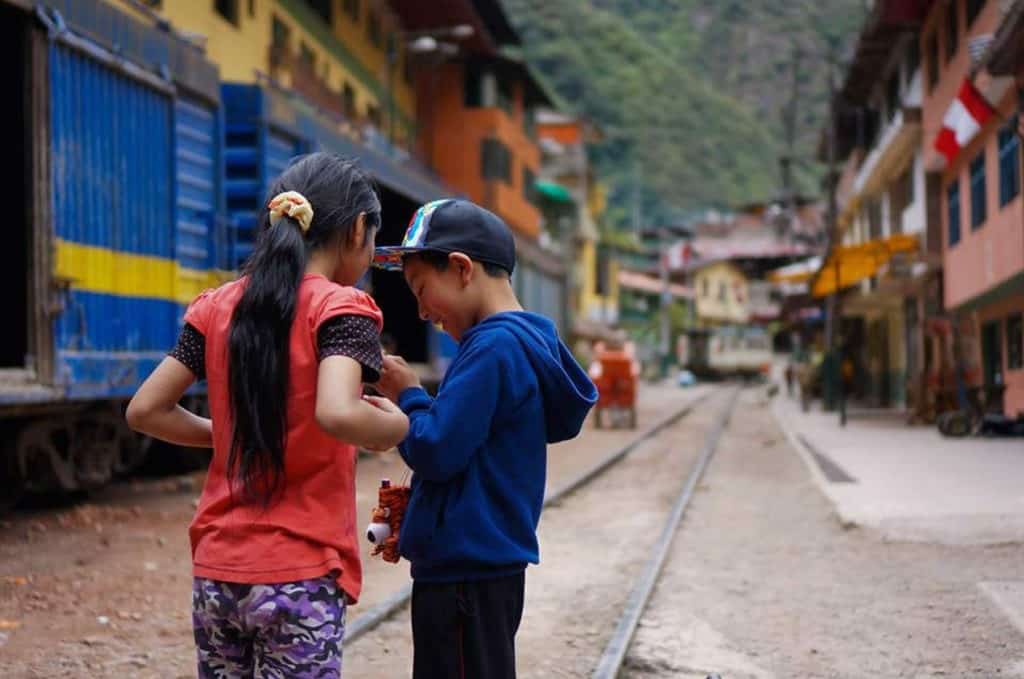
Yes! A Machu Picchu train tour is possible and is one of the most popular ways to visit the archaeological site.
A typical day trip from Cusco includes:
- Early morning transportation from Cusco to Ollantaytambo or another departure station.
- A scenic train journey to Aguas Calientes.
- A shuttle bus ride to the Machu Picchu entrance.
- A guided visit of the archaeological site.
- Return by shuttle bus to Aguas Calientes.
- An afternoon or evening train back toward Cusco.
Although this itinerary is convenient, it can be a loooooooooong day.
If you prefer a more relaxed experience, consider spending one night in Aguas Calientes before visiting Machu Picchu.
This gives you more flexibility with your train schedules and allows you to enjoy the town without rushing.
Is It Better to Take the Train in the Morning or Afternoon to Get to Machu Picchu?
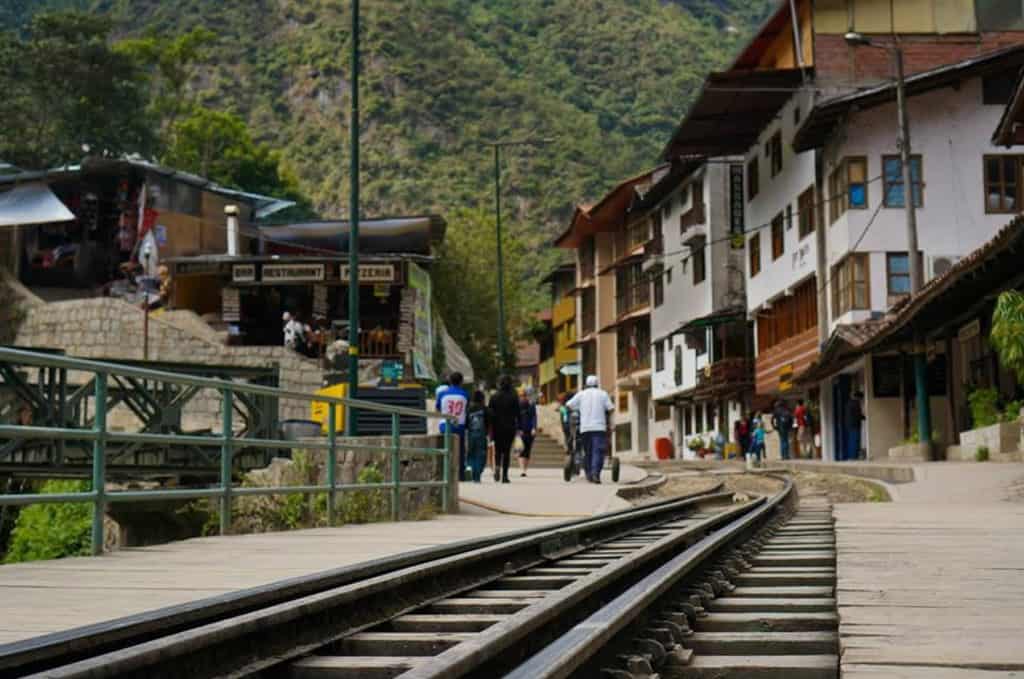
The best departure time depends on whether you’re visiting Machu Picchu on the same day or staying overnight in Aguas Calientes.
Morning Train
To travel by train in the morning is usually the best option for travelers planning to visit the Inca citadel on the same day.
Early departures allow you to arrive in Aguas Calientes with enough time to reach the archaeological site.
However, remember that the earliest train rides may require a very early departure from Cusco.
Afternoon Train
An afternoon train can be an excellent option if you’re planning to spend the night in Aguas Calientes.
You could explore the Sacred Valley during the day before taking the train in the afternoon.
The following morning, you’ll already be close to Machu Picchu and won’t need to travel from Cusco before your visit.
At Apus Peru, we often recommend considering an overnight stay when planning a more relaxed itinerary, especially for travelers who want to combine Machu Picchu with the Sacred Valley.
Practical Tips for Taking a Train Trip to Machu Picchu

Book early during the high season. Popular train departures can sell out, particularly between May and September.
Check whether your service is bimodal. Some tickets include a bus transfer rather than a continuous train journey.
Arrive at the station early. Follow the operator’s recommended check-in time and allow extra time for traffic if you’re traveling from Cusco.
Bring your passport. Your identification details should match those on your train ticket.
Travel light. Pack only what you need for your visit to Machu Picchu and leave larger suitcases at your hotel.
Choose a daytime train for the views. The journey through the Sacred Valley is particularly beautiful during daylight hours.
Allow enough time between connections. Avoid booking train arrivals too close to your Machu Picchu entrance time.
Check what’s included in your ticket. Train tickets, Machu Picchu entrance tickets, and shuttle bus tickets are generally separate unless you book a package that explicitly includes them.
Frequently Asked Questions About the Best Machu Picchu Train
Selected PeruRail services depart from Cusco-area stations such as San Pedro and Poroy, depending on the operating schedule.
Other services combine bus and train transportation through the bimodal system.
Always check your actual boarding station when booking your train.
The journey generally takes approximately 1 hour and 30 minutes to 1 hour and 45 minutes, depending on the train service.
Both companies offer comfortable and scenic journeys to Machu Picchu.
PeruRail has several popular panoramic services, while Inca Rail offers its own range of standard, premium, and luxury experiences.
The right train choice depends on your budget, preferred schedule, and desired onboard amenities.
PeruRail Expedition and Inca Rail’s Voyager are generally among the most economical tourist train options.
However, prices change depending on the date and availability, so it’s worth comparing both companies.
Regular train tickets do not include the entry ticket for Machu Picchu.
You must book your tickets for Machu Picchu separately unless you’ve booked a tour package that explicitly includes a Machu Picchu tour with entrance.
Standard tourist trains have luggage restrictions and limited storage space.
We recommend bringing a small backpack or overnight bag and checking your operator’s current baggage policy.
Absolutely! Even if you aren’t particularly interested in trains, the journey through the Sacred Valley offers beautiful mountain scenery, river views, and a fascinating transition from the Andes into the cloud forest.
For many travelers, it’s one of the highlights of visiting Machu Picchu.
Book Machu Picchu Train Tickets with Apus Peru!
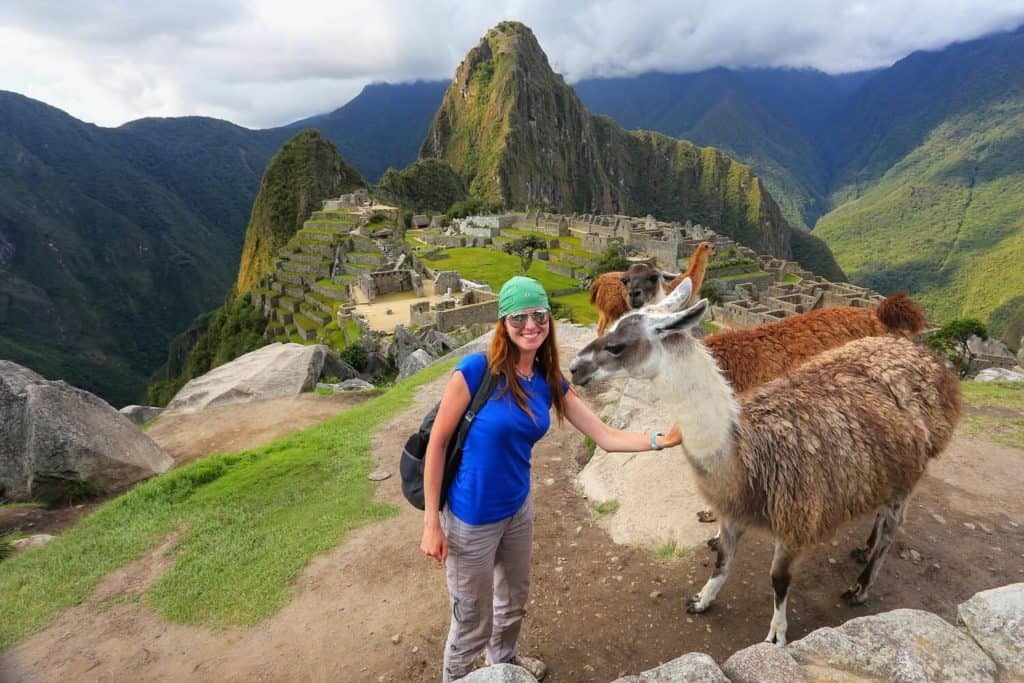
Taking the train to Machu Picchu is much more than simply traveling from one destination to another.
From the spectacular landscapes of the Sacred Valley to the lush cloud forests surrounding Aguas Calientes, the journey is an unforgettable part of visiting Peru’s most famous archaeological site.
At Apus Peru, we help travelers organize their Machu Picchu adventures, including transportation, train tickets, guided visits, and personalized itineraries throughout Cusco and the Sacred Valley.
If you’re planning a longer Peru adventure, you might also enjoy our guides on how to get from Cusco to Machu Picchu and how to travel from Lima to Machu Picchu.
Ready to experience Machu Picchu? Contact Apus Peru and let us help you plan your journey, buy tickets and organize all the details for Cusco and Machu Picchu!