Cruz Velacuy is one of Cusco’s most fascinating religious and cultural celebrations. Held every year on May 3rd, the main day of the religious festivity brings together Catholic traditions and longstanding Andean customs in a colourful celebration centred around the veneration of the cross. The Velacuy is celebrated every May, making it an important tradition in Cusco and throughout the surrounding communities.
If you are visiting the city of Cusco or the surrounding communities in May, Cruz Velacuy is a wonderful opportunity to experience a side of local culture that you might not encounter on a typical sightseeing tour.
There are plenty of amazing processions and traditional folk dances, music, food, and family gatherings, creating a truly festive atmosphere throughout the communities. It is a unique celebration that allows visitors to immerse themselves in traditions that continue to shape life in the Andes.
Want to learn more about Cusco and plan the perfect Cusco itinerary? Check out our tips on the best time to visit Cusco, the top things to do in Cusco, and the best restaurants in Cusco.
What Is Cruz Velacuy, the Festival of the Cross?

One thing I learned very quickly after moving to Cusco is that Peru is a country of festivals. It seems that every saint, season, and religious celebration has its own special day, and it is rare for a week to pass without a parade, or fiesta taking over the streets. Even in every neighborhood in Cusco, you can find different festivals!
Cruz Velacuy is one of these important celebrations that takes place every year. The name refers to the Vigil of the Cross. It is celebrated in Cusco as well as in communities and villages throughout the surrounding region, with similar celebrations taking place in other parts of Peru and across South America.
The celebration has both Catholic and Andean traditions. According to Christian tradition, the veneration of the cross dates back to the Roman Emperor Constantine, who is said to have seen a cross in the sky before an important battle. Over time, Catholic customs became intertwined with local Andean ones, creating the distinctive celebrations seen in Peru today.
In some communities, crosses from peaks and other sacred places in the surrounding mountains are brought down and carefully looked after before the annual celebration. The cross may remain in a local sanctuary throughout the year before it is moved again as part of the festivities. In some places, preparations begin six months in advance, particularly when a community is responsible for organising a large celebration.
The celebration is also closely connected with the passion of Jesus Christ. Religious ceremonies and images of the cross may include a representation of the Passion, reminding worshippers of Christ’s suffering and sacrifice. When the cross is moved through the community, this religious symbolism becomes an important part of the celebration.
In Cusco, some of the places where visitors may encounter Cruz Velacuy celebrations include the Cathedral, San Blas, and San Francisco Plaza. However, some of the most memorable experiences can take place in smaller communities surrounding the city, where the festivities are closely connected to local families and neighbourhoods.
If you enjoy discovering Peru through its traditions, there are plenty of other fascinating celebrations to explore, including the Qeswachaka Festival, the colourful Virgen del Carmen, and the spectacular Tres Cruces de Paucartambo.
How Is the Cruz Velacuy Festival Celebrated?

Cruz Velacuy is much more than a religious procession. The celebration involves entire families and communities, with preparations beginning several days before the main date. In some communities, however, preparations can begin six months in advance, particularly when families and organisers are preparing a large-scale celebration.
In many places, the festivities begin on May 2nd, with families preparing food, decorating the crosses, and getting ready for the celebrations that continue the following day.
One of the traditions involves the carguyoq, the person or family responsible for hosting the celebration. As part of the preparations, the host gives a special loaf of bread to neighbours, who return the gesture with a bottle of beer. Since bread costs less than beer, the exchange also helps the host manage some of the expenses involved in organising the fiesta.
On the day itself, food, traditional music, dancing, and religious ceremonies, all come together to worship the cross. In some communities, the cross is moved from its usual place and carried through the streets as part of the procession before returning to the church or sanctuary.
The Importance of the Holy Cross at Cruz Velacuy

The cross is at the heart of the entire Cruz Velacuy celebration and is the central focus of the Andean religious ceremonies.
As the festivities get underway, families and community members bring crosses from their homes to the church. In some traditions, crosses from peaks and sacred places in the surrounding mountains are also brought down to become part of the celebration.
The tradition of venerating the cross in Peru has a long history. Historical accounts trace some of these traditions back to the first decades of the XVIII century, when Catholic religious practices became increasingly intertwined with existing Andean customs and ancestral beliefs.
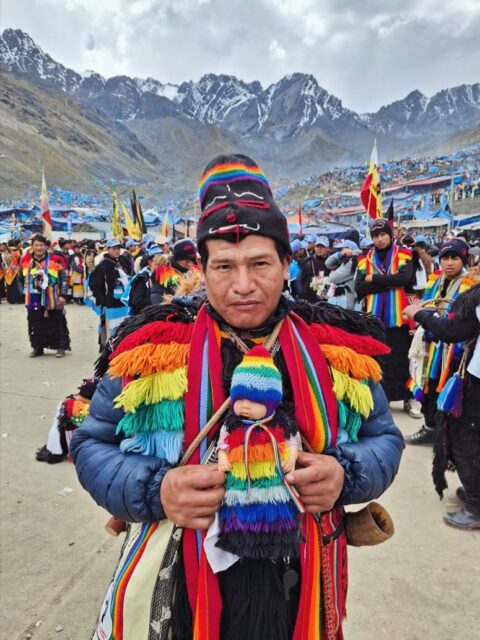
These crosses vary greatly in size and appearance. Some can be almost twenty feet high, while others are small enough to stand on a table. Some are carved from wood, others from stone, and many are brightly decorated and wrapped in colourful fabrics, almost as though they are dressed in clothing. Families carefully adorn the crosses before bringing them to the church, giving each one its own distinctive appearance.
The church fills with worshippers as the crosses arrive, creating a deeply religious and communal atmosphere. During the central Mass and religious ceremonies, the crosses are blessed and sprinkled with holy water by the priest. A special mass in its honour may also form part of the celebration, bringing the community together to pray and give thanks.
The religious meaning of the cross is closely connected to the passion of Jesus Christ. For many worshippers, the ceremonies and the representation of the Passion are a reminder of Christ’s sacrifice and the central role of the cross in Christian faith.
After the blessing, the cross is carried through the town as part of a lively procession. It is carried through the streets alongside bands of musicians, while fireworks add to the festive atmosphere.
A representation of a tree associated with Christ traditionally leads the procession, followed by people carrying their crosses. The largest and most elaborately decorated cross often brings up the rear.
With marching bands filling the streets and fireworks echoing overhead, the procession creates a colourful and memorable spectacle. It brings together Catholic devotion, Andean traditions, music, and community celebration, showing how deeply the veneration of the cross is woven into the cultural life of Cusco and its surrounding communities.
Traditional Dances & Celebration throughout the City

The procession is not simply a journey from one point to another. Along the way, there are plenty of opportunities for the crowd to join in the festivities and enjoy the more playful side of the celebration.
At several points, the procession may slow down as people attempt to reach prizes suspended from ropes above the street. Someone standing on a ladder or leaning from a second-storey window pulls the ropes, making the prizes bounce and swing until someone manages to grab them. These games add a lively and festive atmosphere to the religious celebration.
Eventually, the procession returns to the church, where the priest gives another blessing and thanks the organisers. From there, the religious part of the celebration gradually gives way to dancing, music, food, and feasting.
The different groups then return to their respective homes and family gatherings, taking their blessed crosses with them. In many communities, the celebrations continue for hours, with large groups of family, friends, and neighbours coming together to share food, drink, music, and dancing well into the evening.
Traditional Food at Cruz Velacuy
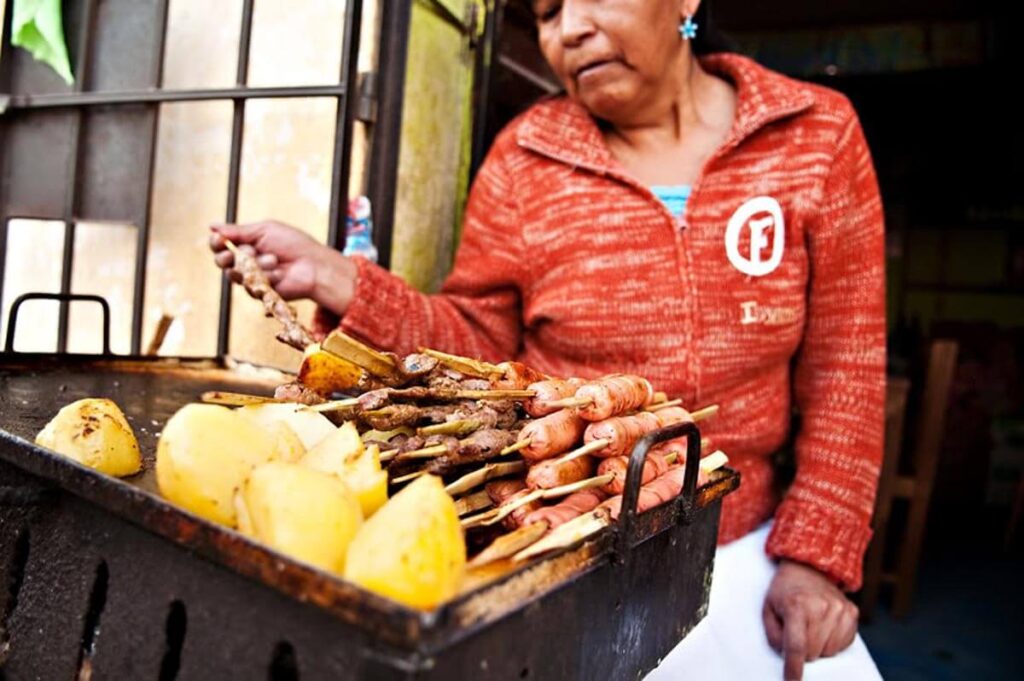
Food is an important part of any Peruvian fiesta, and Cruz Velacuy is no exception. Sharing a meal with family, friends, and neighbours is an essential part of the celebration, with large gatherings often taking place after the religious ceremonies.
Traditional dishes vary between communities, but a Cruz Velacuy feast may include generous portions of pork, hearty soups, bread, and other homemade specialities. Chicha, a traditional fermented corn drink that has been part of Andean culture for centuries, is also commonly shared during the celebrations.
Peruvian beer is often part of the festivities, and gatherings can continue for hours as families and neighbours celebrate together.
Learn more about Peruvian street food and typical Peruvian dishes in our blog posts.
Can Visitors Experience Cruz Velacuy?
Absolutely. If you happen to be in Cusco around May 3, Cruz Velacuy is an excellent opportunity to experience one of the region’s living traditions.
While the celebrations in Cusco are accessible to visitors, attending a celebration in one of the surrounding communities can offer an even more personal insight into how these traditions are woven into everyday life. If you have the opportunity to visit with a local guide or through a respectful community-based experience, you can learn much more about the meaning behind the rituals and celebrations.
Cruz Velacuy is also a reminder that travel in Peru is about much more than visiting famous archaeological sites. Festivals, music, food, religious traditions, and community celebrations are all part of what makes travelling through the Andes so rewarding.
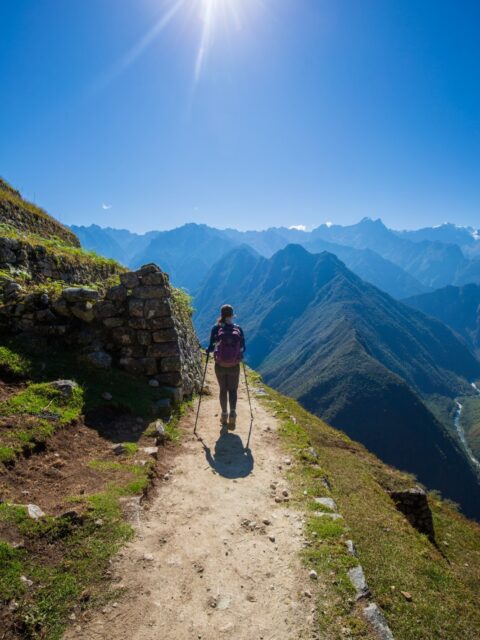
So, after hiking the Inca Trail and visiting Machu Picchu, why not leave some time in your Cusco itinerary for a local fiesta?
Experience More Festivals in Cusco and Peru
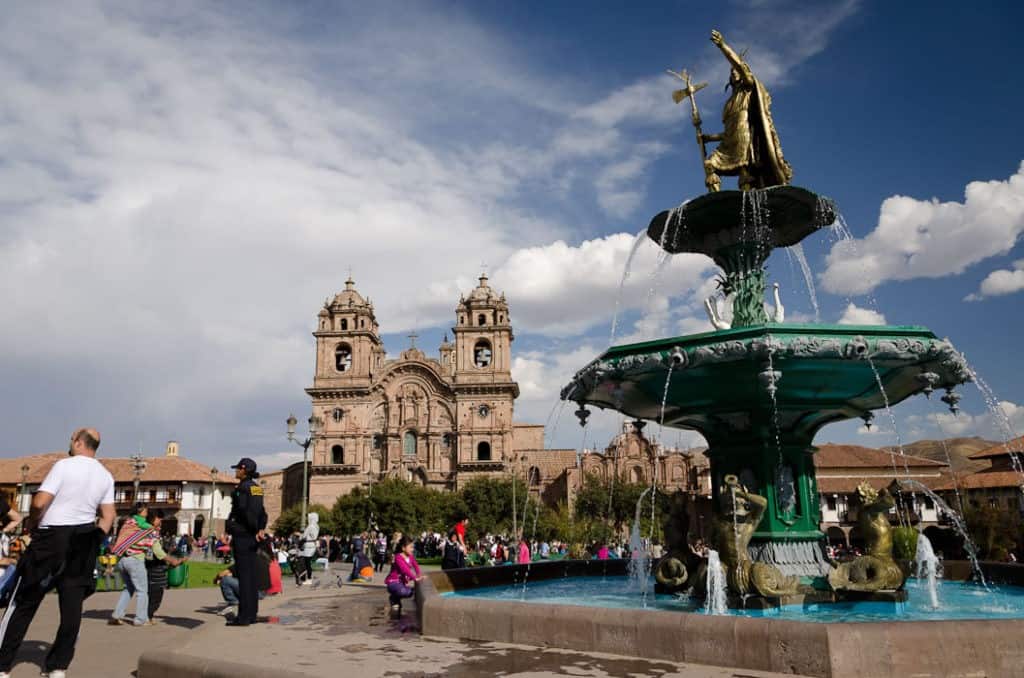
Cruz Velacuy is just one of the many cultural celebrations you can experience while travelling through Cusco and the Sacred Valley. From the famous Inti Raymi to smaller community celebrations, the region has an impressive calendar of festivals throughout the year.
For information about major celebrations and cultural events, take a look at our cultural events calendar, or get in touch with our team to find out what may be happening during your trip.
One of the advantages of travelling with Apus Peru is that our local guides can help you understand the cultural traditions you encounter along the way. They live in the region and know these celebrations from personal experience, giving you the opportunity to see Peru beyond the usual tourist highlights.