
The people of the mountains are known for their weavings: colorful blankets, bright ponchos…and bridges. Yep, you heard that right – bridges made entirely of grass!
Rope bridges woven from grass and other traditional materials were commonplace during Inca times in the Andes. Most have been lost over the centuries, but one principal bridge still remains at a place called Qeswachaka.
Every June, it is rewoven during a ritual ceremony that takes place over four days during the Q’eswachaka festival, and its completion is celebrated with food and dancing.
As innovative tour operators, Apus Peru offers a special Q’eswachaka tour; follow the link to find out more about this fascinating day tour!

What is Qeswachaka, the Last Remaining Woven Inca Bridge?
First, let’s take a closer look at the meaning behind the name Q’eswachaka. Also spelled Qeshuachaca or Keshwa Chaca, the name comes from Cusco Quechua: q’eswa means “straw rope,” while chaka means “bridge.” Put together, Q’eswachaka literally translates as “straw-rope bridge,” an apt name for this remarkable traditional bridge.
Not sure how to pronounce Q’eswachaka? It’s easier than it looks! The pronunciation is: keh-shwa-cha-ka.
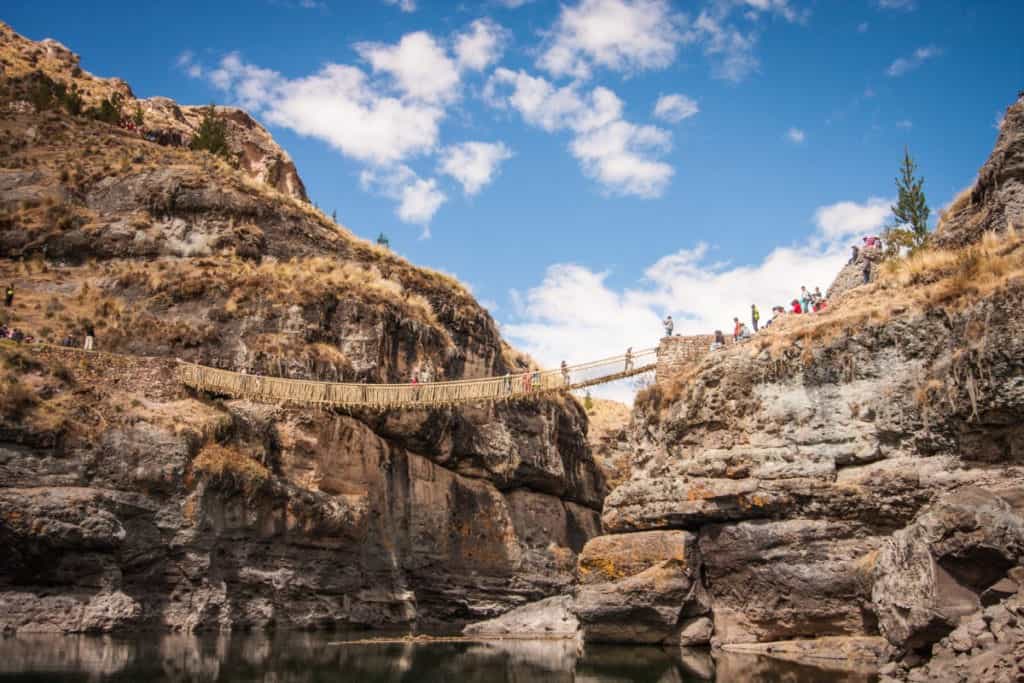
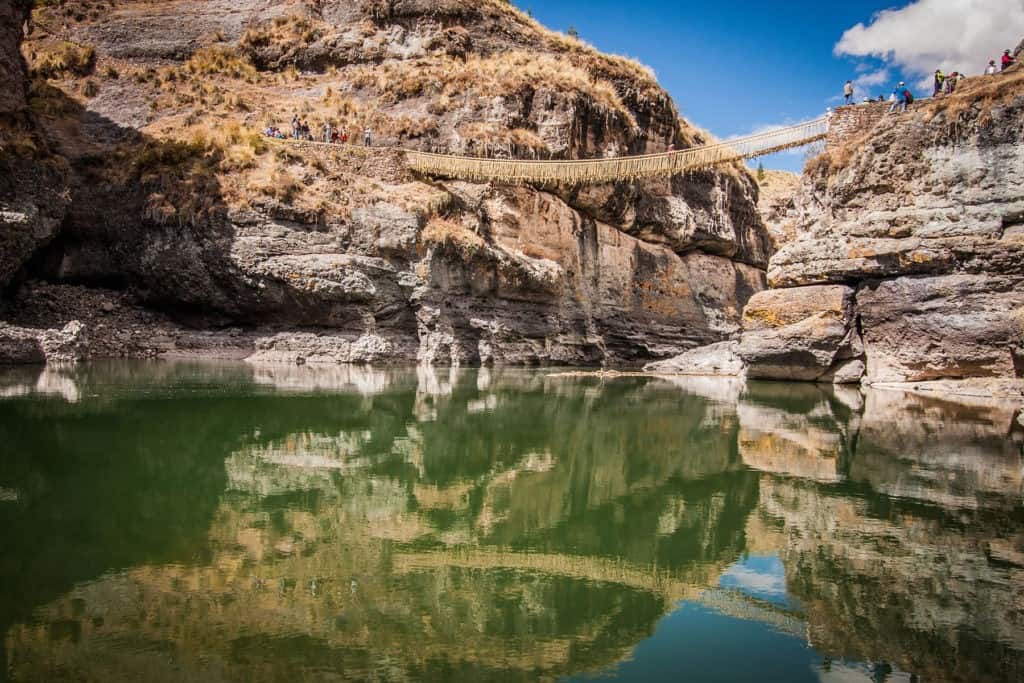
This ancient bridge in Peru is one of the most fascinating attractions in the Cusco region – move over, Inca Trail! Located in the province of Canas, in the Cusco region, the Q’eswachaka sits at an impressive 3,700 m (12,139 ft) above sea level. Stretching 28 meters across the Apurimac River and suspended around 30 meters above the water, this remarkable bridge is an impressive sight. Even the river’s name carries a special meaning: Apurimac comes from Quechua and means “the god who speaks.”
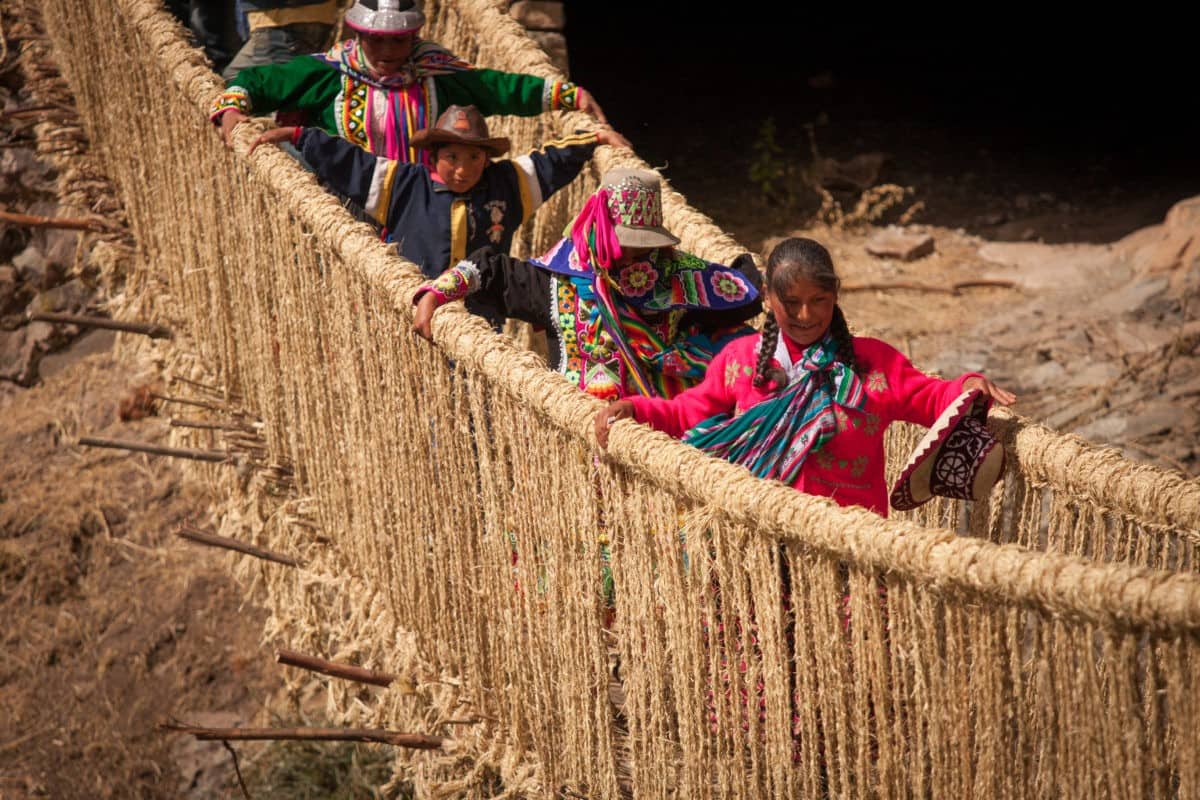
Experience the Qeswachaka Bridge Festival
Want to witness one of Peru’s most unique living traditions? Join us for our one-day Qeswachaka Bridge Festival tour and experience the annual rebuilding of the last remaining Inca grass bridge.
In the time of the Incas, the Q’eswachaka formed part of the vast network of roads known as the Qhapaq Ñan, or Royal Road, which connected Quechua communities and important sites throughout the empire. But what makes this bridge truly extraordinary is that it is not simply a relic of the past. Every year, local communities come together to rebuild the Q’eswachaka entirely by hand, using traditional techniques passed down through generations.
Keep reading to discover more about the history of this remarkable Inca bridge and the incredible feat of engineering that keeps this ancient tradition alive today!
The History of Qeswachaka Inca Rope Bridges
The Qhapaq Ñan, the vast Inca road network, was vital to holding the great Inca Empire together, stretching from Colombia in the north to Chile in the south. Yet traveling across the Andes was no easy task. With its steep valleys, deep gorges and countless rivers, the landscape presented natural obstacles that the Incas had to overcome. One solution was the construction of suspension bridges made from grass and other locally available materials.
So, what did an Inca bridge actually look like? These remarkable old bridges were woven by local people and were generally narrow enough for only one person to cross at a time. Despite their simple materials, they were strong enough to span some of the most challenging landscapes in the Andes.
According to the New York Times, at the height of the Inca Empire, there were nearly 200 suspension bridges woven from grass and other traditional materials throughout the Andes. Today, Q’eswachaka is the last remaining example of this ancient tradition. Located more than 100 km from Cusco, the bridge is a living reminder of the engineering skills and ingenuity of the Incas. Like many Inca bridges, Q’eswachaka was destroyed during the Spanish conquest, reportedly as part of efforts to hinder the Spanish advance toward Cusco.
The bridge was reconstructed many years later, and the surrounding communities have continued to care for it ever since. Every June, local residents gather to collect long blades of grass, which are dried and twisted into smaller strands before being woven into the thick cables used to rebuild the bridge. These cables are assembled using traditional techniques and anchored securely at both ends.
Because the natural fibres gradually deteriorate, the entire bridge must be rebuilt every year. This annual reconstruction is much more than a practical necessity – it is a community tradition that brings generations together and keeps an ancient Inca technique alive.
During the Inca Empire, bridge maintenance would have been an ongoing responsibility, with people assigned to repair and protect these important crossings. They also played a role in controlling access and monitoring who traveled along the roads. Today, the annual rebuilding of Q’eswachaka continues this remarkable connection between the past and present.

What is the Q’eswachaka Inca Festival?
This festival near the Quehue district takes place every year during the second week of June, when local communities gather for the annual rebuilding of this remarkable Inca suspension bridge. The festival begins with the preparation of the grass ropes, followed by several days of weaving, food, music and dancing. Close to a thousand people, almost all of them local residents, come together to take part in this unique celebration.
The bridge is rebuilt annually using traditional techniques that have been passed down from generation to generation for around 500 years or even 600 years. This annual reconstruction honors the communities’ Inca ancestors and represents a remarkable example of cooperation and cultural continuity. The celebrations take place in the town of Quehue, where around 700 men and women from the communities of Huinchiri and Ccollana come together to carry out this important communal project.
In the three days leading up to the principal day of the festival, local residents begin preparing the materials needed for the new bridge. They cut long grasses and other native plants growing near the bridge site, which are then gathered and woven into ropes of different thicknesses.
Community members work side by side, carefully plaiting and weaving the grasses to create the narrow, swinging suspension bridge. After three days of intensive work over the spectacular Apurímac River, the communities of Canas province come together to celebrate the completion with a lively folkloric festival featuring music, dancing and traditional food.
What to Expect During the Festival of the Last Inca Bridge
Day 1: Ceremonial Offering with Coca Leaves
At dawn on the first day, before the festival officially begins, the paqo, the ceremony’s spiritual leader, makes offerings of coca leaves honoring the Apus, the sacred mountain spirits.
The festival then gets underway with a dramatic moment: the old rope bridge is cut loose and plunges into the river below, making way for its annual reconstruction.
Meanwhile, women begin gathering the ichu grass that will be used to build the new bridge. The long strands are then carefully braided together to create ropes of different thicknesses, forming the essential building material for the new Q’eswachaka.
Days 2 & 3: Rebuilding the Bridge
The second and third days are when most of the bridge-building takes place.
The largest and thickest ropes are first stretched across the gorge, more than 30 meters above the Apurimac River. These sturdy cables form the foundation of the new bridge. Thinner ropes are then woven around them to hold everything securely in place, while small sticks are threaded through the ropes to create the bridge’s floor.
While the women traditionally take the lead in preparing and weaving the grass ropes, the men are responsible for securing the finished cables to the eucalyptus anchor points at either end of the bridge.
After two demanding days of work, the communities have once again demonstrated the remarkable engineering skills and traditional knowledge required to build a suspension bridge by hand, just as their ancestors did centuries ago.

Day 4: Let’s Celebrate!
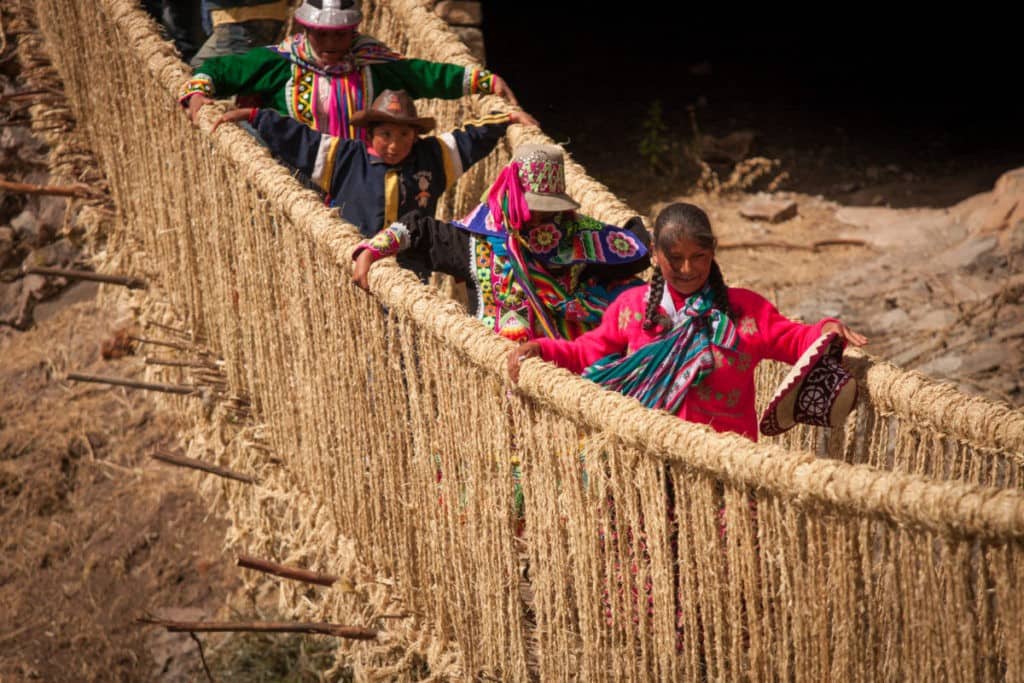
On the final day, when the bridge consisting of grass is complete, its strength is tested and then the bridge is open to the public. Even though there is a modern metal bridge a few meters upstream, there is large line of people ready to cross the bridge as soon as it opens.
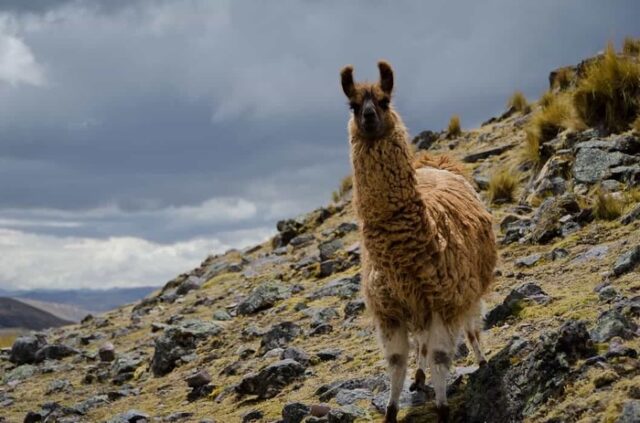
Later in the afternoon, after a Pachamama ceremony where the earth is honored, a cohort of men dressed as traditional Incas descend from a neighboring hill and cross the bridge. Their leader is a shaman. People line the stairs that lead down to the bridge and receive a blessing from the Andean priest. The procession is followed by flag bearers, singing girls, and llamas (who at the last minute might decide they do not want to cross the bridge and walk back up the hill!).
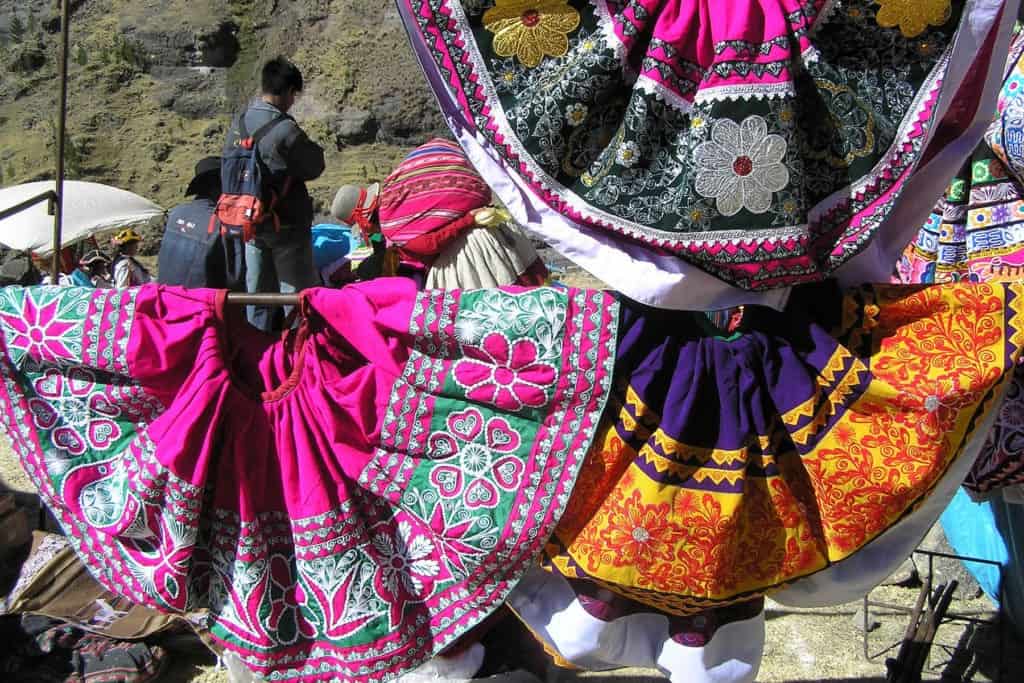
Traditional dancers from the surrounding area and Cusco gather in a nearby field for performances, and vendors sell festival food like baked cuy (guinea pig) and fried trout. Traditional dances, music, and eating last the whole day and the party spills out onto the surrounding hills. Throughout the day there is a line at the bridge. Families take photos and teenagers dangle arms and legs over the sides of the bridge, competing to see who can strike the most daring pose.
How to Visit the Bridge Building Festival
Adventures like Qeswachaka fall into a small category that can truly be described as “once in a lifetime.” Seeing a handmade bridge hung across a steep canyon and then crossing it yourself is an experience that is hard to replicate anywhere else in the world.
Option 1: Join a Qeswachaka Bridge Tour
Want to experience the Q’eswachaka Festival for yourself? Apus Peru offers a full-day tour to this remarkable cultural event on the second Sunday of June, as well as a range of other cultural experiences throughout Peru. Find our full Q’eswachaka Peru tour information here, or explore our cultural treks and tours to discover more unique traditions and celebrations.
Option 2: Go on Your Own!
If you want to visit independently on the day of the annual bridge reconstruction, you can take a public bus from Cusco to the district of Combapata. From there, catch a colectivo taxi to the town of Quehue, where you can find local transportation to the festival grounds, about 15 minutes away.
And the best part? There’s no entrance fee, so you can enjoy this incredible cultural tradition for free!
Q’eswachaka Bridge Facts
Here are some fascinating facts about this Peruvian bridge:
- In 2013, UNESCO declared the Q’eswachaka bridge an Intangible Cultural Heritage of Humanity, recognizing the traditional knowledge, rituals and ceremonies associated with its annual reconstruction.
- During the Inca period, suspension bridges were widely used throughout the Andes, providing essential crossings over deep gorges and rivers.
- The Q’eswachaka bridge spans over 28 m and is approximately 1.2 m wide, suspended around 30 m above the river.
- The main material used to build the bridge is ichu grass, a thin native Andean grass that becomes remarkably strong when hundreds of strands are twisted and woven together.
- While the Q’eswachaka Festival takes place just once a year, the bridge itself can be crossed throughout the rest of the year – except, of course, while it is being rebuilt.
Other Inca Bridges
Although Q’eswachaka is often described as the “last” Inca bridge in Peru, it is not the only surviving bridge associated with the Inca road network. There are several other historic bridges worth visiting, including another traditional rope bridge.
The vast network of roads known as the Qhapaq Ñan connected Cusco with different parts of the Inca Empire and incorporated a variety of ingenious ways to cross rivers, valleys and other natural obstacles. Along the route, the Incas built stone bridges, floating bridges, oroyas – a type of pulley system that carried people across rivers in a suspended basket – as well as suspension bridges made from natural fibres.
The Inca Bridge at Machu Picchu
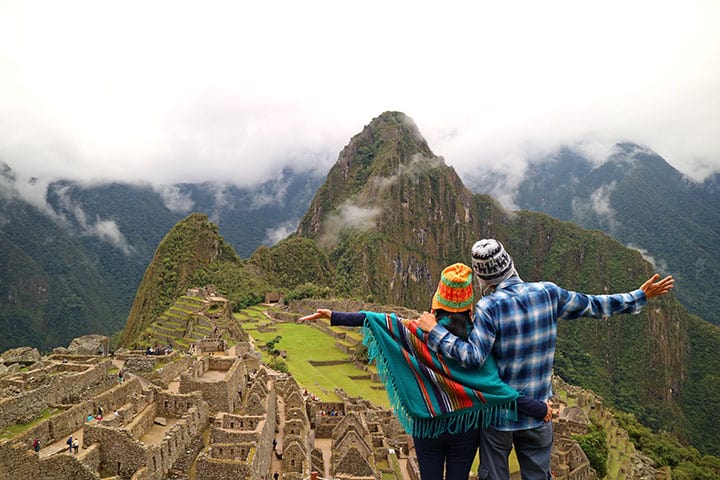
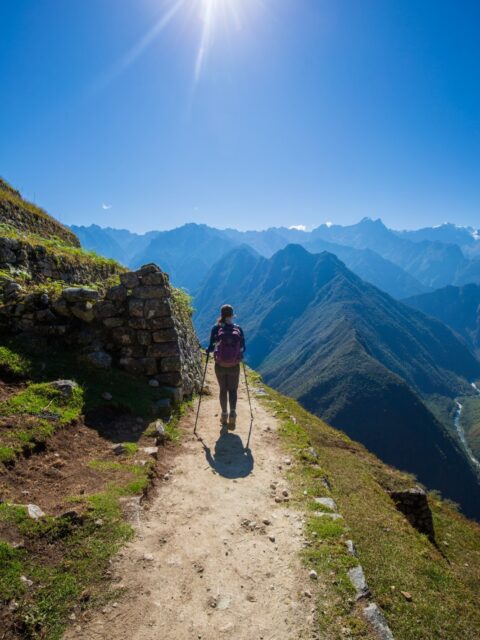
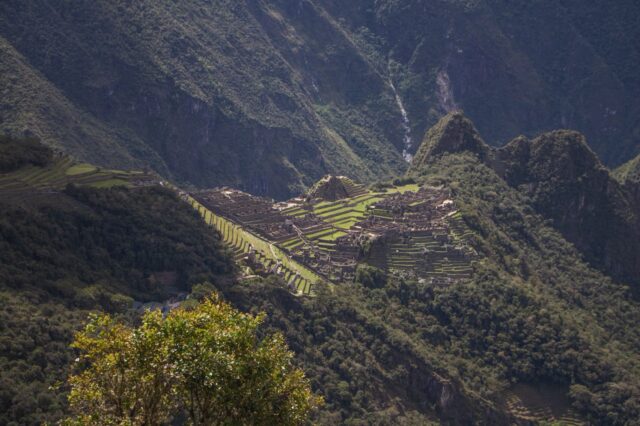
Did you know that Machu Picchu is also home to an Inca bridge? Unlike Q’eswachaka, this bridge is made of wood and is located along a narrow trail overlooking the surrounding mountains.
Reaching the Machu Picchu Inca Bridge requires approximately an hour of walking through a spectacular landscape. While visitors can hike to the bridge and admire this impressive feat of Inca engineering, crossing it is not permitted due to safety reasons.
Want to see Machu Picchu…?
4 complete days around Cusco + Trek or Train to the Lost City; Colorful markets, llamas, amazing Peruvian food
Rope Bridge in Checacupe
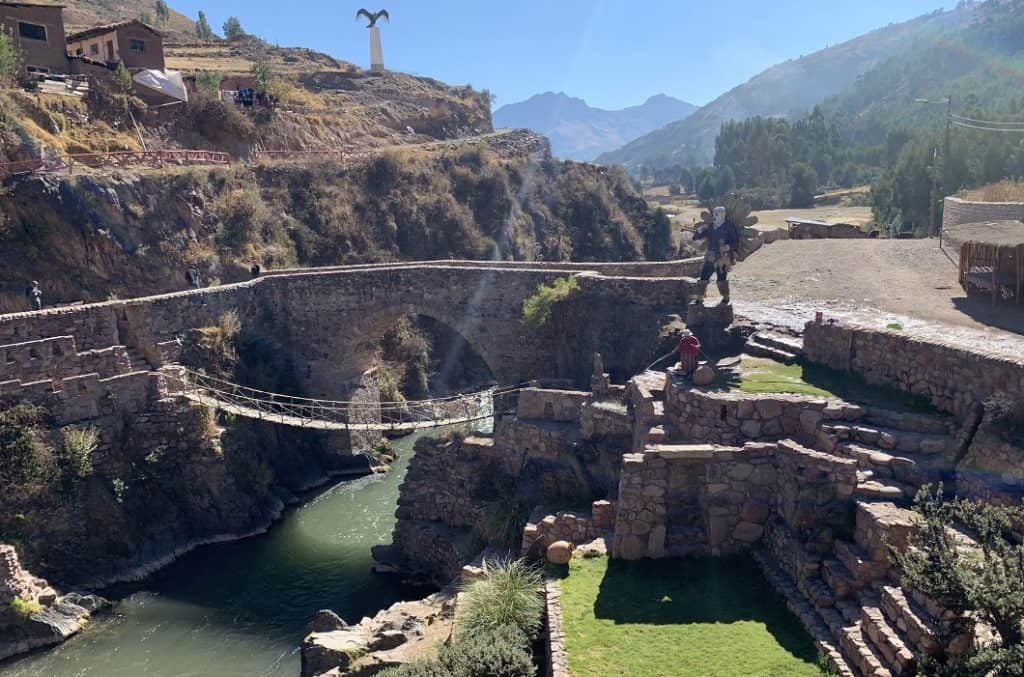
The charming village of Checacupe is another fascinating destination for anyone interested in Peru’s history and culture. Here, travelers can see three bridges built during three different historical periods: Inca, Colonial and Republican.
Together, these bridges offer a unique glimpse into the evolution of bridge construction in the Andes and the different cultures and periods that have shaped the region.
You can visit Checacupe on one of our amazing Palccoyo hike tours.
Visit Q’eswachaka! One of the Most Fascinating Inca Festivals You Can Witness
If you’re visiting Peru in June, why not include a trip to the Q’eswachaka Bridge Festival in your plans? It’s a unique opportunity to witness a centuries-old tradition that has been passed down through generations and remains an important part of living Andean culture. Watching local communities come together to rebuild the bridge, followed by music, dancing and traditional celebrations, is an experience you’re unlikely to forget.
Want to experience the Q’eswachaka Festival for yourself? Contact us for personalized service and to learn more about our festival treks in Peru.
Q’eswachaka is just one of the many fascinating cultural celebrations you can experience in Peru. If you’re interested in discovering more, check out our guide to the Inti Raymi Sun Festival or explore our Festivals in Cusco guide. You can also browse our monthly events calendar to see what festivals and cultural events are taking place during your visit.






[…] If you would like to learn more about the history behind this festival, you can view an article I wrote for Apus Peru here. […]