The famous Inti Raymi, the Festival of the Sun, is celebrated every June 24th. When the Inti Raymi ceremony is held, Cusco comes alive! This unique festival honours Inti, the Inca Sun God, and pays tribute to the cultural legacy of the Inca civilisation.
More than 800 performers dressed in elaborate Inca costumes take part in a dramatic recreation of ancient ceremonies, while thousands of locals and visitors gather throughout Cuzco to experience one of Peru’s most important cultural celebrations.
From the historic centre of the city of Cusco to the ancient fortress of Saqsayhuaman, Inti Raymi is a colourful celebration of Andean traditions, music, dance and history.
Let’s discover the history behind this important festival of the Inca empire, how it is celebrated today, and how you can experience your first Inti Raymi for yourself.
Want to discover Inti Raymi with a local guide? Take a look at our Inti Raymi Festival tour.
What Is Inti Raymi, the Ceremony of the Inca?
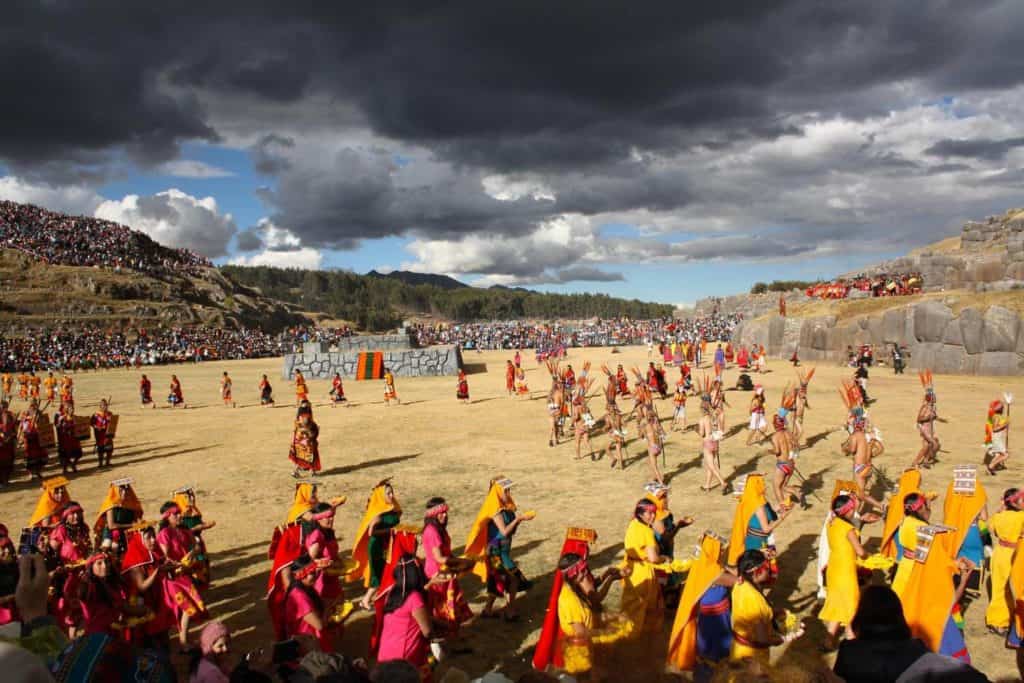
Inti Raymi, which means “Festival of the Sun” in Quechua, is based on ancient Inca religious traditions dedicated to Inti, the Sun God “Inti”. The celebration was connected to the winter solstice and the beginning of the Inca agricultural year.
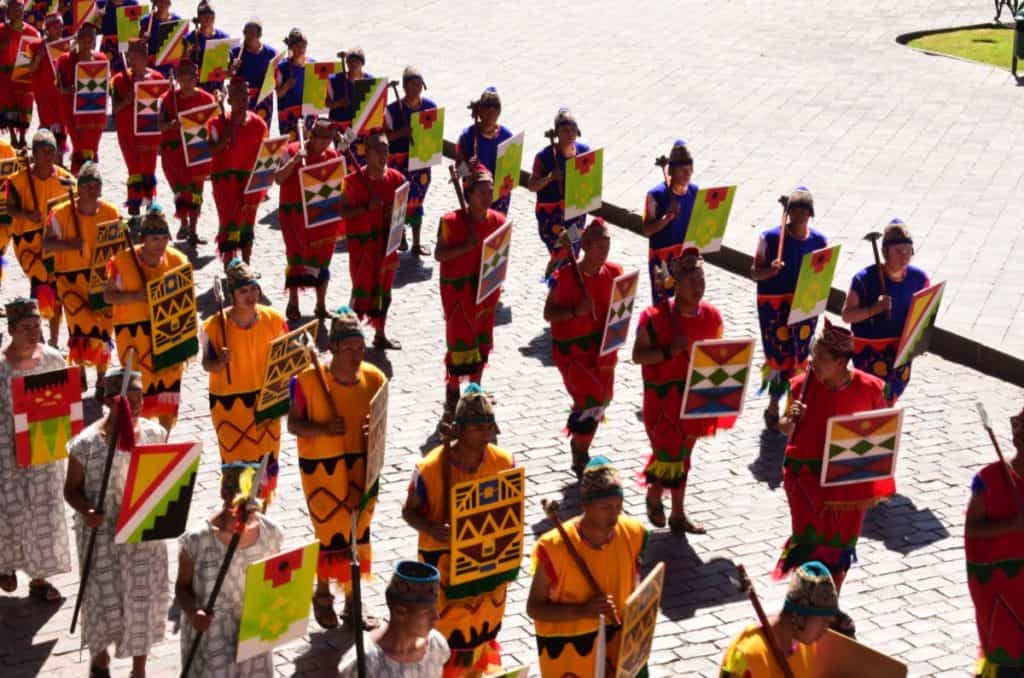
Today, Inti Raymi is an ancient Inca celebration brought back to life as one of Peru’s most important cultural festivals. It is one of the largest celebrations in Cusco, though is a renactment rather than a continuous tradition. The main ceremony is celebrated every June and brings together hundreds of performers portraying the Inca royal court, priests, musicians and representatives from different communities.
The modern-day celebration unfolds at three important locations in Cusco: Q’oricancha, the Plaza de Armas and the archaeological complex of Saqsayhuaman.
The History of Inti Raymi
Origins of the Inti Raymi Celebration
Inti Raymi was established by the Inca ruler Pachacutec in the 1430s in Cusco, the capital of the Inca Empire. The festival was held around the winter solstice in the Southern hemisphere, when the Incas gathered to honour the Sun and ask for prosperity and a successful agricultural season.
The celebration was one of the most important events in the Inca ceremonial calendar. It was a time to give thanks to Inti for the harvest and everything provided by the earth, while also reinforcing the relationship between the Sapa Inca, the people and the wider empire.
Historical accounts describe a festival that lasted several days and attracted people from different parts of the empire. Ceremonies included music, dancing, offerings, coca leaves and chicha, a traditional fermented corn drink.
Some historical accounts also describe the sacrifice of llamas as part of the ancient rituals. This practice is not part of the modern celebration.
What Did Inti Raymi Mean to the Incas?
For the Incas, the Sun was essential to life and agriculture. Inti was believed to provide warmth, light and fertility, making the Sun an important figure in the spiritual and agricultural life of the empire.
Inti Raymi was therefore much more than a ceremony of the Inca empire. It was a religious ceremony expressing gratitude to the Sun and Pachamama, while also bringing together communities from across the empire.
The festival also reinforced the authority of the Sapa Inca, who was considered the highest political and religious leader of the Inca Empire.
Why Was Inti Raymi Banned?
Following the Spanish conquest, many Indigenous religious traditions were suppressed as Spanish authorities attempted to replace Andean beliefs with Catholicism.
In 1572, Inti Raymi was prohibited by Viceroy Francisco de Toledo, who considered many ancestral ceremonies incompatible with Catholic teachings.
Although the public festival disappeared, Andean communities continued to preserve many of their traditions, beliefs and ceremonies.
The Reenactment of Inti Raymi
The modern celebration of Inti Raymi was revived in 1944, thanks largely to Cusco writer, actor and director Faustino Espinoza Navarro.
Espinoza researched historical accounts of the ancient ceremony and worked with local actors and intellectuals to create a theatrical reconstruction of the festival.
The first modern Inti Raymi was held on June 24, 1944, marking the beginning of a new chapter for the celebration.
Since then, Inti Raymi has grown into one of Peru’s most important cultural events, attracting thousands of visitors to Cusco every year. In 2001, it was officially declared part of Peru’s Cultural Patrimony. It is still celebrated in indigenous cultures throughout the coutnry.
When Is the Inti Raymi Sun in Cusco Celebrated?
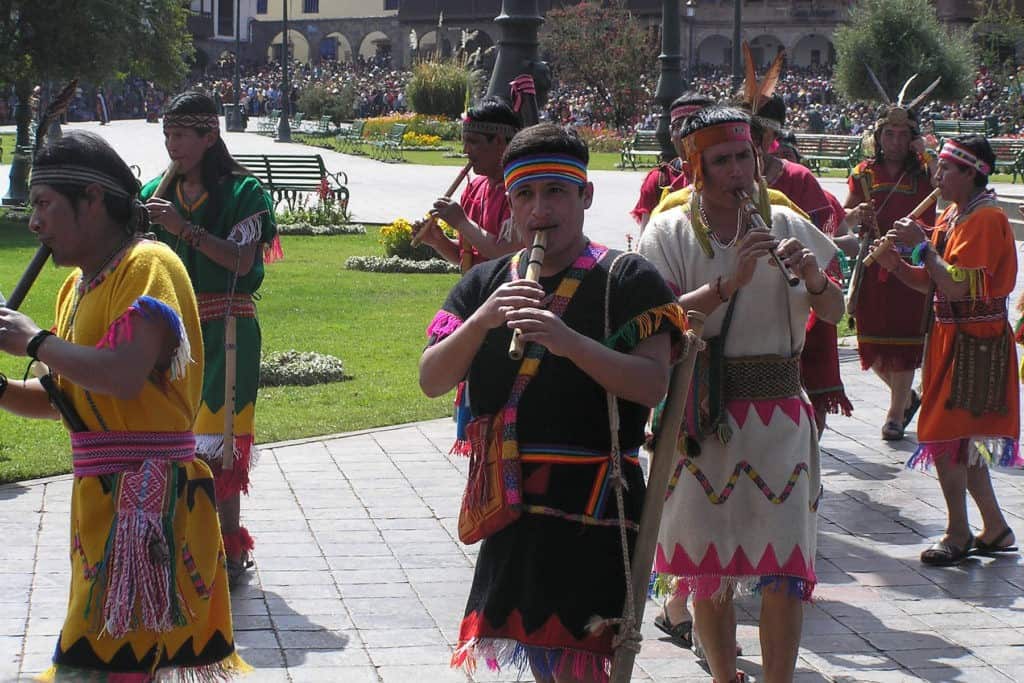
The main Inti Raymi is celebrated annually on June 24th.
The date is closely associated with the winter solstice, which takes place around June 21 in the Southern Hemisphere. For the Incas, this astronomical event marked an important point in the agricultural and ceremonial calendar.
Although June 24 is the main day, Inti Raymi forms part of a wider month of celebrations throughout Cusco. During June, the city hosts processions, concerts, cultural performances and other events leading up to the Festival of the Sun.
Where Is Inti Raymi Peru Celebrated?
The main Inti Raymi ceremony in honor of the sun is celebrated in Cusco at three different locations: Qoricancha, the main square of Cusco, and Saqsayhuaman.
Each location represents a different part of the ceremony, and watching the entire celebration means following the procession as it moves through the city.
How Is Inti Raymi in Cusco Celebrated Today?
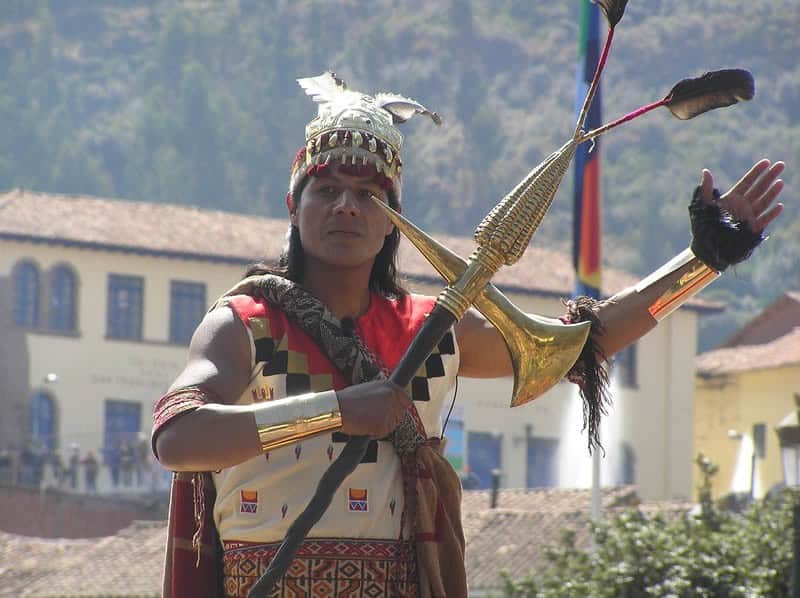
The modern Inti Raymi route begins in the morning at Q’oricancha, the ancient Inca Temple of the Sun. Today, Q’oricancha is partially covered by the Santo Domingo Church, which was built over the foundations of the Inca temple.
1. Q’oricancha
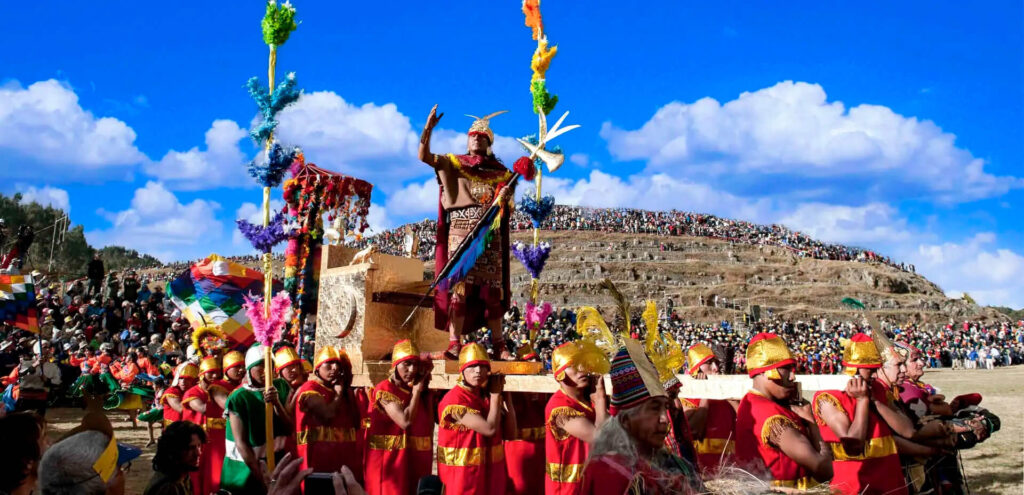
The Sapa Inca and Mama Ocllo make their first appearance at Q’oricancha, where the Inca ruler pays tribute to the Sun.
The ceremony includes speeches in Quechua, ritual gestures and offerings involving coca leaves. The Inca and his entourage then begin their procession through the city.
Q’oricancha is also one of the best places to experience the atmosphere of Inti Raymi without purchasing a ticket, although space fills up quickly.
2. Plaza de Armas
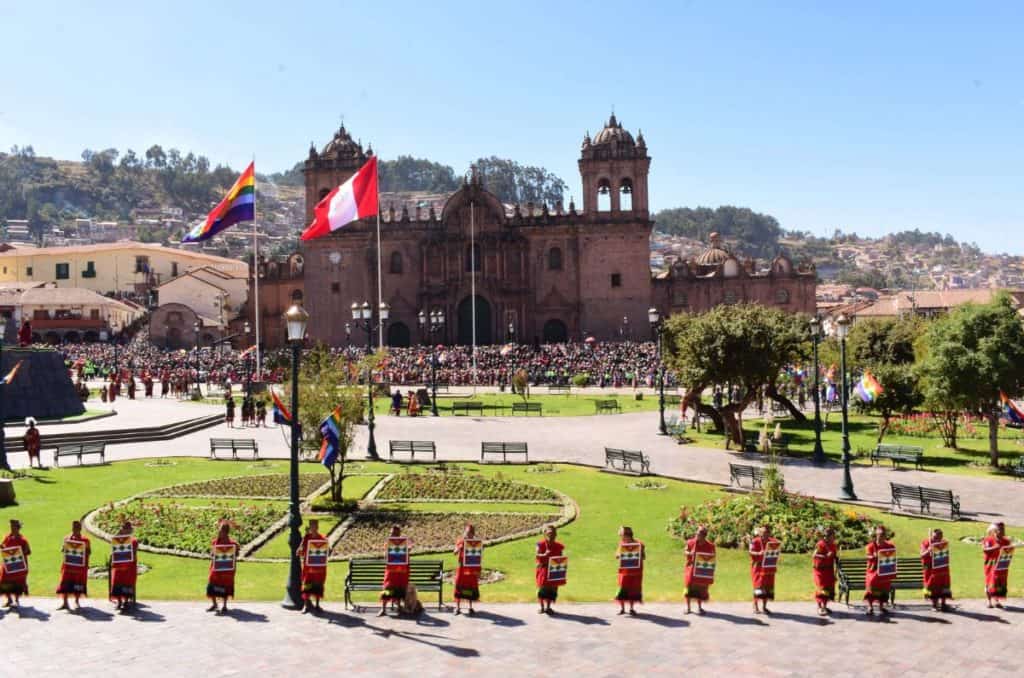
The procession continues towards the Plaza de Armas, Cusco’s historic main square.
Here, the Sapa Inca addresses the people from a ceremonial platform before the procession continues towards Saqsayhuaman.
The Plaza de Armas becomes extremely busy on June 24, so arriving early is essential if you want to find a good viewing spot. Some restaurants and bars around the square also offer balcony views, although prices can be considerably higher during Inti Raymi.
3. Saqsayhuaman
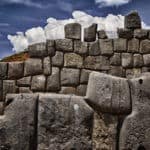
The final and most elaborate part of Inti Raymi takes place at the archaeological complex of Saqsayhuaman, just outside the centre of Cusco.
This is where the main theatrical performance unfolds, with hundreds of actors representing different figures from Inca society and Andean cosmology.
The Sapa Inca interacts with performers representing the three levels of the Andean universe:
- Kuntur, the condor, represents the heavens, or Hanaq Pacha.
- Amaru, the serpent, represents the underworld, or Ukhu Pacha.
- The puma represents the earthly world, or Kay Pacha.
The ceremony also includes a theatrical representation of a llama sacrifice. No animal is harmed during the modern performance.
Inti Raymi Clothing
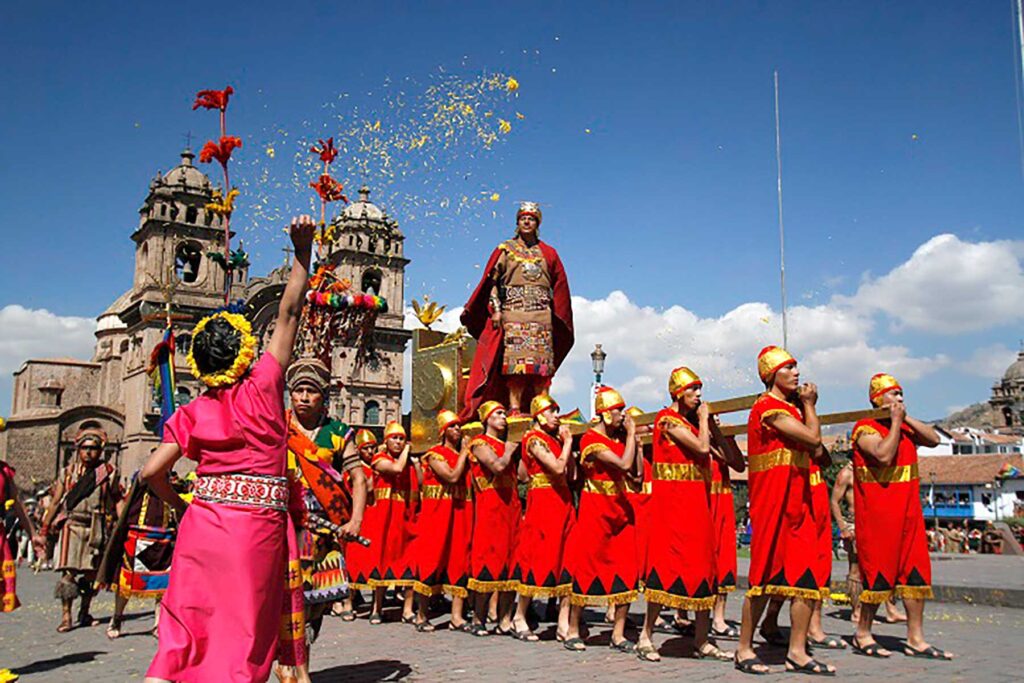
The costumes worn during Inti Raymi are one of the most visually striking parts of the celebration.
Performers wear colourful clothing inspired by Inca and Andean traditions, with elaborate headdresses, jewellery, textiles and other accessories.
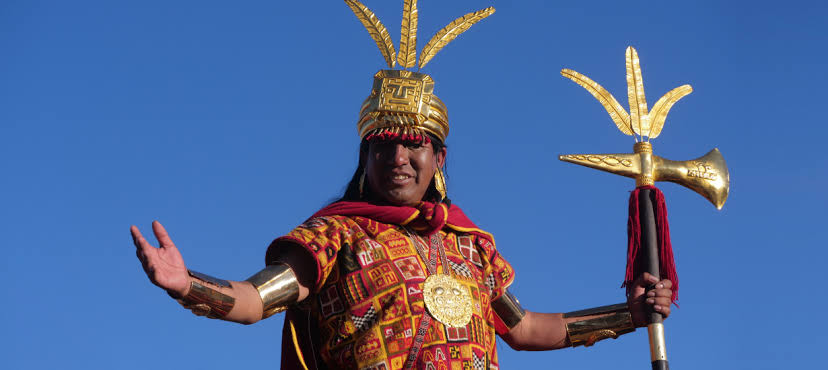
The Sapa Inca and other members of the royal court are particularly impressive, with costumes designed to communicate their status and connection to the Sun.
Inti Raymi Food
Food is an important part of Andean celebrations, and Inti Raymi is no exception.
One tradition associated with the festivities is Pampamesa, a communal meal in which people share traditional Andean foods. Depending on the occasion, these may include potatoes, corn, beans and different types of meat, including cuy, or guinea pig.
Sharing food in this way reflects the importance of community, reciprocity and togetherness in Andean culture.
Inti Raymi Music
Music is an essential part of the Festival of the Sun.
Traditional Andean instruments, including drums, horns and other percussion instruments, accompany the dancers and processions throughout the celebration.
Different musical styles and rhythms are used during the festivities, helping create the dramatic atmosphere that makes Inti Raymi such a memorable experience.
How to Watch Inti Raymi
If you want to experience Inti Raymi, you have several options depending on how much of the ceremony you want to see.
At Q’oricancha
The Q’oricancha portion of the ceremony can be viewed without a ticket. The best viewing areas around the temple fill up quickly, however, so arriving early is recommended.
At the Plaza de Armas
The Plaza de Armas is also accessible without purchasing an Inti Raymi ticket, although the square becomes extremely crowded.
For a more comfortable experience, some restaurants and bars around the Plaza de Armas offer balcony seating overlooking the festivities. These spaces tend to be in high demand on June 24, so advance reservations are recommended.
At Saqsayhuaman
If you want to see the main ceremony at Saqsayhuaman from the official seating areas, you need to purchase a ticket in advance.
Tickets are divided into different seating categories, with prices depending on the location. Because Inti Raymi attracts thousands of visitors, tickets can sell out well before June 24.
For the best choice of seats, it is advisable to book as early as possible.
Tickets for Inti Raymi
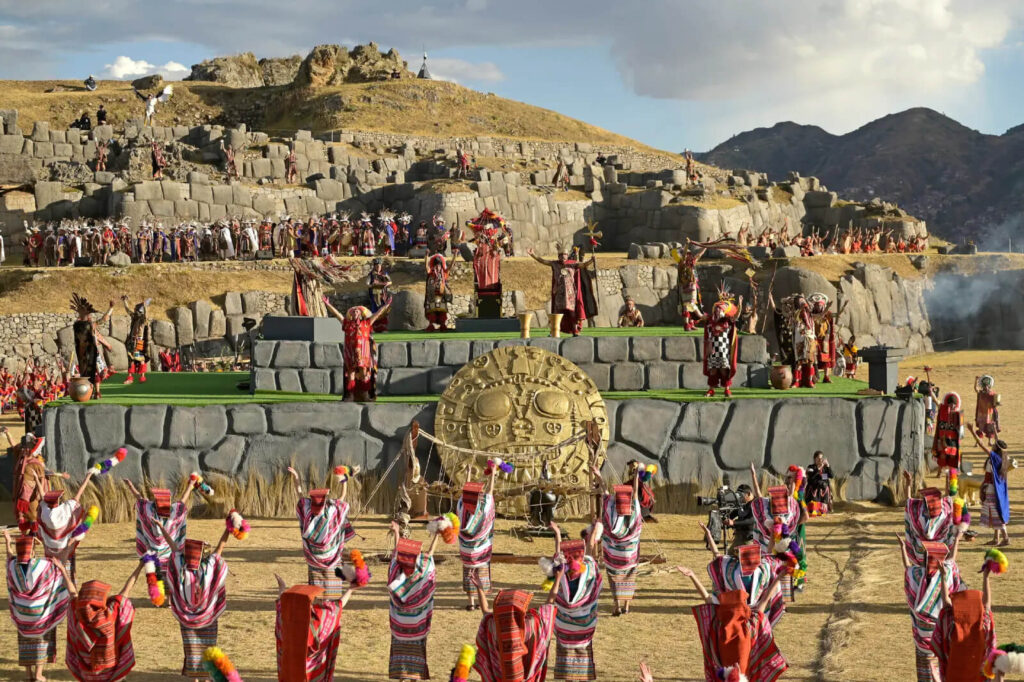
If you want to watch the main Inti Raymi ceremony at Saqsayhuaman from the official grandstands, you will need to purchase a ticket in advance. The seating area provides a much better view of the large-scale performance, which includes the arrival of the Sapa Inca, traditional dances, music, ceremonial rituals and the representation of different figures from Inca cosmology.
Ticket prices vary according to the seating category and location within the grandstands. The higher-priced categories offer more central and privileged views of the performance, while the lower-priced categories are positioned farther from the main ceremonial area.
For the 2026 Inti Raymi, official adult tickets at Saqsayhuaman ranged from approximately USD 140 to USD 245:
- Illapa – approximately USD 140
- Chaska – approximately USD 195
- Killa VIP – approximately USD 210
- Inti Super VIP – approximately USD 245
There are also reserved seating options at Q’oricancha, as well as combination tickets that include Q’oricancha and Saqsayhuaman.
It is important to remember that you do not need a ticket to experience every part of Inti Raymi. The ceremonies at Q’oricancha and the Plaza de Armas can be viewed from public areas, although these locations become extremely crowded and good viewing spots are limited. The official ticketed seating is primarily for the main performance at Saqsayhuaman.
Inti Raymi Vocabulary: Learn Some Quechua
First of all, how do you pronounce Inti Raymi?
It is pronounced approximately: in-tee rye-mee.
In Quechua, Inti Raymi means “Festival of the Sun.”
Learning a few Quechua words can make your experience even more meaningful:
- Inti – Sun
- Raymi – Festival or celebration
- Sapa Inca – The Inca ruler
- Pachamama – Mother Earth
- Q’oricancha – Golden enclosure
- Hanaq Pacha – The upper world or heavens
- Kay Pacha – The earthly world
- Ukhu Pacha – The inner or underworld
- Amaru – Serpent
- Kuntur – Condor
- Chicha de jora – Traditional fermented corn drink
Join Apus Peru for the Ancestral Sun Festival!
Inti Raymi is an incredible celebration to experience independently, but following the ceremony with a knowledgeable local guide can help you understand the history, symbolism and traditions behind what you are seeing.
Join Apus Peru on our guided Inti Raymi tour and spend the day experiencing the Festival of the Sun with an English-, Spanish- and Quechua-speaking guide.
The ceremony includes speeches and performances in Quechua, so having someone who can explain the meaning behind the words and rituals can make the experience much more rewarding.
More Festivals to Experience in Peru
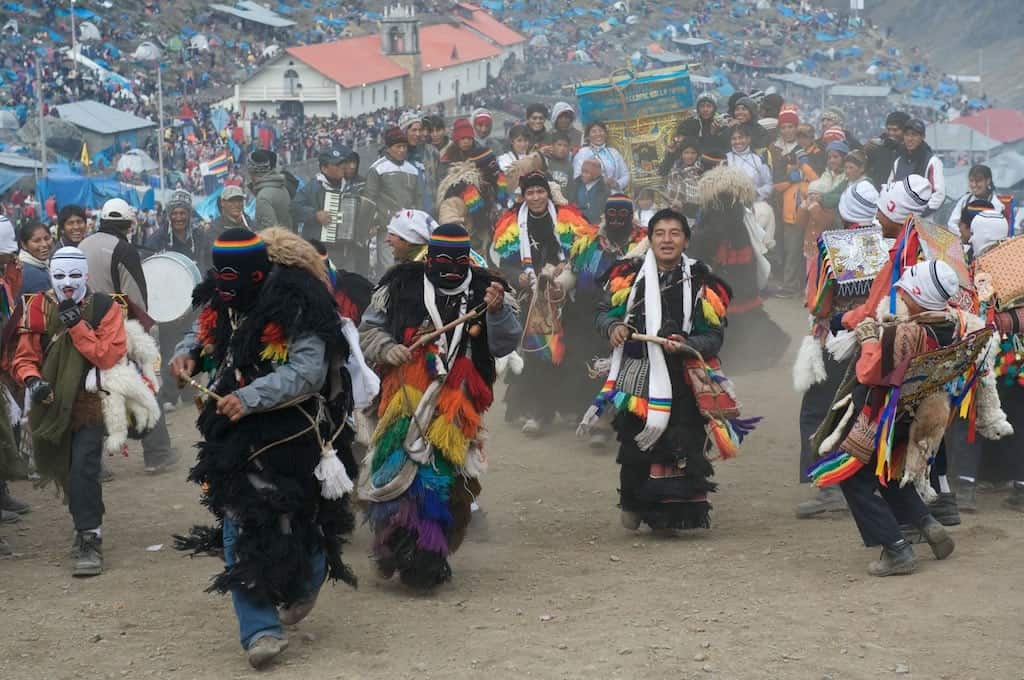
Inti Raymi is just one of the many fascinating festivals celebrated throughout the Andes.
At the Qeswachaka Festival, communities come together to rebuild the last remaining traditional Inca rope bridge, accompanied by music, dancing and celebrations.
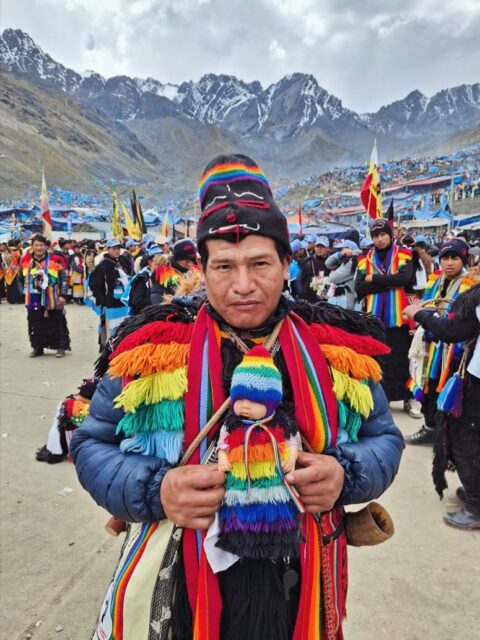
The Qoyllur Rit’i Festival offers another extraordinary glimpse into Andean spirituality, combining Indigenous traditions, pilgrimage and Catholic beliefs against the dramatic backdrop of the mountains.
Peru is so much more than Machu Picchu. If you want to plan your trip around Inti Raymi or another cultural celebration, take a look at our Cultural Calendar.
You can also discover more festivals in Peru and festivals in Cusco to help you plan your visit.