Did you know that Peru’s festivals are considered some of the most spectacular cultural celebrations in the world? Colourful, energetic, and deeply rooted in tradition, many festivals also warmly welcome visitors, making them a wonderful way to experience a more authentic side of Peru.
Of course, you’ve come to Peru to lay eyes on Machu Picchu, wander the cobbled streets of Cusco, and perhaps even challenge yourself on an Andean trek. But once you’ve ticked off the country’s iconic sights, why not check the festival calendar and see if a traditional Peruvian celebration coincides with your trip?
Peru’s Ultimate Highlights in One Trip
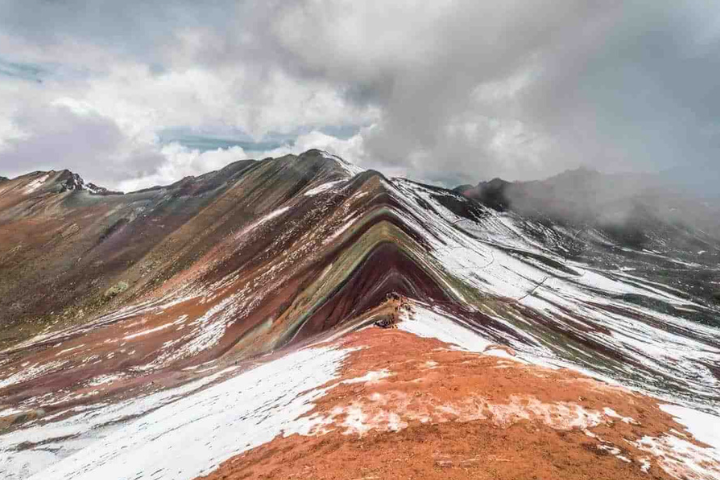
Tick off Peru’s major icons – from Machu Picchu and Vinicunca Rainbow Mountain to the Salt Flats. Meet locals, taste authentic food, and opt for a one-day Inca Trail hike.
Peru has an extraordinary number of festivals and celebrations, ranging from huge national holidays to intimate community traditions. For Peruvians, these celebrations are an important part of cultural and community life, reflecting the country’s complex history and the way Indigenous Andean beliefs, Catholic traditions, and local customs have blended over centuries.
Here are some of the most important and fascinating festivals in Peru to look out for.
Why Are Peru Festivals So Important For Locals?
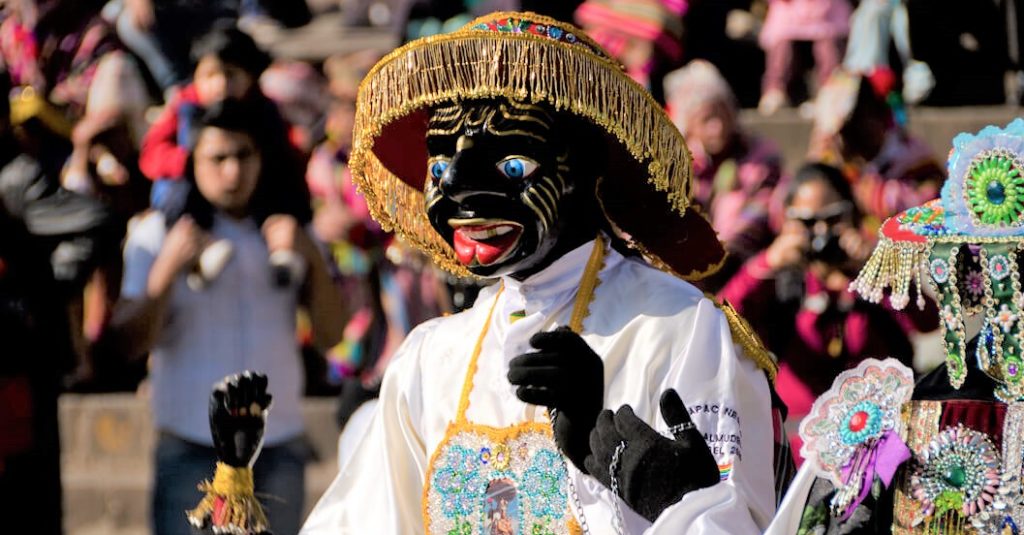
Festivals are much more than colourful events on the tourist calendar. For many local communities, they are an important way of maintaining traditions, strengthening community ties, paying homage to religious figures, and passing cultural knowledge from one generation to the next.
Peru’s festivals also reflect the country’s fascinating history. In the Andes, ancient Indigenous traditions have often become intertwined with Catholic celebrations introduced during the colonial period. The result is a unique cultural landscape where Catholic saints may be honoured alongside the goddess Pachamama, mountain spirits, and ancient Andean beliefs.
This mixture is particularly visible during pilgrimages, music festivals, and agricultural celebrations. Some festivals are enormous events attracting thousands of visitors, while others remain deeply local affairs celebrated primarily by the communities themselves.
For travellers, these celebrations provide an opportunity to experience a side of Peru that you simply cannot discover by visiting the country’s archaeological sites alone.
Honestly, especially in June and July, there are so many festivals happening in Cusco, where I live, and I absolutely love it! I have never seen another place with so many people dressed in colourful traditional costumes, learning and performing dances. Even schools, universities and children get involved, spending weeks practising their dances for performances. The whole city feels incredibly lively and connected to its culture during these months… AND you see basically every day a firework, it is kind of funny.
The Most Famous Traditional Peruvian Festivals
Popular Festival: Inti Raymi – Festival of the Sun
- When: 24 June
- Where: Cusco
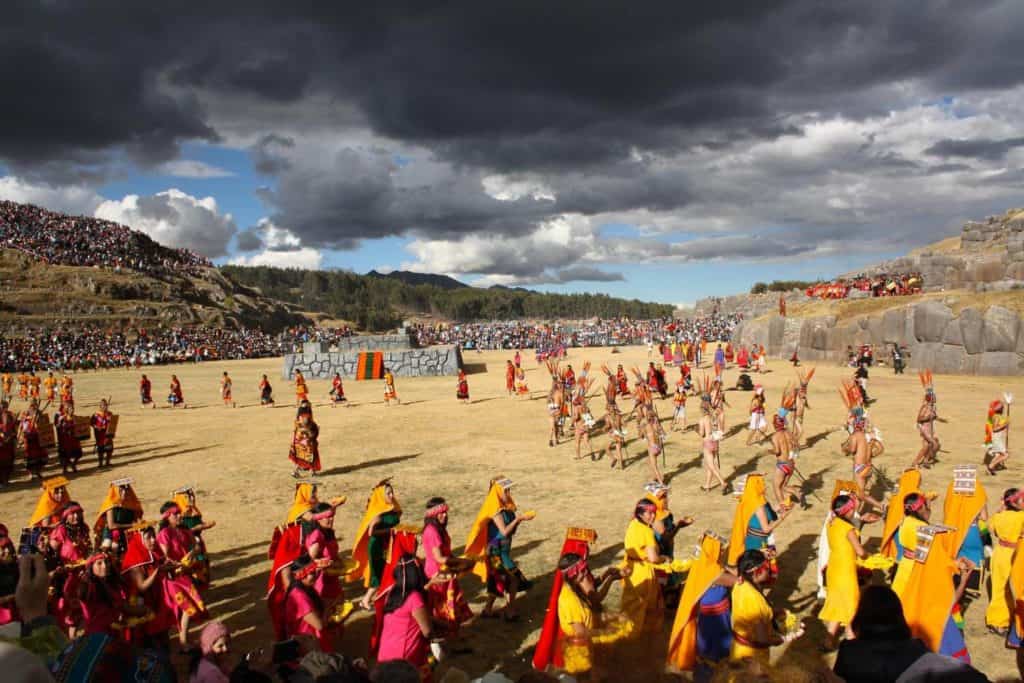
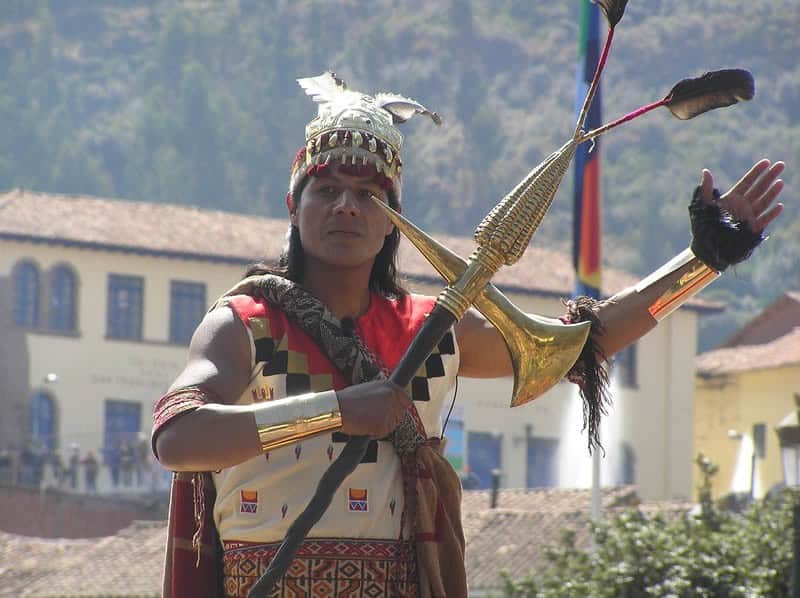
Few Peruvian festivals are as famous as Inti Raymi, the Festival of the Sun. Held every year in Cusco on June 24, it is the probably the biggest festival in Peru and recreates an ancient Inca ceremony dedicated to Inti, the Sun God.
The celebrations begin at Qorikancha, the former Temple of the Sun in central Cusco, before continuing at the ancient fortress of Sacsayhuaman overlooking the city. Hundreds of performers take part in elaborate costumes and ceremonial dances, bringing the history and mythology of the Inca Empire to life.
Today, Inti Raymi is one of the most important cultural events in Cusco and attracts visitors from around the world – however its the only one on this list that is not a genuinely local celebration . If you’re planning to attend, booking accommodation and tours well in advance is recommended.
Read more about Inti Raymi or discover our Inti Raymi Festival tour.
Celebration of Corpus Christi – Cusco’s Festival of the Saints
- When: May or June, depending on the Catholic calendar
- Where: City of Cusco
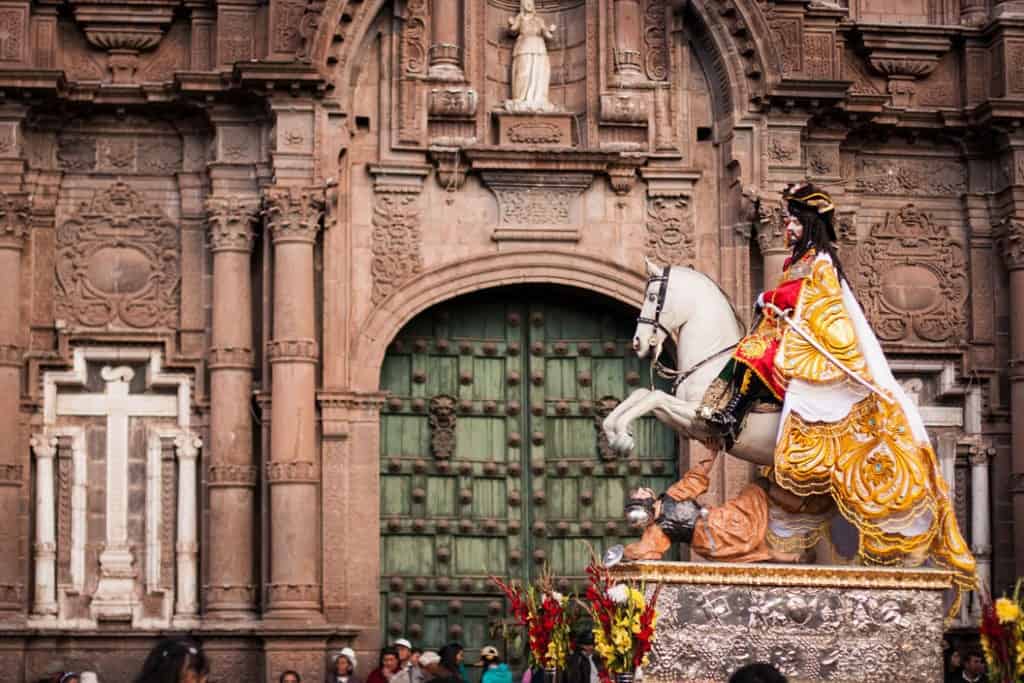
Corpus Christi is one of the best examples of how Catholic and Indigenous traditions have blended in Peru.
The celebration begins with processions from different churches across Cusco, as beautifully decorated statues of saints and religious figures are carried through the streets over more than a week before gathering in the Plaza de Armas. The atmosphere is filled with folk music, traditional costumes, incense, and large crowds of local people and visitors.
Corpus Christi has deep Catholic roots, but the celebration also reflects older Andean traditions. The procession of sacred figures through the city can be understood alongside pre-Hispanic traditions of carrying sacred objects and bringing together communities from different parts of the region.
La Virgen de la Candelaria – Puno’s Festival of Dance
- When: February
- Where: Puno
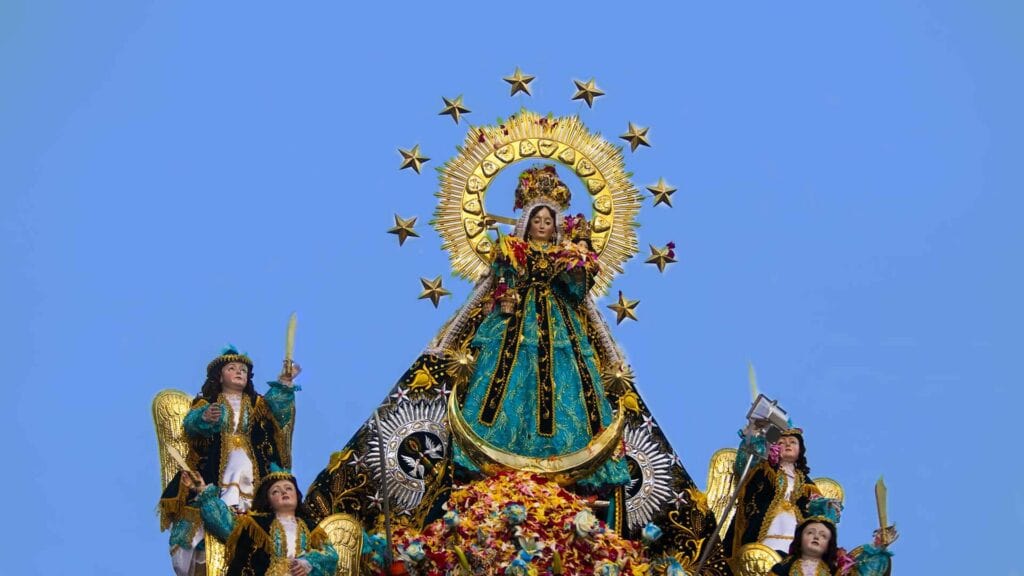
If you love music, dancing, and colourful costumes, the Virgen de la Candelaria in Puno is one of the best festivals in Peru to experience.
Held in honour of the Virgin of Candelaria, the patron saint of Puno, the celebration combines Catholic traditions with Indigenous Andean beliefs. Thousands of dancers and musicians take part in processions and competitions, filling the streets of Puno with elaborate costumes, masks, music, and dancing.
The festival is particularly remarkable for the enormous variety of traditional dances performed during the celebrations. It is one of the largest cultural festivals in Peru and was recognised by UNESCO as Intangible Cultural Heritage of Humanity in 2014.
The festivities are so extensive that you could easily spend several days immersed in the celebrations while exploring the region around Lake Titicaca.
Qoyllur Rit’i – A Sacred Andean Pilgrimage
- When: May or June, depending on the religious calendar
- Where: Sinakara Valley, Cusco region
For something completely different, Qoyllur Rit’i offers one of the most extraordinary cultural experiences in the Peruvian Andes.
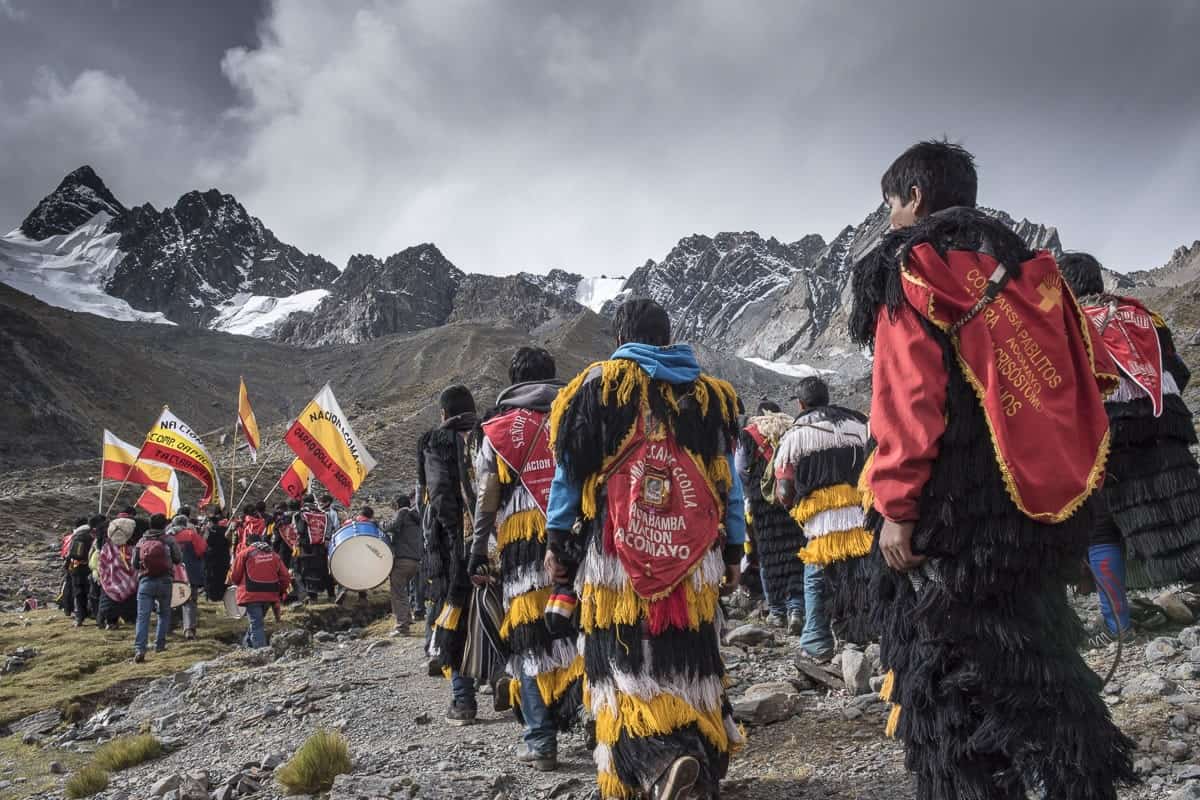
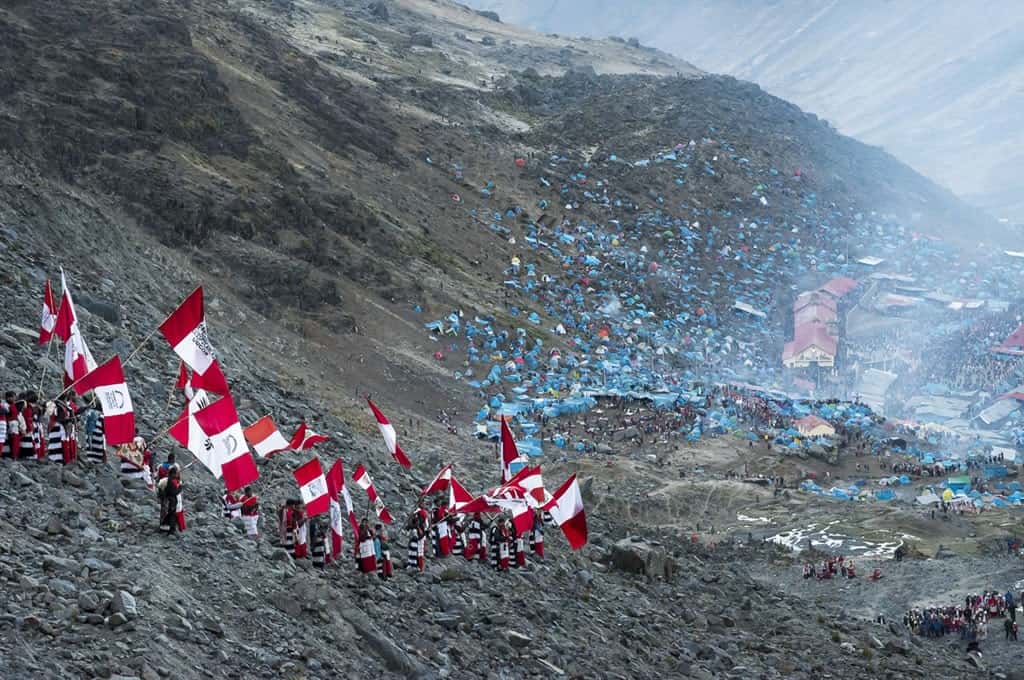
Every year, thousands of pilgrims travel into the high mountains of the Sinakara Valley to honour the Lord of Qoyllur Rit’i. The pilgrimage combines Catholic traditions with much older Andean beliefs connected to the mountains, glaciers, and natural world.
Groups of dancers and musicians travel from their communities to the sanctuary, often walking for hours or even days through the mountains. At an altitude of around 4,600 metres (15,092 ft), the setting itself is breathtaking.
Qoyllur Rit’i is definitely not a performance. It is a deeply meaningful religious and cultural tradition for the communities who participate. Visitors should therefore approach the event respectfully and remember that they are witnessing a sacred ceremony.
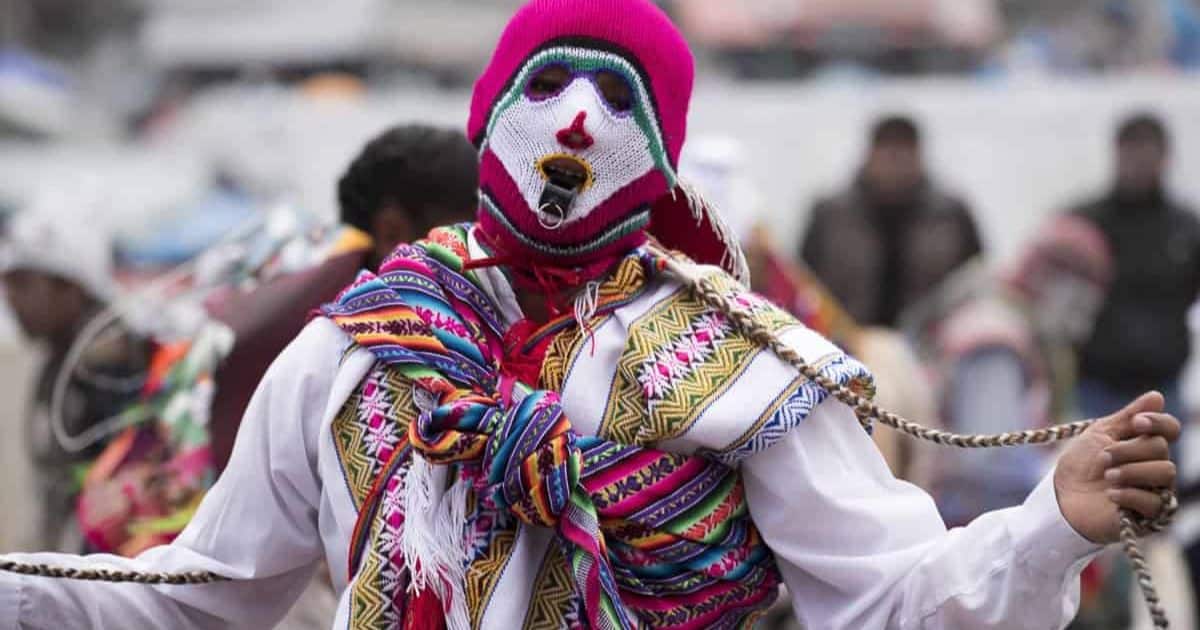
Join the Qoyllur Rit’i Pilgrimage!
Travel deep into the Andes and experience this extraordinary pilgrimage, where Indigenous traditions, Catholic faith, music and dance come together.
Read our guide to Qoyllur Rit’i or discover our Qoyllur Rit’i tours.
Carnaval – Carnival in Peru

- When: February or March, depending on Easter
- Where: Nationwide, particularly Cajamarca and Cusco
Carnival may be most closely associated with Brazil, but Peru has its own lively carnival traditions.
Across the country, Carnaval brings music, dancing, colourful costumes, and plenty of playful chaos to the streets. In the Andes, traditional celebrations can include flowers, water, paint, music, and dancing.
In Cusco, for example, Carnaval includes the traditional pucllay, a celebration associated with play and joy. Be warned, though: if you are walking around during the celebrations, you may get caught in a water fight!
Carnival traditions vary considerably from one region to another, which makes it particularly interesting for travellers exploring different parts of Peru.
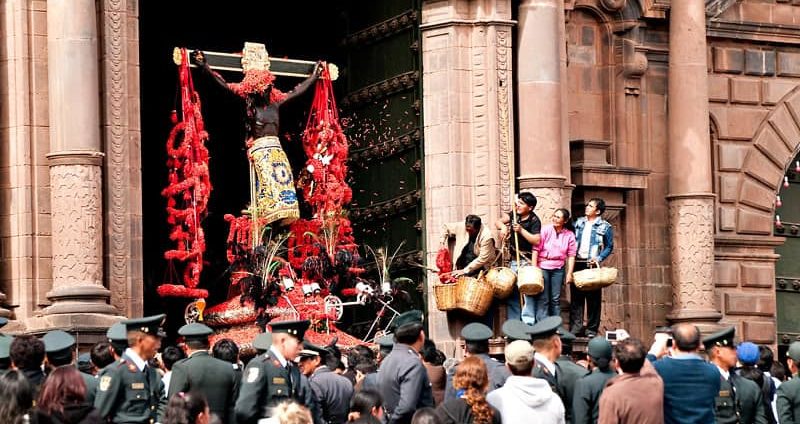
Semana Santa – Easter in Peru
- When: March or April, depending on the year
- Where: Nationwide, particularly Ayacucho and Cusco
Easter, or Semana Santa, is one of the most important religious celebrations in Peru. Although Holy Week is observed throughout the country, some destinations are particularly famous for their elaborate celebrations.
Cusco hosts large religious processions through the historic centre, while Ayacucho is renowned for some of the most significant Easter celebrations in Peru.
During Holy Week, streets fill with dances, flowers, music, and ceremonies. The celebrations reveal the strong influence of Catholicism on Peruvian culture while also reflecting local traditions that have developed over centuries.
If you happen to be travelling through Peru during Easter, it is worth checking what celebrations are taking place in your destination.
Read more about Easter in Peru.
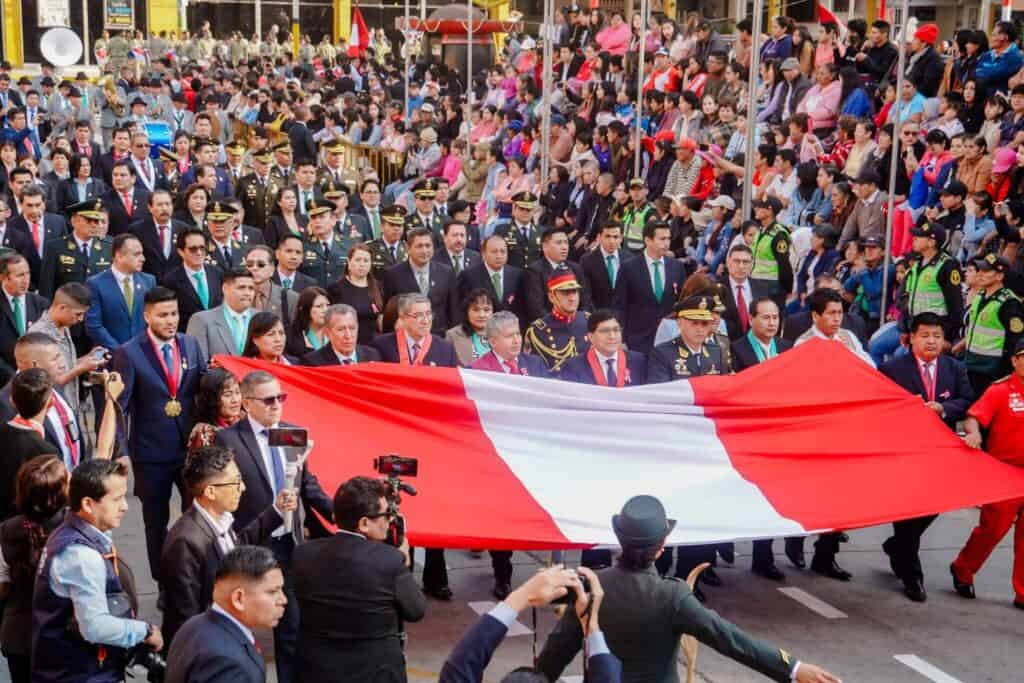
Fiestas Patrias – Peru’s Independence Celebrations
- When: 28 and 29 July
- Where: Nationwide
While many Peruvian festivals have religious or regional origins, Fiestas Patrias is a celebration shared by the entire country.
Held every year on 28 and 29 July, Peru’s national holidays commemorate independence from Spain in 1821. Cities and towns across the country are decorated in red and white, Peru’s national colours, while concerts, parades, fireworks, and celebrations take place throughout the country.
In Cusco, the historic centre comes alive with music, food, and festivities. Restaurants and bars are also particularly lively, making it a great time to experience Peru’s national pride alongside local residents.
Fiestas Patrias is one of the easiest festivals for visitors to experience because celebrations take place across the country.
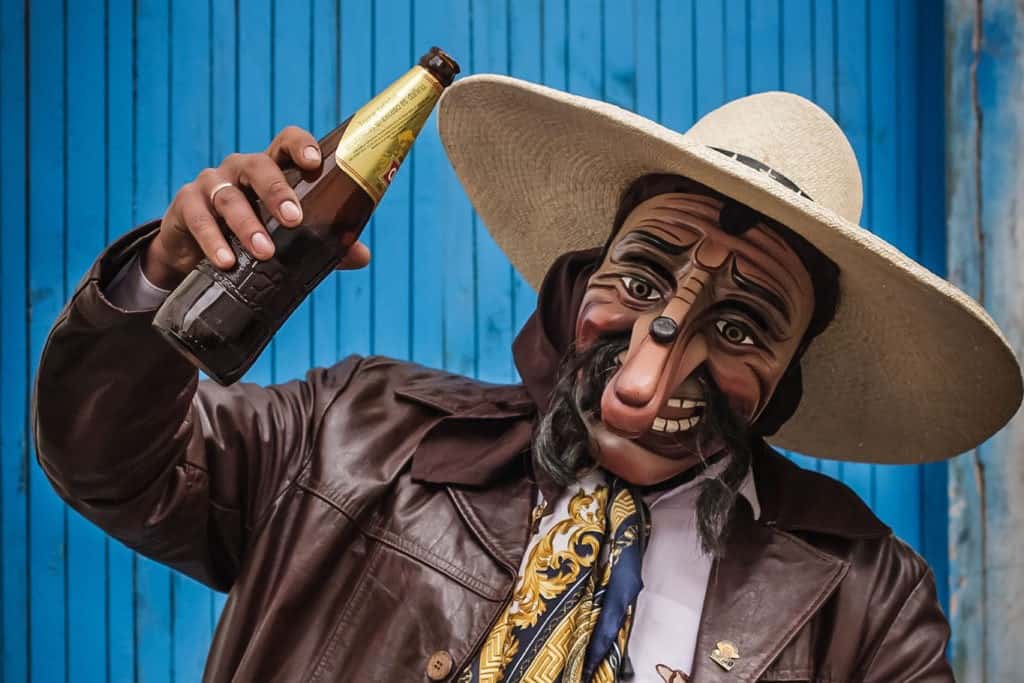
Virgen del Carmen – The Festival of Paucartambo
- When: July
- Where: Paucartambo, Cusco region
The small town of Paucartambo, around three hours from Cusco, becomes the setting for one of the most colourful festivals in the Andes as the community celebrates its patron saint, the Virgen del Carmen.
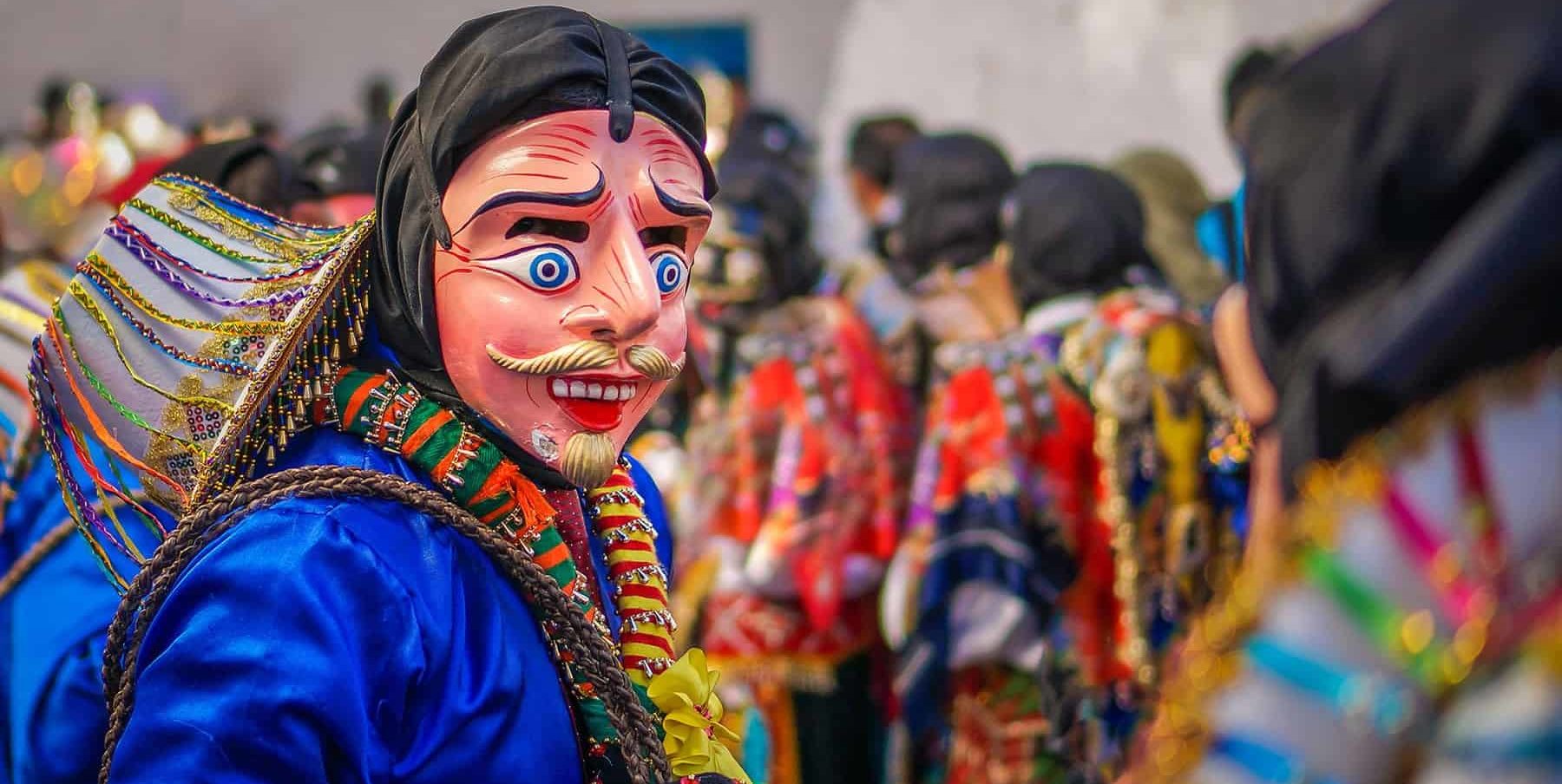
The festival combines Catholic devotion with traditional Andean beliefs and features spectacular masks, costumes, music, and dancing. Different groups of dancers represent characters from Peruvian history, folklore, and local traditions.
One of the most memorable characters is the Saqra, or devil dancer, who appears during the procession of the Virgin. The celebrations continue with music, fireworks, dancing, and religious ceremonies.
For travellers interested in traditional Andean culture, Virgen del Carmen is an unforgettable experience – but again, it must be remembered this is very important to local people, though respectful visitors are welcome.
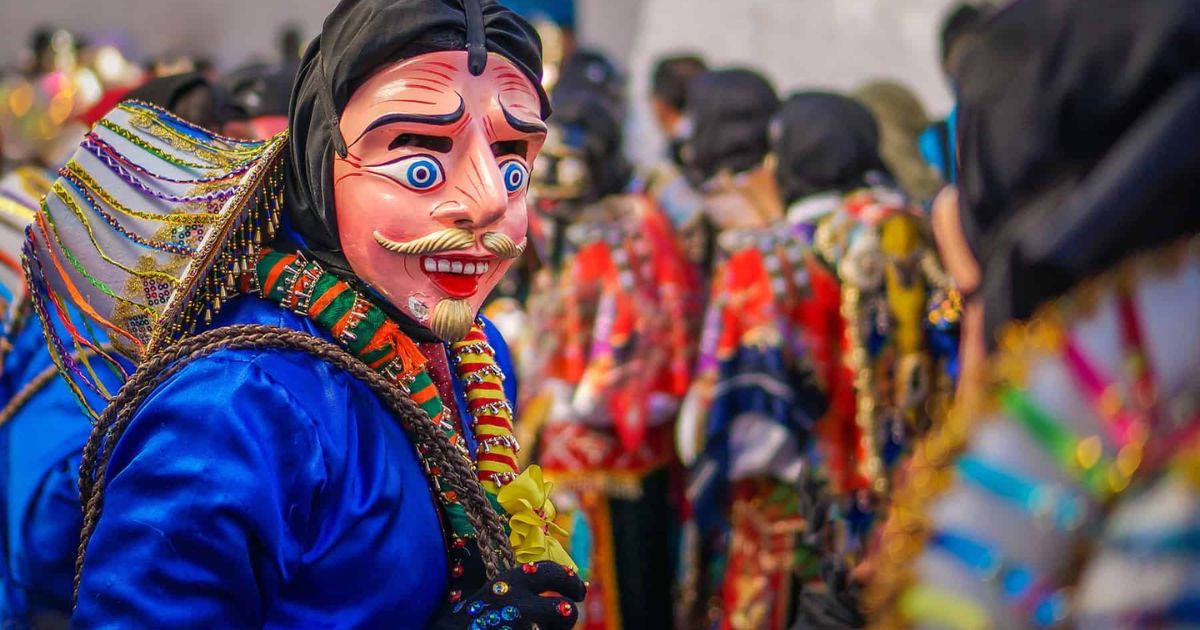
Step Into the Festivities of Paucartambo!
Spend two days immersed in music, dancing, colourful masks and centuries-old traditions during the Virgen del Carmen celebrations.
Learn more about the Virgen del Carmen festival or explore our Virgen del Carmen Festival tour.
Señor de los Milagros – Lima’s Purple Festival
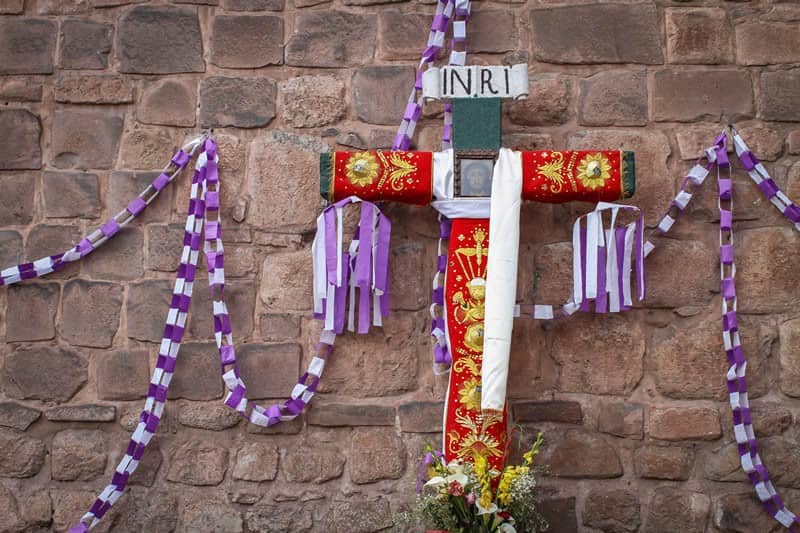
- When: October
- Where: Lima (with small processions in other cities)
In October, the streets of Lima turn purple for the celebrations of Señor de los Milagros, or the Lord of Miracles.
The festival centres around a revered image of Christ that is carried through the streets during enormous religious processions. Thousands of devotees dress in purple and follow the procession while singing and praying.
The tradition dates back to the colonial period and has become one of the most important religious celebrations in Peru. It is a particularly interesting example of the way different cultural influences have shaped Peruvian religious traditions.
If you are visiting Lima in October, look out for the purple decorations, traditional food, and dances taking place throughout the city. You can also see a small procession in Cusco.
All Saints’ Day – Honouring the Dead in Peru
- When: 1 and 2 November
- Where: Nationwide
All Saints’ Day and the Day of the Dead are important occasions for families throughout Peru to remember and honour loved ones who have passed away.
The traditions vary between regions, but families may visit cemeteries, bring flowers and food, light candles, and spend time together remembering deceased relatives.
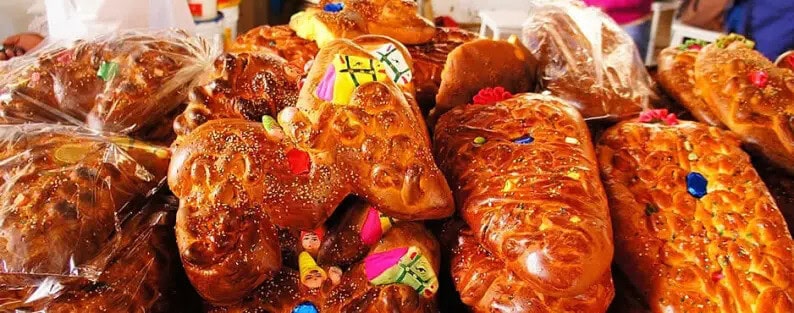
In many cities and communities, All Saints’ Day is also celebrated with traditional t’anta wawas, sweet breads shaped like babies, horses and other figures that are shared with family and used to honour loved ones who have passed away.
These celebrations also reflect Peru’s pre-Hispanic traditions. Respect for ancestors was deeply important in Andean societies, and elements of these beliefs have continued alongside Catholic traditions.
Visiting a cemetery during these celebrations can be a moving experience, but travellers should always remember that these are meaningful family and religious occasions rather than tourist attractions. Ask permission before taking photographs and be respectful of those who are mourning.
Christmas in Peru – Nativity Scenes and Andean Traditions
- When: December
- Where: Nationwide, particularly Cusco
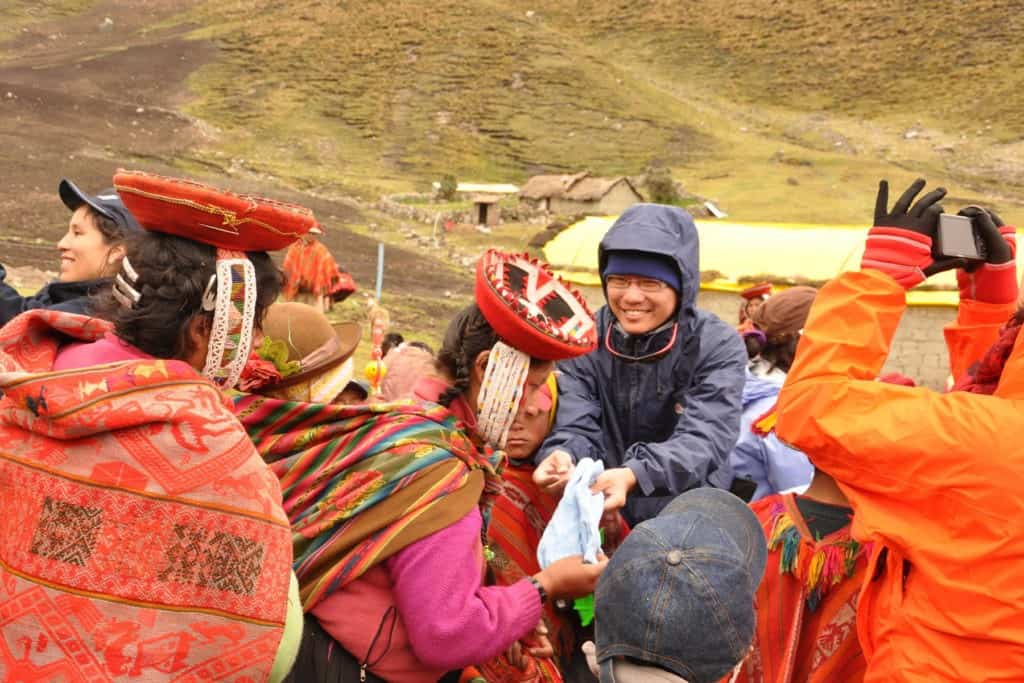
Christmas is an important celebration throughout Peru, combining Catholic traditions with local customs and Andean culture. In Cusco, the days leading up to Christmas are particularly lively, with markets and streets filled with traditional decorations, handmade crafts, and figures used to create nativity scenes.
On 23 and 24 December, Cusco’s Plaza de Armas and surrounding streets fill with stalls selling figurines of the Baby Jesus, saints, mosses, native grasses, and other decorations for traditional nativity scenes. The famous Santurantikuy market on Christmas Eve is one of the best-known places to see these traditions.
Read more about Christmas in Peru.
Traditional Andean Festivals in Peru
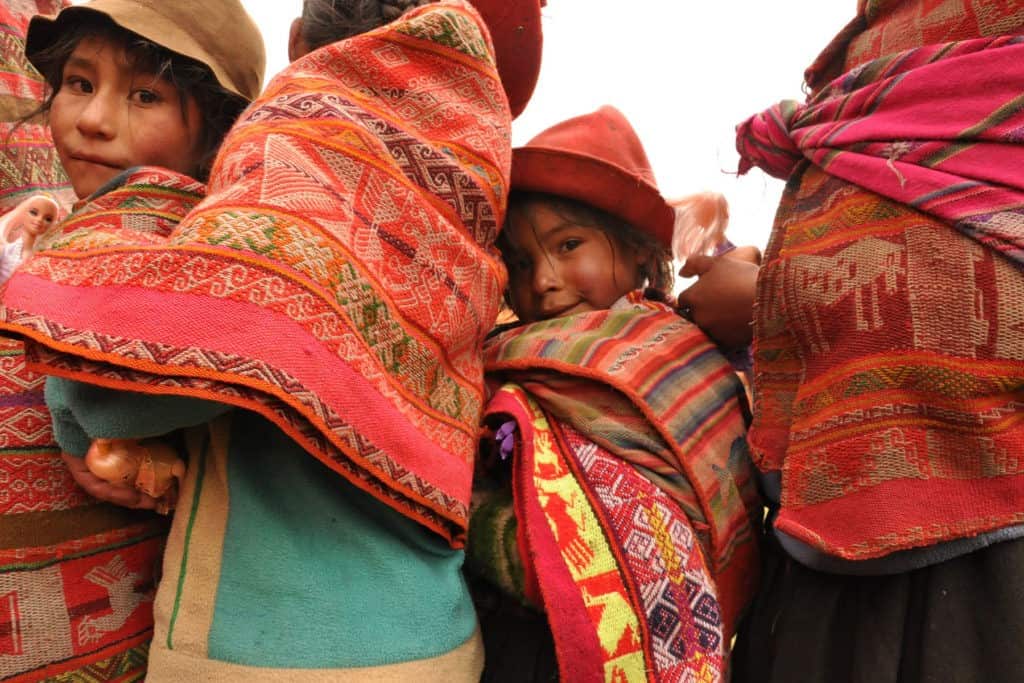
Not all of Peru’s most fascinating celebrations are huge festivals attracting thousands of participants. Some of the country’s most meaningful traditions take place in small Andean communities.
Q’eswachaka – Rebuilding the Last Inca Rope Bridge

- When: June
- Where: Cusco region
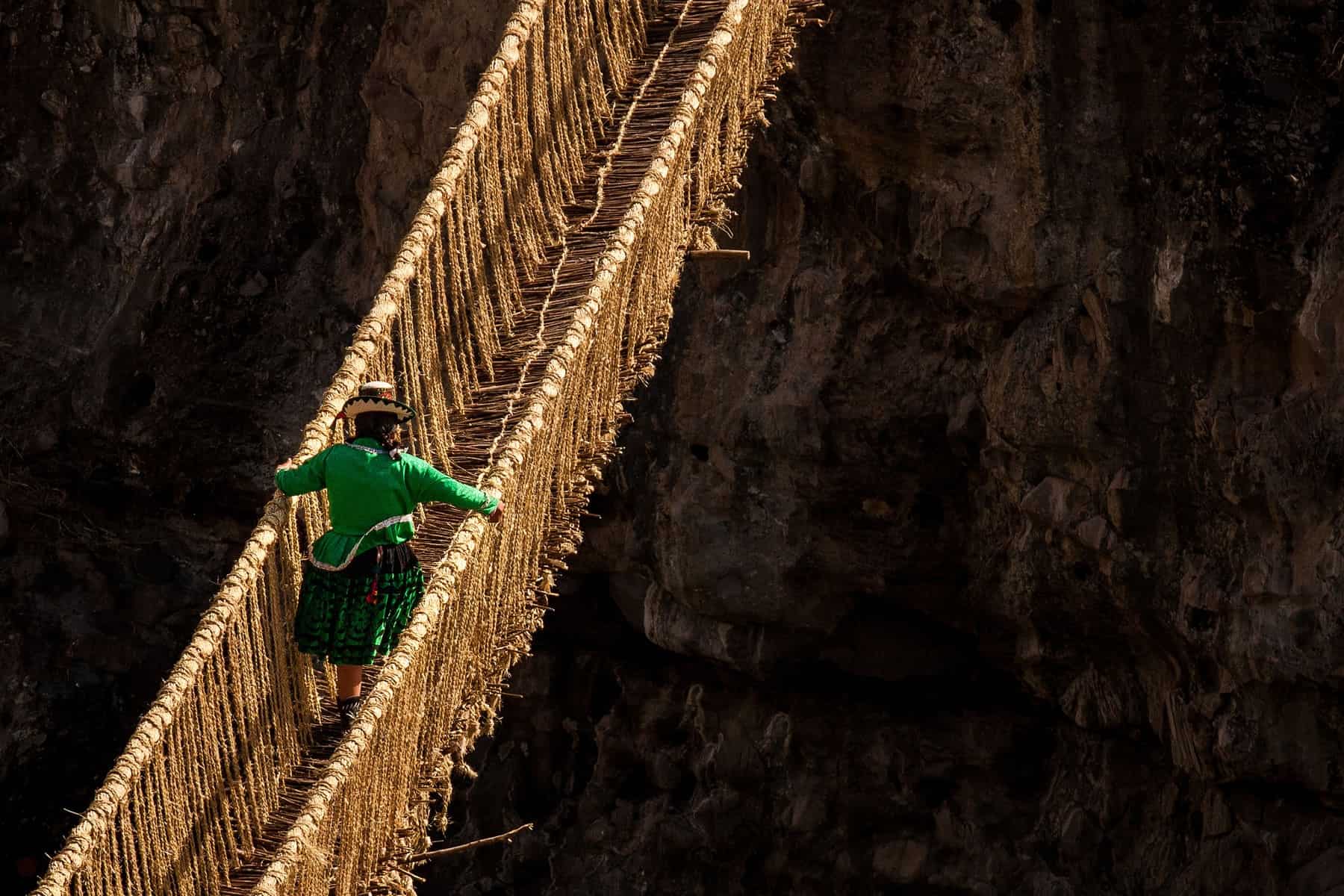
Every year, communities in southern Cusco come together to rebuild Q’eswachaka, one of the last remaining Inca rope suspension bridges.
Made entirely from ichu, a local type of grass, the bridge is rebuilt by hand using traditional techniques passed down through generations. The process takes several days and culminates in a community celebration with music, dancing, and festivities.
The Q’eswachaka tradition is a remarkable example of living Andean heritage and demonstrates that Peru’s cultural traditions are not simply preserved in museums – they continue to be practised by communities today.
Read more about the Q’eswachaka bridge-building festival or join our Q’eswachaka tour.
Andean New Year and Pachamama Celebrations

The Andean New Year is celebrated around June 21, when communities in the Andes celebrate the winter solstice and welcome a new agricultural and spiritual cycle.
August, meanwhile, is an especially important month for honouring Pachamama, or Mother Earth. Although these are separate occasions, both reflect the deep connection between Andean communities, nature, agriculture and the spiritual world.
For the Andean New Year, communities may hold ceremonies to welcome a new agricultural and spiritual cycle. Offerings, prayers, music, dancing and rituals honour the sun and Pachamama while giving thanks for the year ahead.
In August, families and communities make traditional offerings known as pagos a la tierra to honour Pachamama. These may include coca leaves, food, sweets, incense, flowers, chicha and other symbolic items. A paq’o, an Andean spiritual practitioner, may lead the ceremony and make offerings to Pachamama and the apus, the sacred mountain spirits.
These traditions are generally much quieter and more intimate than Peru’s large public festivals, but they offer a fascinating insight into Andean spirituality and the traditions that remain an important part of life in the Andes.
Cruz Velacuy – The Festival of the Crosses

- When: May
- Where: Cusco and the Andes
Cruz Velacuy, or the Festival of the Crosses, is celebrated across the Andean region. In Cusco, crosses are decorated with flowers and other ornaments before being taken to churches and sacred places.
The celebration combines Catholic symbolism with local Andean traditions and includes music, dancing, and community gatherings.
For visitors, it is another fascinating example of the way Indigenous and European traditions have become intertwined in Peruvian culture.
Peru’s Best Festivals for Travellers
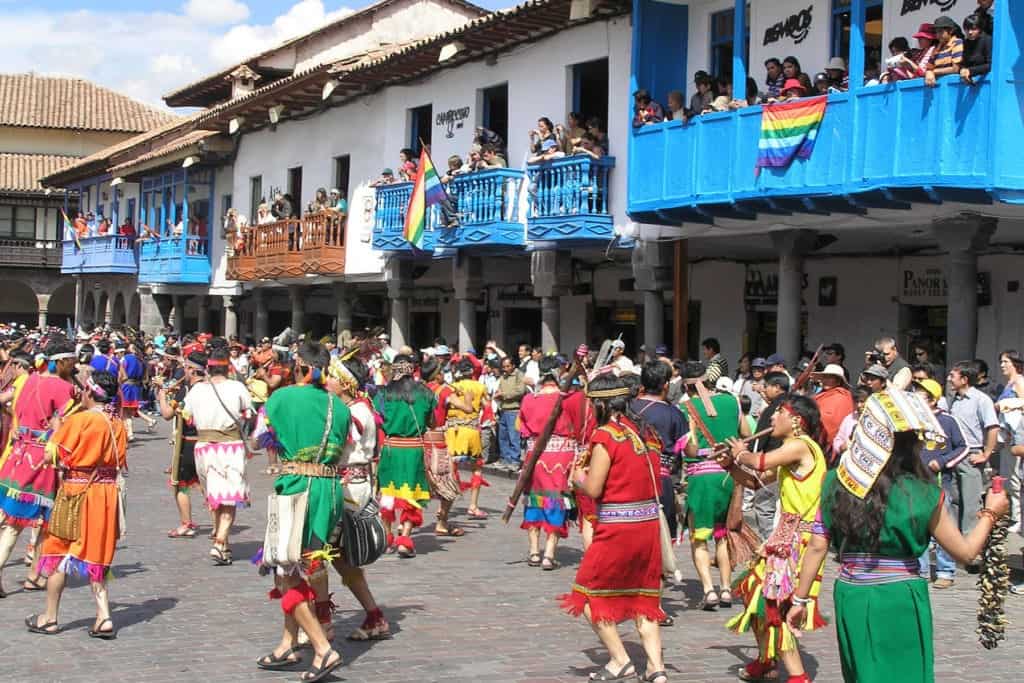
With so many celebrations taking place across the country, which Peruvian festival should you choose?
Best for Music and Dance
If you want spectacular costumes, energetic performances, and plenty of dancing, the Virgen de la Candelaria, Inti Raymi, Carnaval, and Virgen del Carmen are excellent choices.
Best for Spiritual and Religious Experiences
For travellers interested in Peru’s religious traditions, Qoyllur Rit’i, Semana Santa, Señor de los Milagros, and Cruz Velacuy offer very different experiences.
Best for Ancient Andean Traditions
Q’eswachaka and the Andean New Year celebrations provide a closer look at Indigenous traditions that remain part of everyday life in the Andes.
Best National Celebration
If you want to experience Peru celebrating as a nation, Fiestas Patrias is the obvious choice. Celebrations take place throughout the country, so you don’t need to travel to a specific destination to join in.
Festivals in Peru by Region
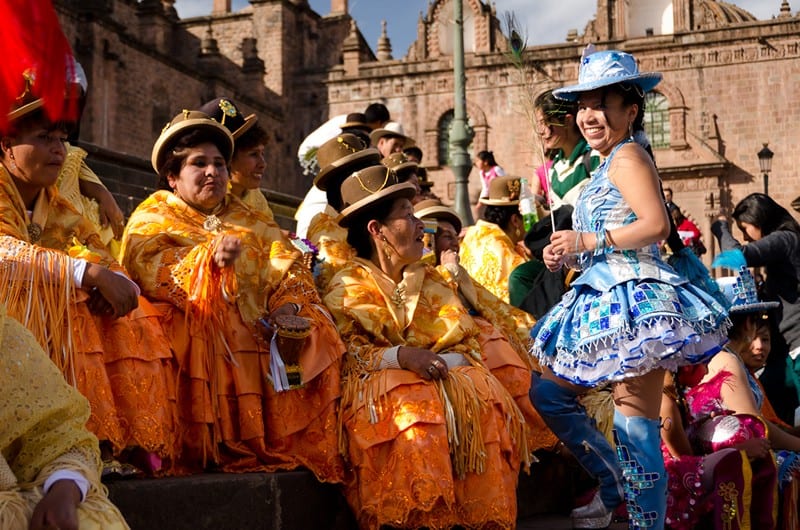
One of the best things about travelling in Peru is that each region has its own traditions and celebrations.
Cusco
Cusco is particularly rich in festivals, with major events including Inti Raymi, Qoyllur Rit’i, Virgen del Carmen, Cruz Velacuy, and Q’eswachaka. Read more about festivals in Cusco.
Puno
This city is best known for the spectacular Virgen de la Candelaria celebrations, but the wider Lake Titicaca region is also home to many traditional Andean celebrations.
Lima
Lima hosts some of the country’s largest national and religious events, including the Señor de los Milagros in October, while the celebrations for Santa Rosa in late August have large alfombras de flores (flower carpets), which are vibrant temporary murals covering the roads. They are created for the procession of Santa Rosa de Lima to pass over.
Ica
Ica is known for its lively regional celebrations, particularly the Fiesta de la Vendimia, or Ica Grape Harvest Festival, held around March. The celebration brings together wine and pisco producers, musicians, dancers, food, parades, and traditional festivities to celebrate the region’s grape-growing and winemaking traditions. It is considered an international harvest festival.
Ayacucho
Ayacucho is particularly famous for its Semana Santa celebrations, which attract visitors from across Peru.
Arequipa
The region around Arequipa has its own rich religious and cultural traditions, including the pilgrimage to the Virgen de Chapi.
Northern Peru
Northern Peru has a distinctive cultural identity, with celebrations such as the Marinera Festival in Trujillo showcasing the region’s music, dance, and traditions.
Can Tourists Attend Festivals in Peru?
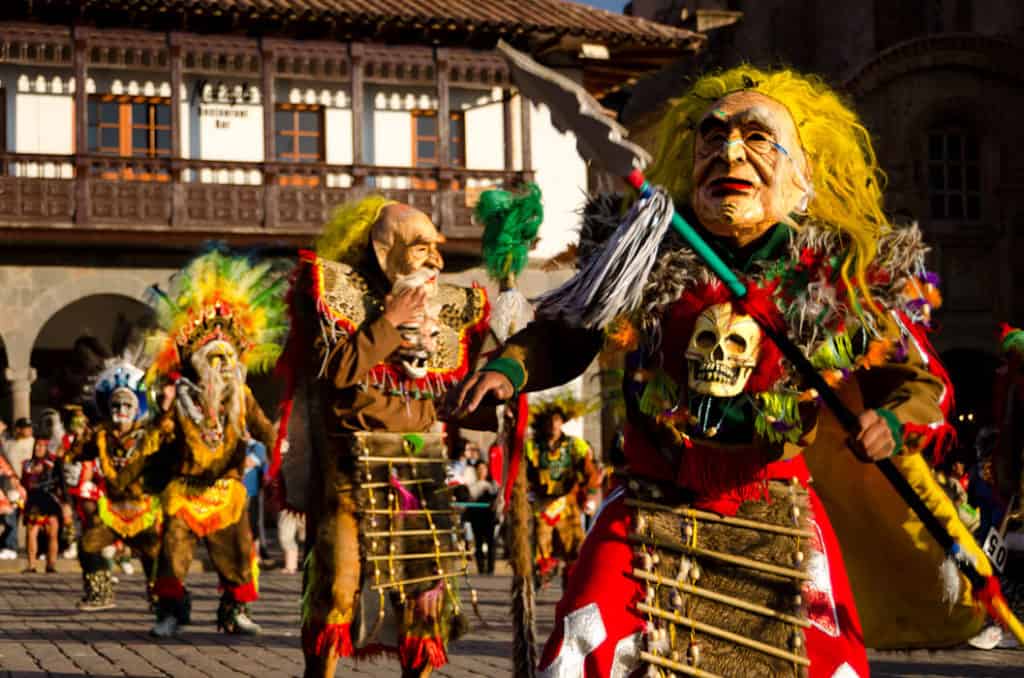
Yes. Many Peruvian festivals welcome visitors, and attending a celebration can be one of the most rewarding ways to experience local culture.
However, it is important to remember that these are living traditions rather than performances created specifically for tourists.
A few simple rules will help you enjoy the experience respectfully:
- Ask permission before photographing people, particularly during religious ceremonies or when taking close-up photos.
- Remember that some ceremonies are sacred and should not be treated as entertainment.
- Expect large crowds and plenty of noise during major festivals. In Peru, sound systems can sometimes be loud and less than perfect, with powerful speakers and distorted sound. If you are sensitive to noise, it is a good idea to bring earplugs.
- While these are highly religious events, they can also be accompanied by a lot of drinking and raucous behaviour; especially as the day wears on. Keep this in mind if you don’t enjoy that kind of thing; its not particularly suitable for children.
- Book accommodation and transportation early for popular celebrations.
- Bring appropriate clothing and comfortable shoes, particularly for outdoor events and high-altitude festivals.
- Check the dates carefully, as some festivals follow the Catholic or lunar calendar and therefore change from year to year.
When Is the Best Time to Experience Festivals in Peru?
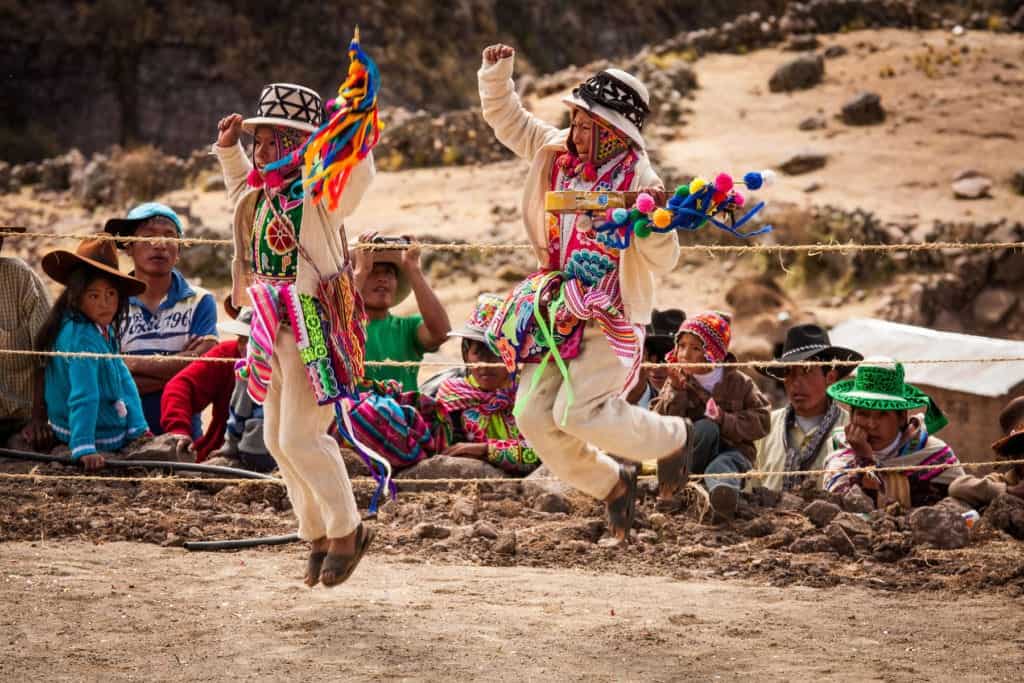
There isn’t one single best time to experience festivals in Peru because celebrations take place throughout the year.
May and June are ideal for travellers interested in traditional Andean celebrations, while June and July are especially busy around Cusco thanks to Inti Raymi and other local festivities.
October is a fascinating time to visit Lima for Señor de los Milagros, while November offers the opportunity to experience traditional All Saints’ Day celebrations.
If you want to plan your trip around a specific festival, always check the dates before booking, as many Peruvian celebrations change from year to year.
For a more detailed month-by-month overview, see our Peru Cultural Calendar.
Experience Holidays in Peru Beyond Machu Picchu
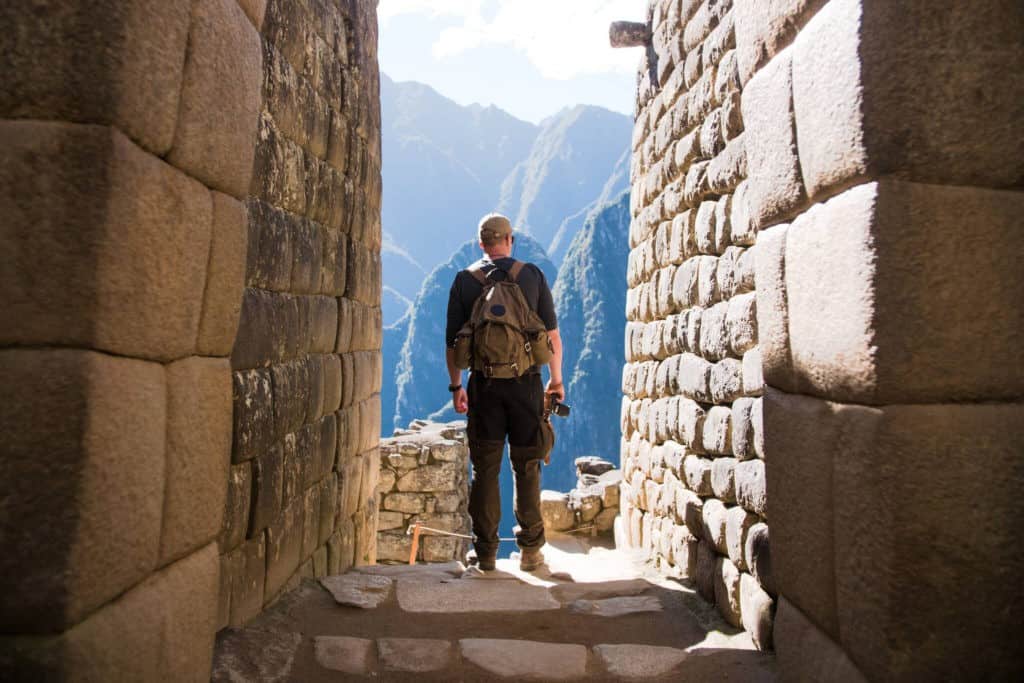
Visiting Machu Picchu is an unforgettable part of any trip to Peru, but the country’s culture extends far beyond its famous archaeological sites. Peru’s festivals offer a chance to experience the country through the traditions of the people who call it home.
So when planning your Peru adventure, don’t just look at the sights. Check the festival calendar, too. You might discover that one of these celebrations becomes one of the most memorable parts of your trip.
And if you’re looking for a way to combine Peru’s famous archaeological sites with a deeper cultural experience, explore our Peru tours and discover how we can help you experience the country beyond the usual tourist trail.