Festivals and holidays in Cusco are an integral part of the city’s rich cultural tapestry and offer a fascinating insight into the heritage of Peru. One of the many reasons to explore Cusco is that traditional events are held throughout the year, bringing locals and tourists together to celebrate the city’s rich cultural traditions. While Cusco is known around the world as the jumping-off point for the Inca Trail, linger a little longer in the region and you’ll be treated to a sensory feast of colour, dance, music and traditional celebrations.
So, after you’ve put your Machu Picchu ticket to good use and explored the ancient Inca citadel, return to Cusco and immerse yourself in the city’s vibrant festival scene. Or, use the festivals as a great opportunity for acclimatisation before your trek!
Continue reading our guide to festivals in Cusco for all the details you need to know…
June is an Important Festival Month in the City of Cusco
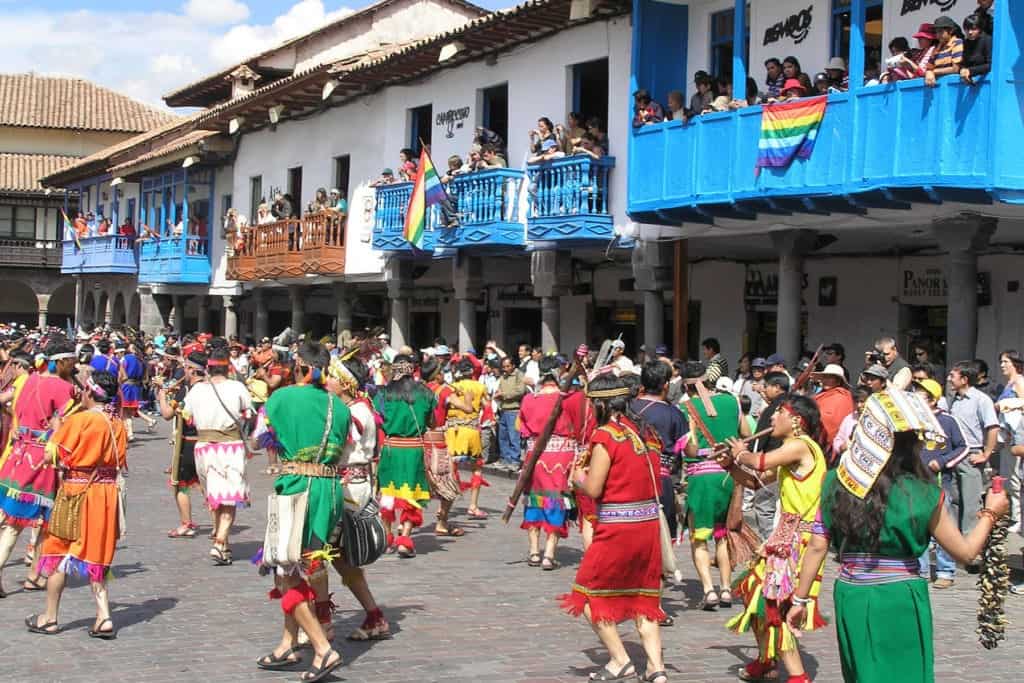
Cusco is alluring at any time of year, but in June this ancient Andean city really comes into its own. This is a month of almost back-to-back festivals in Cusco, when lively parades fill the streets and the historic centre comes alive with music, dancing, traditional costumes and religious celebrations.
Beneath the blue skies and bright Andean sun, the main square of Cusco is filled with colour, while music and dancing spill into the surrounding streets. If you’ve ever wanted to dig a little deeper into Andean culture and experience some of the most traditional festivals in Cusco, Peru pulls out all the stops in June. Read our guide on the best time to visit Cusco.
There are dozens of festivals and traditional celebrations across Cusco and the surrounding region, and it can be tough deciding which to attend. To help you choose, we’ve pulled together the most fascinating events that attract visitors from across Peru and around the world.
To join one of our specially crafted festival tours, have a look at our Cultural Treks in Peru. And if you’re looking for more inspiration for your Cusco itinerary, feel free to reach out and we help you create your Peru trip.
If you’d like to discover more festivals in Peru in general, check out our complete guide. You can also explore our cultural events calendar for a month-by-month overview of festivals and celebrations throughout Cusco and the country.
Inti Raymi Festival (June 24): Procession in Cusco
When: 24th June
Where: Q’oricancha (Sun Temple), Plaza de Armas of Cusco, and Sacsayhuaman
Inti Raymi is one of the most famous festivals in Cusco and is attended by thousands of visitors and local residents every year. If you feel a little hesitant about “fitting in” at festivals in Cusco, Inti Raymi is a good place to start, as the modern celebration is designed to welcome visitors from everywhere.
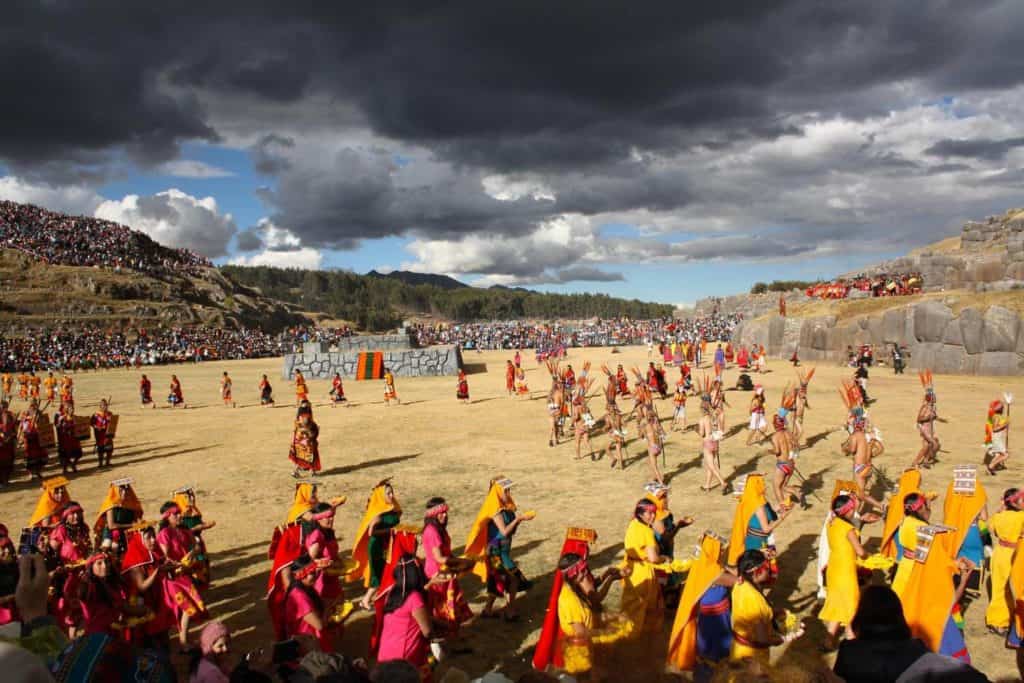
Known as the Festival of the Sun, Inti Raymi is a modern reenactment of an important ritual celebrated by the Incas in honour of Inti, the Sun God. he celebration takes place on 24 June and is closely associated with the winter solstice in the Southern Hemisphere and the traditional Andean agricultural calendar.
Hundreds of performers take part in the ceremony, wearing elaborate costumes and recreating elements of Inca history and religious traditions. The celebration begins at Q’oricancha before continuing to the Plaza de Armas and finally to the archaeological site of Sacsayhuaman, where the main theatrical ceremony takes place.
Find out more about the Inti Raymi Festival here. To join one of our specially crafted tours, have a look at our Inti Raymi Festival tour.
Corpus Christi in Cusco
When: 60 days after Easter Sunday
Where: Plaza de Armas, Cusco
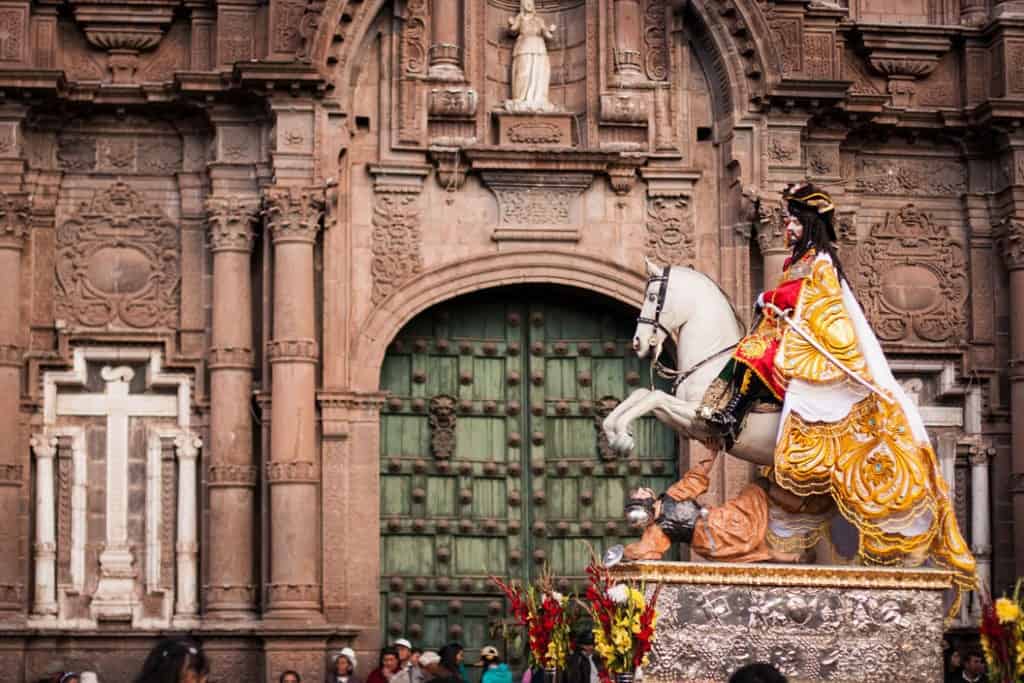
Of all the fiestas de Cusco, Corpus Christi is one of the most important and visually spectacular. Like many celebrations in the region, these festivities bring together Catholic traditions and older Andean beliefs and practices.
The festival developed during the colonial period, when Catholic religious celebrations became intertwined with existing Andean ceremonial traditions. Today, the main celebration sees 15 saints and virgins carried in procession through the streets of Cusco before gathering in the Plaza de Armas.
The statues are then taken into Cusco Cathedral, where they traditionally remain for several days before being returned to their respective churches. Music, dancing and elaborate costumes fill the streets as the people of Cusco accompany their patron saints into the historic centre.
If trying cuy (guinea pig) is on your list, Corpus Christi is also an interesting time to experience this traditional dish. During the celebrations, food stalls and restaurants serve regional specialities, and the aromas of roasted cuy are hard to miss.
Top tip: For the best vantage point, book a table at one of the balcony restaurants around the Plaza de Armas and enjoy front-row seats to the celebrations.
Qoyllur Rit’i
When: Begins on the Sunday before Corpus Christi (May or beginning of June)
Where: Sinakara Valley, in the Ausangate region near Cusco
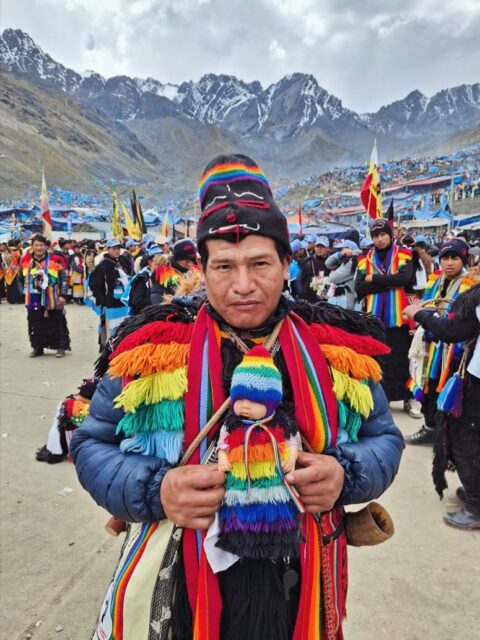
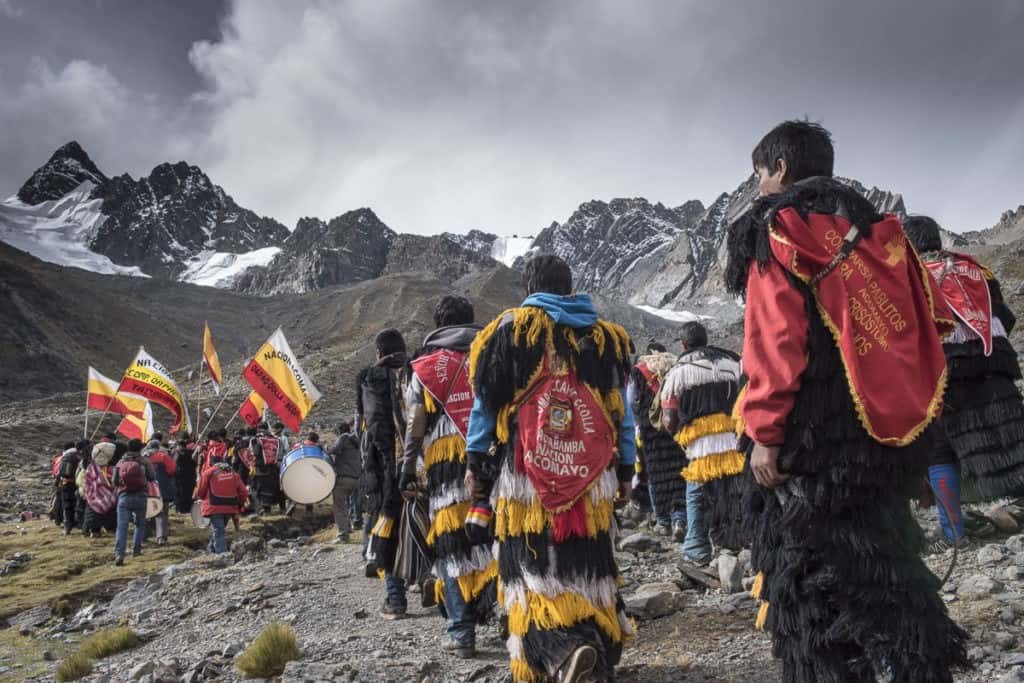
Known as the “Snow Star Festival”, Qoyllur Rit’i is one of the most extraordinary religious pilgrimages. Held in the high Andes, the pilgrimage brings together thousands of Indigenous and Quechua pilgrims and performers from communities across southern Peru.
Groups of dancers in traditional dress leave their communities several days before Corpus Christi and make their way to the Sanctuary of the Señor de Qoyllur Rit’i in the Sinakara Valley, beneath the snow-capped mountains of the Ausangate region.
This important event combines Catholic beliefs with Andean cosmology and traditions. The name Qoyllur Rit’i is associated with the “snow star”, while the pilgrimage centres on the image of the Lord of Qoyllur Rit’i. The mountains, celestial bodies and natural world all play an important role in the spiritual traditions surrounding the pilgrimage.
Keep your eyes peeled for the colourful groups of dancers, the moonlit processions and the alacitas craft market, where pilgrims purchase miniature objects and offerings associated with their hopes for the future.
Inspired to experience this extraordinary pilgrimage yourself? We offer 2-day Qoyllur Rit’i tours and 4-day Qoyllur Rit’i tours.
Qeswachaka

When: Second Sunday in June
Where: Qeswachaka, 4 hours from Cusco
Fancy experiencing one of the more unusual Cusco festivals? The Inca Empire was once connected by an extensive network of rope suspension bridges, woven by hand from grasses and other natural materials. Today, Qeswachaka is one of the last surviving examples of this ancient Andean rope-bridge tradition.
The bridge stretches across the Apurimac River in a remote part of the Cusco region, beyond the Sacred Valley, and is rebuilt by local communities every June. The tradition has been passed down through generations, with community members using the same basic techniques and natural grass fibres to create the bridge by hand.
The rebuilding ceremony lasts several days and is accompanied by traditional music, dancing, food and community celebrations. More than simply a feat of engineering, the annual reconstruction is an important expression of community cooperation and cultural continuity.
Discover more about the Qeswachaka bridge-building festival here. Apus Peru also offers a special Q’eswachaka tour for travellers who want to experience this fascinating tradition.
Virgen del Carmen Festival
When: 15th-17th July
Where: Paucartambo, around 3 hours east of Cusco
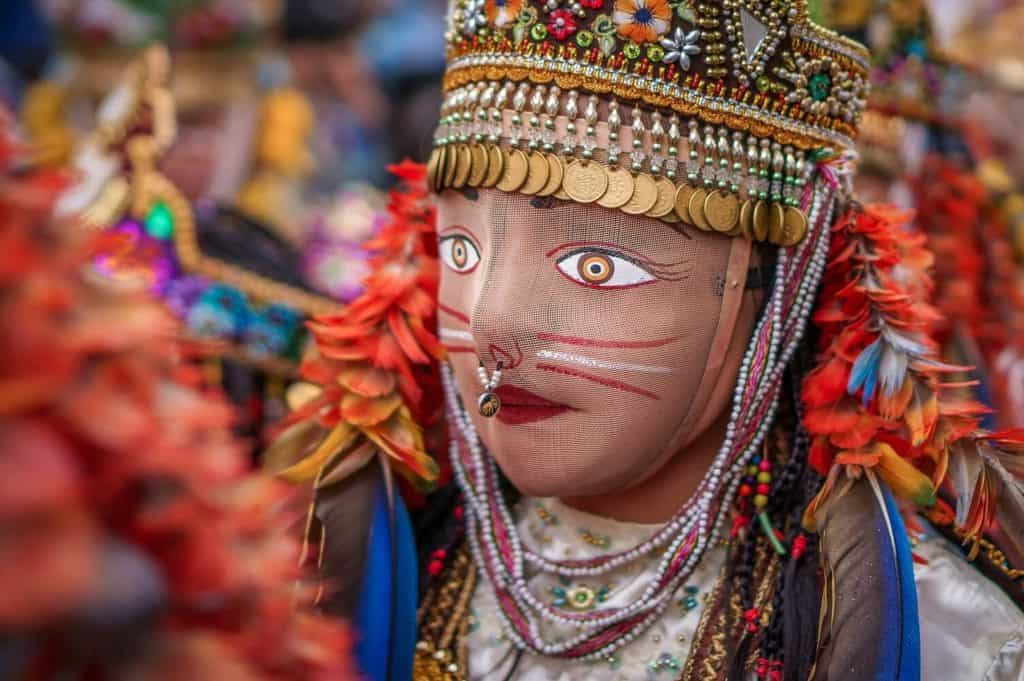
The festival of the Virgen del Carmen is another intriguing event often included among the major festivals of the Cusco area, although it takes place in the small town of Paucartambo rather than in Cusco itself. Every July, visitors flock here from across Peru and beyond to witness one of the region’s most spectacular celebrations, sometimes described as the Mardi Gras of Cusco.
Dancers in traditional dress fill the streets, performing choreographed dances that reflect different aspects of Peruvian history, society and Andean culture as they accompany the Virgen del Carmen through the town.
Don’t forget to look up during your visit to see dancers performing on rooftops and balconies. The celebrations become particularly dramatic as the procession makes its way towards the cemetery, with acrobatic performances and a spectacular firework display adding to the excitement.
Eventually, the celebrations turn towards ceremonies honouring the souls of the dead. It’s a colourful, energetic and deeply traditional event, and one of the most memorable festivals you can experience in the wider Cusco region.
Learn more about the Virgen del Carmen Festival and Tres Cruces de Oro in our blog. Want to visit this incredible festival? Have a look at our Virgen del Carmen Festival tour.
Cusco Carnival

When: February or March, depending on the date of Easter
Where: Cusco and surrounding communities
Carnival brings colour, music and plenty of playful chaos to Cusco before Lent begins. During the celebrations, locals and visitors take part in water fights, colourful games and traditional festivities, while neighbourhoods and communities organise their own celebrations.
If you’re out and about during Carnival, be prepared to get wet! People may splash you with water or cover you in white foam, and simply saying “no” may not always stop them. If you’re not keen on getting soaked, keep your distance from groups taking part in the water fights and consider carrying a plastic poncho for protection. Just be warned – wearing one can also make you an even more obvious target for a good soaking!
One of the most distinctive traditions is the yunza, in which people gather around a decorated tree and dance before taking turns trying to cut it down. When the tree finally falls, the person responsible for the final cut is traditionally expected to host the following year’s celebration.
Carnival is a lively way to experience a different side of Cusco’s local culture and is particularly enjoyable if you want to see how celebrations extend beyond the main tourist attractions.
Religious Festivals: Easter and Semana Santa
When: March or April, depending on the year
Where: Cusco
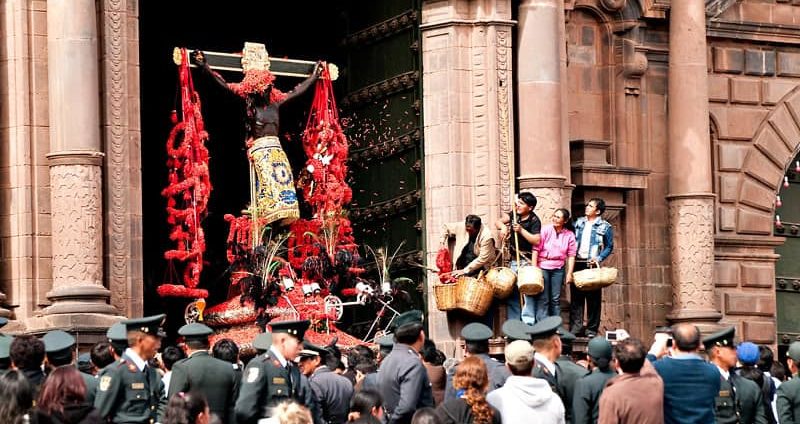
Holy Week and Easter are among the most important religious celebrations in Cusco. If you want to experience the city’s Catholic traditions alongside elements of Andean culture, Semana Santa (holy week in Cusco) offers a fascinating insight into the region’s religious heritage.
One of the most important and religious events takes place on Holy Monday, when the Procession of the Lord of the Earthquakes sees the image of the Señor de los Temblores carried through the Plaza de Armas. According to local tradition, the image was credited with protecting Cusco during a devastating earthquake in 1650, and it has been venerated by the city ever since.
The procession is followed by several days of religious observances, including Good Friday processions and traditional foods, before Easter Sunday brings the celebrations to a close.
Find out exactly what takes place during Easter in Cusco.
Pachamama Raymi – Festival of Mother Earth

When: 1st August
Where: Cusco and villages across the Andes
August is an important month for honouring Pachamama, or Mother Earth, throughout the Andes. On 1 August, families and communities may take part in ceremonies and offerings known as pagos a la tierra, paying tribute to Pachamama and asking for protection, prosperity and a good year ahead.
Offerings can include coca leaves, flowers, food, drink and other symbolic items. Andean mountain deities, known as apus, may also be honoured as part of these traditions.
In Cusco and surrounding communities, you may notice other signs of the celebrations too, including yellow decorations and confetti. These traditions offer a quieter but deeply meaningful way to learn about the spiritual relationship between Andean communities and the natural world.
Santurantikuy and Christmas in Cusco

When: 24th-25th December
Where: Plaza de Armas, Cusco
Christmas in Cusco combines Catholic traditions with local customs, and Christmas Eve is the main focus of the celebrations. On 24 December, the historic city centre becomes home to Santurantikuy, one of the largest traditional Christmas markets in Peru.
Local artisans and vendors set up stalls around the Plaza de Armas selling religious figures, Baby Jesus figurines, handmade crafts and traditional materials used to create nacimientos, or nativity scenes. You’ll find everything from mosses and native grasses to miniature figures and decorations used to bring Christmas scenes to life.
During the weeks leading up to Christmas, chocolatadas are also held in Cusco and surrounding communities. These community events involve sharing hot chocolate, sweets and bread, often with children and older people.
Read more about celebrating Christmas in Cusco.
New Year in Cusco

When: 31st December
Where: Plaza de Armas, Cusco
New Year in Cusco combines midnight celebrations with traditional customs and beliefs about bringing good fortune into the year ahead.
There are several traditions associated with New Year in Peru. Wearing yellow clothing or underwear is believed to attract happiness and luck, while burning or discarding old objects can symbolise leaving the past behind. In some places, effigies representing the old year are also burned as part of the celebrations.
In Cusco, the Plaza de Armas becomes a lively gathering place at midnight, with locals and visitors welcoming the New Year together.
Discover the other unique customs associated with New Year in Peru here.
Which Festivities of Cusco Do You Want to Experience?

Peru itineraries are often focused on sightseeing in Cusco, visiting Machu Picchu and exploring the Andes, but experiencing a local festival can give you a very different perspective on the region. Whether you visit during the busy festival season in June or at another time of year, there is almost always the possibility of encountering a celebration in Cusco and the Sacred Valley.
If you’d like to include a visit to one of these festivals during your Peru trip, just say the word and we’ll help you experience the celebrations. For even more local events around the country, check out our Cultural Events Calendar, with festivals and traditional celebrations organised by month.