Peruvian fruits and food in Peru boast an astonishing variety, thanks to the country’s incredible biodiversity, diverse climates, and the many regions where farmers cultivate tropical and Andean fruits. We’re excited to introduce you to some of the most unique and delicious fruits from Peru. Get ready to enjoy the incredible flavors of Peruvian fruits with our list!
The Secret Behind Popular Exotic Fruits in Peru
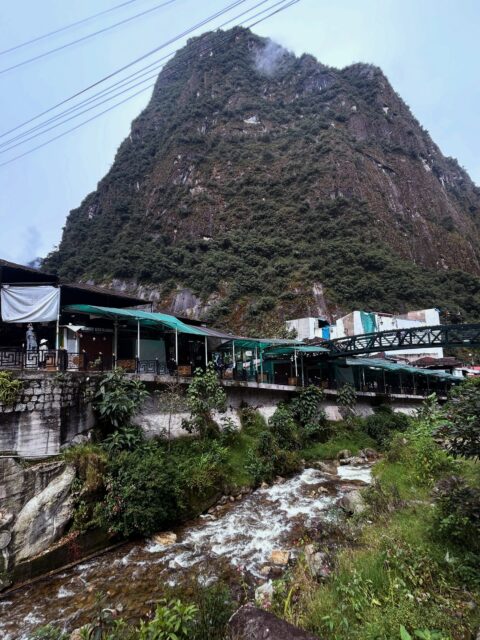
Peru’s unique fruits owe their exceptional diversity and quality to the country’s rich tapestry of climates. From the coastal plains to the high-altitude mountains peaks and the dense Amazon rainforest, Peru is one of the most biodiverse countries worldwide.
Peru provides multiple ecosystems with fertile ground for a wide array of fruits to flourish. Along the coast, mild temperatures and fertile soils nurture citrus fruits, mangoes, and avocados. In the Andean highlands, indigenous treasures like lucuma and aguaymanto thrive in the cool mountain air. Meanwhile, the lush Amazon rainforest in Peru offers a bounty of exotic delights such as camu camu and cocona.
Combined with Peru’s long-standing agricultural traditions and commitment to sustainable farming, this natural abundance yields fruits of unparalleled taste and diversity.
Aguaje
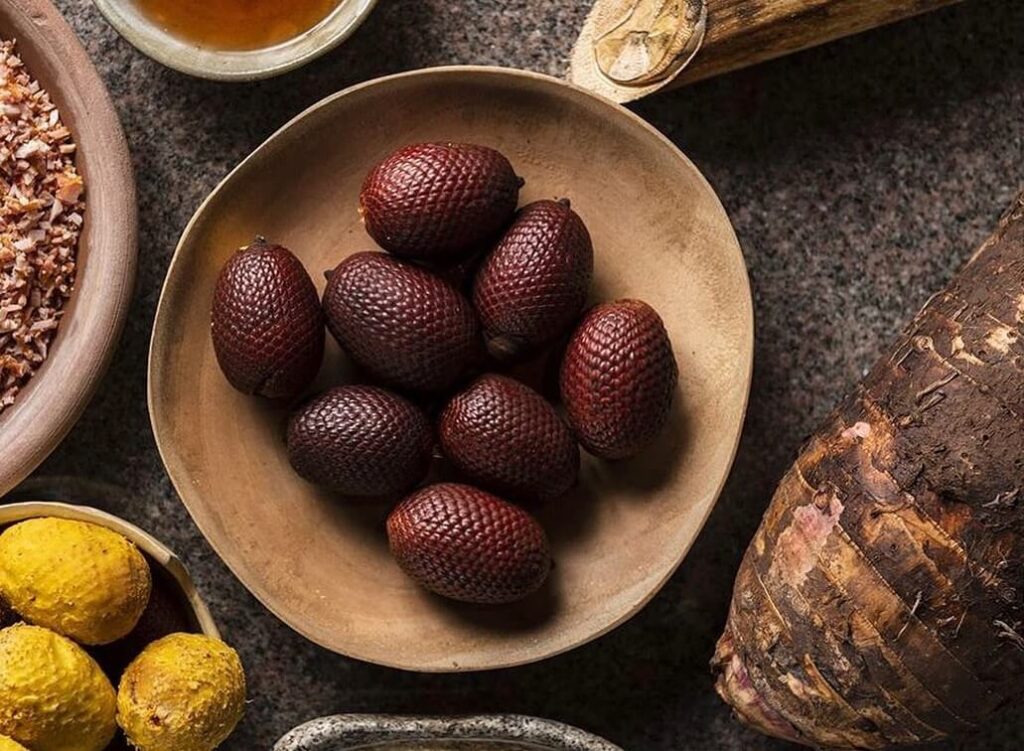
Aguaje, pronounced ah-gwah-HEH, is the miracle fruit native to the Peruvian Amazon rainforest and is cherished for its sweet, creamy flesh and orange color. It’s commonly used to make refreshing juices and desserts.
I’ve never actually tried Aguaje fruit, but I have had the ice cream, and it is incredible! Whenever I’m craving something sweet but different, Aguaje ice cream hits the spot perfectly. It’s got this subtle tanginess and hints of sweetness that remind me of sweet potatoes and carrots. Seriously, it’s like nothing else I’ve ever tasted, and I just can’t get enough of it!
Aguaje isn’t just tasty – it’s also super good for you! This nutritious fruit is loaded with vitamins A and C, as well as antioxidants, which can help keep your skin glowing and support your immune system. Plus, in the region of Peru, Aguaje is deeply rooted in culture. It has been used for generations for its medicinal properties and is seen as a symbol of fertility and vitality by indigenous communities.
Dragon Fruit
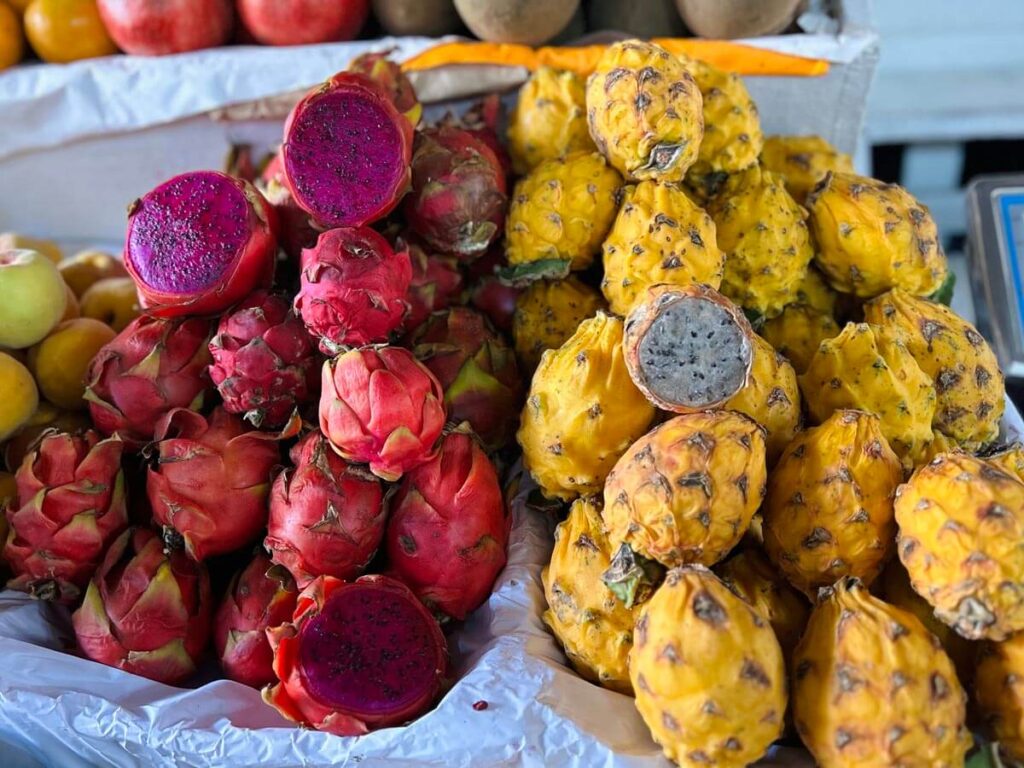
Pitaya, commonly known as dragon fruit and pronounced pee-TAH-yah, is a tropical delight that’s downright delicious! Its bright pink or yellow skin is eye-catching, and inside, you’ll find red or white flesh filled with tiny seeds.
The taste is wonderfully sweet, akin to a blend of kiwi and pear. Packed with antioxidants, vitamins, and minerals like vitamin C and B, iron, and magnesium, this sweet fruit isn’t just tasty – it’s also great for your health, helping to keep your heart healthy and reduce inflammation. Whether you enjoy it fresh, toss it into salads, or blend it into smoothies, this fruit from the Amazon adds a burst of tropical flavor to any dish.
But a word of caution: don’t overdo it! The positive effects on the digestive system are quite impressive. Eating too much dragon fruit can speed up your digestion. Trust me, I learned this the hard way after indulging in three of them at the market. Let’s just say it was quite the adventure trying to find the nearest restroom!
Chirimoya
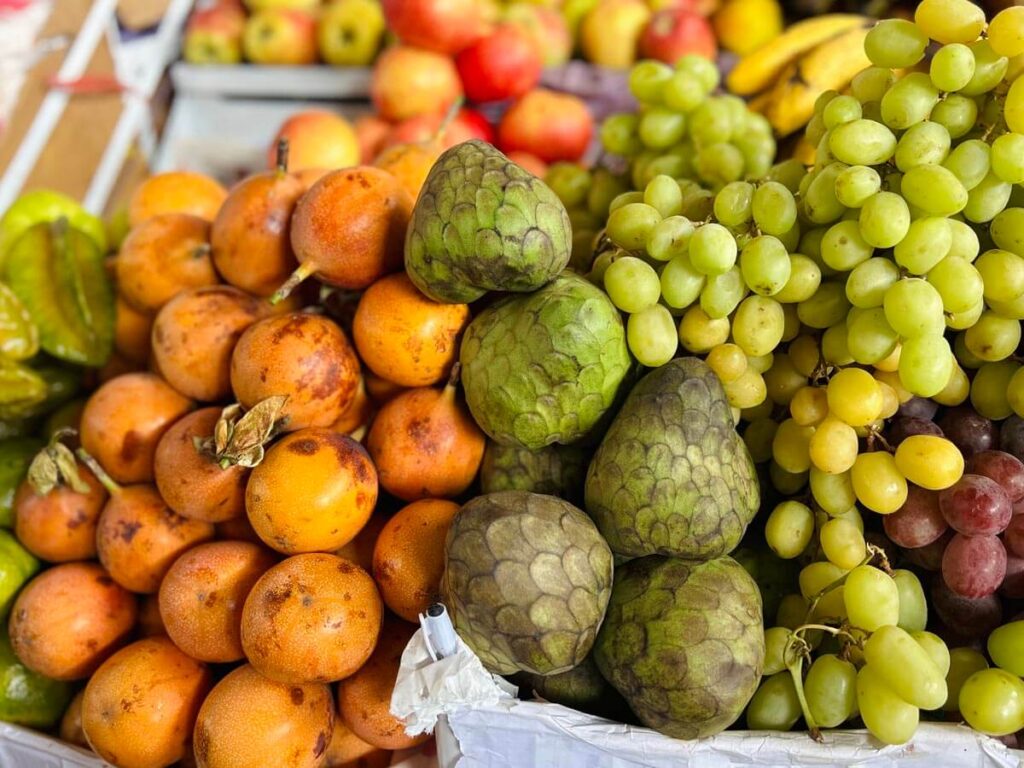
What is a Cherimoya fruit? Chirimoya is pronounced as chee-ree-MOH-yah, and also known as a custard apple or cherimoya, is a tropical fruit native to the Andes region of South America, particularly Peru, Ecuador, and Colombia. It has a green, scaly outer skin and soft, white, custard-like flesh inside, which is sweet and fragrant with a flavor often described as a combination of pineapple, banana, and vanilla.
I personally love this tasty Andean fruit too, but chirimoya is very sweet, so it’s not the type of fruit you can snack on continuously.
Granadilla
Granadilla, pronounced grah-nah-DEE-yah, is a national fruit that belongs to the passionfruit family. This fruit has a tough outer shell with a round shape, and is well-known in Peru. It turns from green to orange or yellow when ripe.
Inside, the fruit contains juicy, gelatinous pulp filled with small black seeds. Granadilla has a sweet and tangy flavor, often likened to a combination of pineapple and banana. It’s commonly eaten fresh by scooping out the pulp with a spoon or sucking it directly from the fruit.
By the way, it’s the perfect Peru fruit to take on a hike because of its tough outer shell; you can transport it easily. Just toss it into your backpack, and it’ll stay intact. Plus, it’s incredibly refreshing during a hike!
Bananas
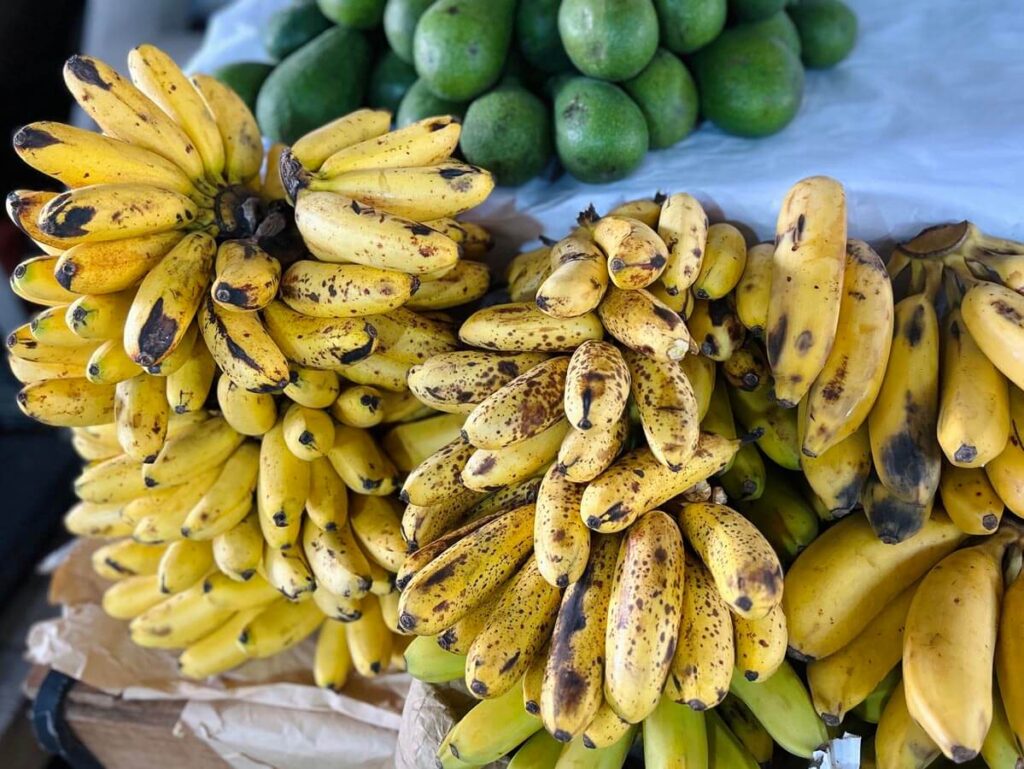
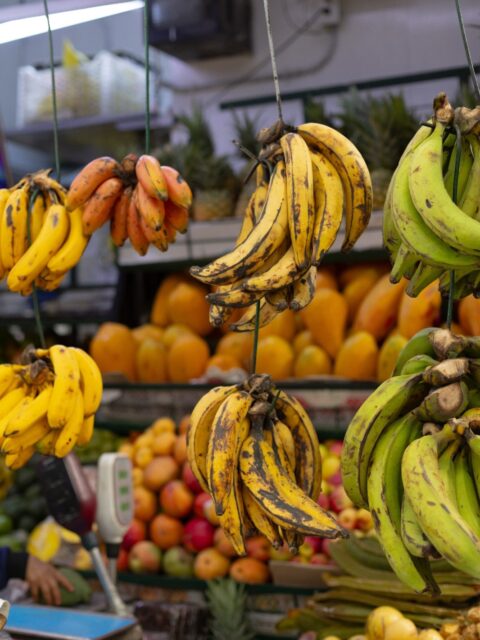
Please don’t underestimate fruits like bananas! In Peru, you can discover a wide variety of banana types. There’s even the plantain variety, which you can fry and enjoy with savory dishes.
Among my personal favorites are the petite bananas, boasting a unique and more flavorful taste. They are ideal for travel due to their tougher skin, ensuring they remain fresh for longer periods. And don’t be fooled by their outward appearance – even if they’re black and ugly on the outside, they’re still incredibly delicious and you find a fresh fruit on the inside!
Lúcuma
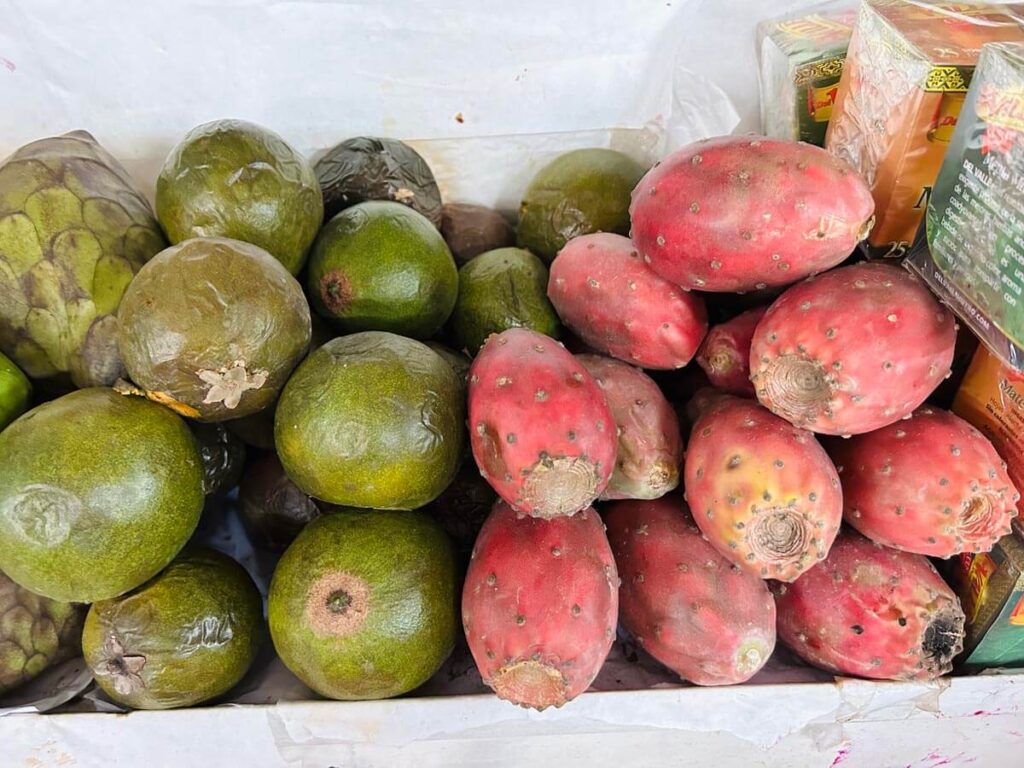
Considered the national fruit of Peru, Lúcuma (pronounced LOO-koo-mah) has a green exterior and a bright orange-yellow flesh with a unique and exotic flavor profile. Lucuma is often called the “gold of the Incas” because of its yellow flesh and its importance in pre-Columbian Peru. This subtropical fruit is highly prized for its delicious taste and is commonly used in Peruvian desserts and ice creams. It is rarely eaten raw. Besides, Lúcuma fruit is often regarded as one of Peru’s superfoods, celebrated for its versatility and health benefits.
When I first tasted this miracle Peru fruit, it was quite a weird experience. I couldn’t quite make up my mind about it. Lúcuma is a fruit with a sweet flavor, like a mix of chocolate, maple syrup and vanilla, but at the same time, it was remarkably creamy, almost like cooked sweet potato. While I absolutely adore lucuma ice cream and desserts, I realized that enjoying this sweet and creamy fruit raw wasn’t my thing.
Tuna
Commonly known in English as a “prickly pear” and pronounced as TWO-nah, tuna is the edible fruit of a cactus. This fruit is also native to the Andean valleys of Peru, and is perfect for making full fruit compote, or enjoying on their own.
Tuna season in Peru typically occurs during the warmer months, which are generally from December to March. During this period, you can find Mamitas selling them everywhere on the street. The taste and consistency remind me a bit of watermelon; it is very refreshing on warm days!
Pepino Dulce
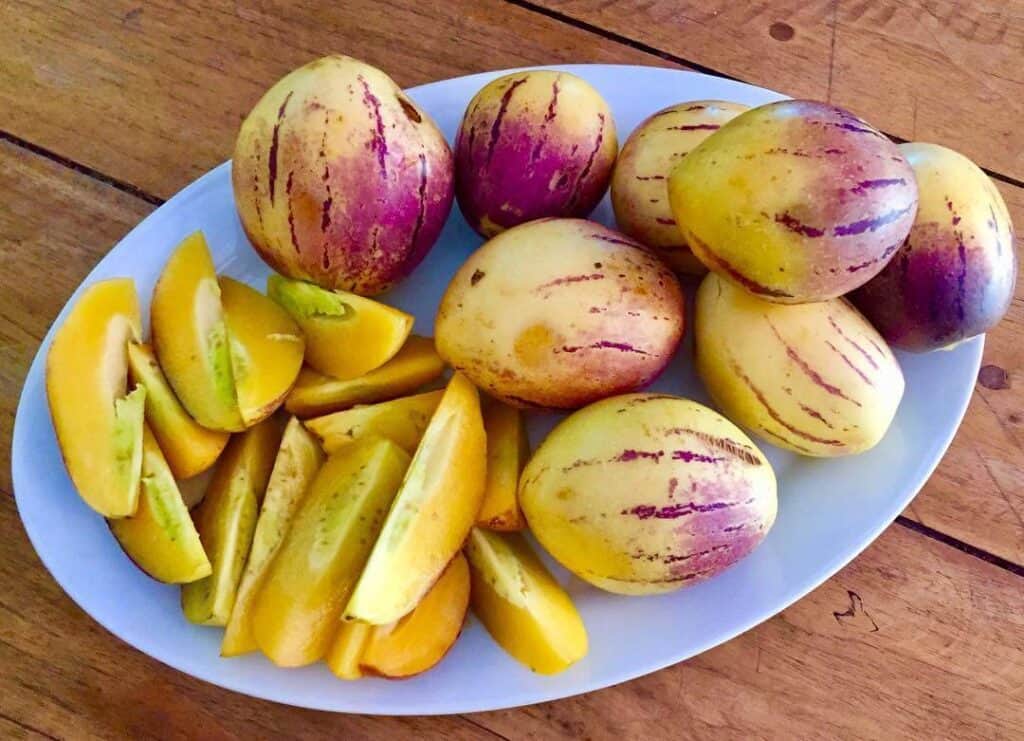
The Pepino dulce fruit (peh-PEE-noh DOOL-seh) is native to Peru, and also known as sweet cucumber or melon pear. It is a Amazonian fruit not related to cucumbers but is actually nightshade fruit related to the tomato and eggplant.
This fruit reminds me of an apple, with a texture that is slightly more refreshing. Pepino dulce has a mild, sweet flavor with hints of honeydew melon, cucumber, and cantaloupe, making it an enjoyable snack. It can be eaten raw, sliced, or added to fruit salads, smoothies, and desserts.
Peruvian Limes
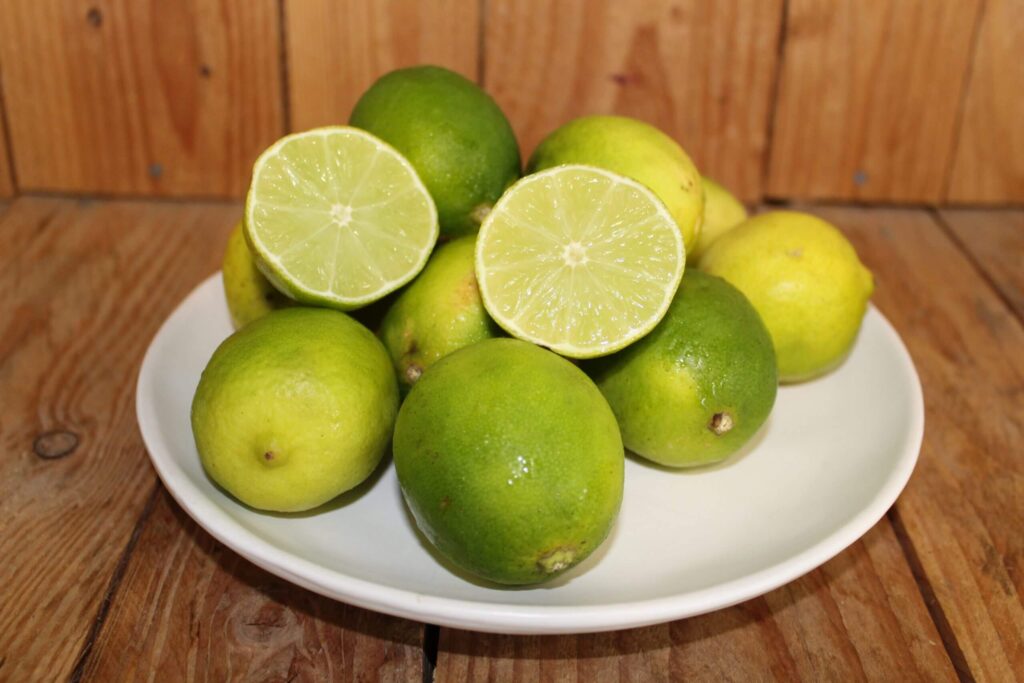
The Peruvian limón, or lime, is perhaps the fruit I use most every day. Whether it’s for making juice, homemade lemonade, or simply to upgrade my avocado bread, it’s a staple in my kitchen!
Whether squeezed over ceviche for a refreshing acidity or incorporated into marinades, dressings, and beverages for an extra zing, Peruvian limón plays a crucial role in balancing flavors.
Passion Fruit
Maracuyá (mah-rah-KOO-yah), also known as the traditional Peruvian passion fruit, is a round or oval-shaped with a tough outer skin that can be yellow or purple when ripe. Inside, you’ll find juicy pulp filled with small black seeds.
While it can be too sour to eat raw, maracuyá is perfect for making juices, even without adding any other fruit! One of the best cocktails is made with passion fruit: Maracuyá Sour! It is definitely a miracle fruit for those wanting delicious desserts with a unique flavor.
And here’s a tip: if you’re in Peru, try a maracuyá cheesecake – it’s a delicious combination of sweet and sour flavors!
Tumbo
Tumbo, also known as banana passionfruit and pronounced as TOOM-boh, belongs to the passionfruit family and is characterized by its elongated shape, resembling a small banana. This fruit of the Andes valleys has a thick, yellow-orange skin and contains juicy, aromatic pulp filled with small black seeds.
The flavor of tumbo is unique, combining sweet and tart notes with a subtle tropical aroma. It’s often described as a blend of passionfruit and banana flavors, with hints of citrus. This Andean valley fruit is commonly used to make juices, smoothies, and desserts.
Aguaymanto
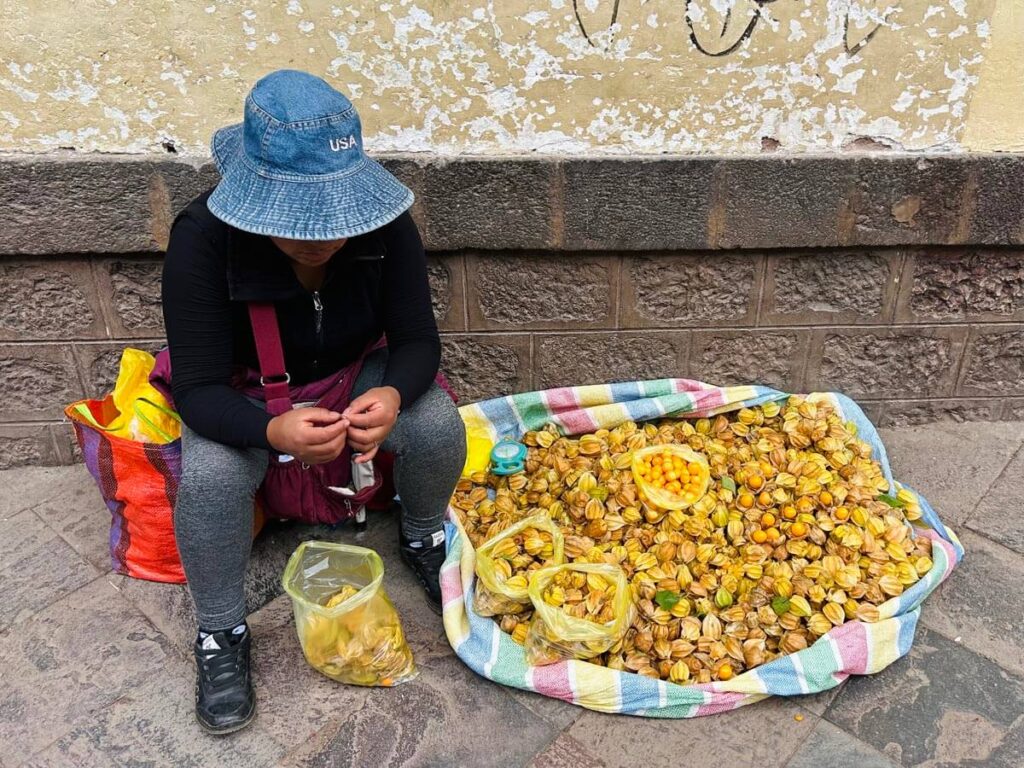
Also known as goldenberry and pronounced ah-gwah-ee-MAHN-toh, this fruit is a small, round fruit that grows inside a papery husk. Aguaymanto has a tangy-sweet flavor, reminiscent of a combination of pineapple and tomato, with a hint of citrus. I love eating these fruits raw as a snack or pour on top of yogurt for an extra burst of flavor.
Cacao Fruit
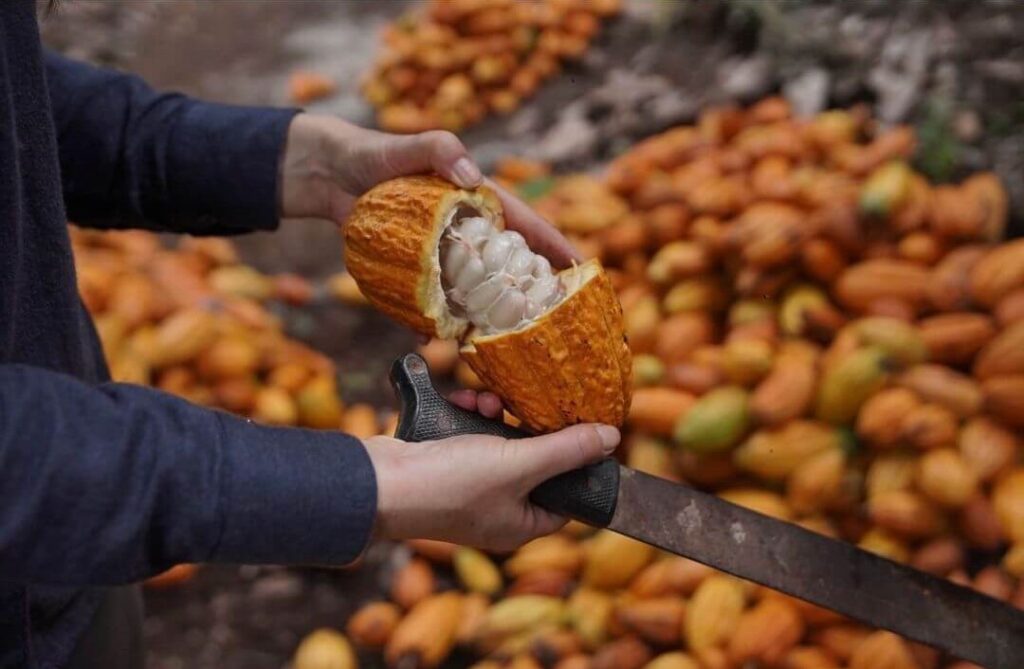
Cacao isn’t just about chocolate – the fresh cacao fruit is a delicious tropical treat in its own right. It grows in large, football-shaped pods that emerge directly from the trunk and main branches of the cacao tree. As the pods ripen, they turn shades of yellow, orange, or red and develop a thick, leathery skin.
Inside, you’ll find rows of cacao beans surrounded by a soft, white pulp. The pulp is surprisingly sweet and juicy, with a refreshing flavor that many compare to a mix of mango, pineapple, lychee, and citrus. In cacao-growing regions of Peru, it’s common to suck the sweet pulp from the beans as a snack.
The beans themselves are a different story. They are bitter and aren’t eaten raw. Instead, they are removed from the fruit and undergo a lengthy process of fermentation, drying, roasting, and grinding before they become the cocoa used to make chocolate and other cocoa products. The fresh cacao fruit offers a completely different experience from chocolate, making it well worth trying if you ever have the chance.
Learn more about medicinal plants in our blog post!
Camu Camu
Camu camu (kah-moo kah-moo) is a small, sour fruit native to the Amazon that grows on shrubs. It is renowned for its exceptionally high vitamin C content, making it one of the richest natural sources of this essential nutrient.
Camu camu fruit is about the size of a cherry and ranges in color from light orange to purplish-red when ripe. This refreshing fruit is commonly used to make camu camu juice, jams, sauces, and desserts.
Ice Cream Bean (Pacay Fruit)
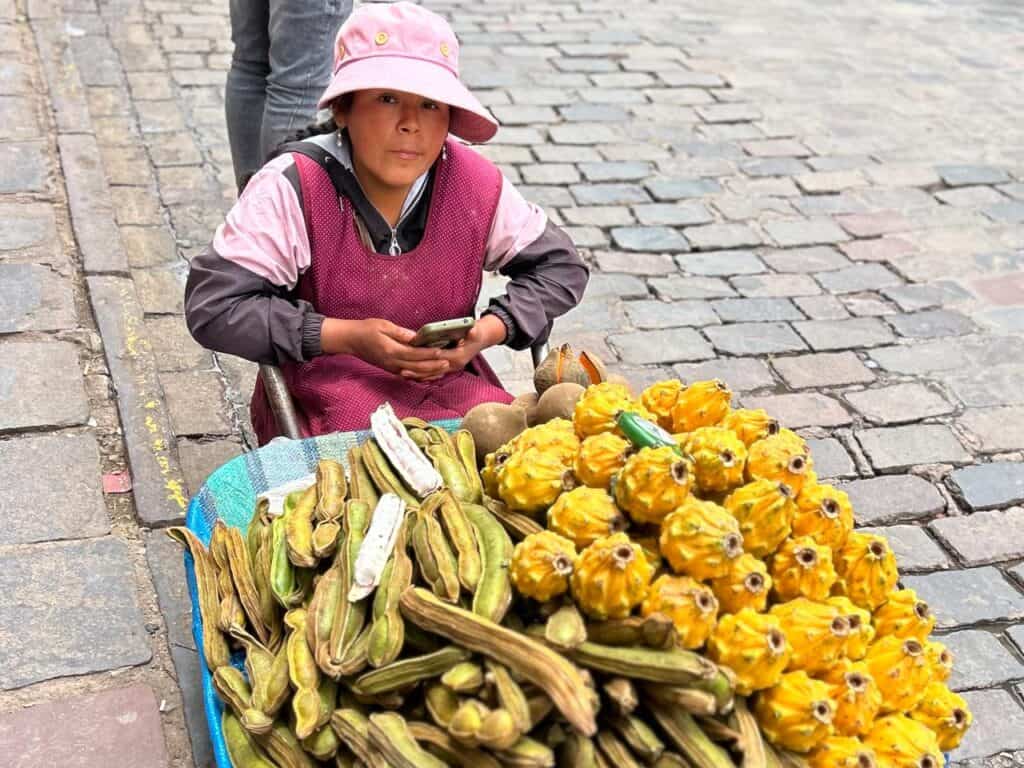
The Pacay fruit is also known as ice cream bean, and consists of long, flat, and leathery pods. Inside these pods are large, flat seeds surrounded by a sweet, cottony pulp that has a texture resembling cotton candy or vanilla ice cream. Hence, the name “ice cream bean.”
I love grabbing some ice cream beans at the local markets during their season, but be sure to wait until they’re ripe! Look for pods that have turned brown and feel slightly brittle – that’s when they’re ready to enjoy. Once cracked open, you’ll find the sweet, cottony pulp inside, signaling it’s time to savor the deliciousness of ripe ice cream beans.
Guava
This oval shaped fruit can range in color from green to yellow or pink when ripe, depending on the variety. Guava (GWAH-vah) is known for its fragrant aroma and sweet, juicy pink flesh.
The flavor of guava can vary depending on the variety and ripeness but is generally described as a mix of sweet and tangy, with notes of pear, strawberry, and citrus. It’s commonly eaten fresh, either sliced and eaten as a snack or used in salads, smoothies, desserts, and jams.
Cocona
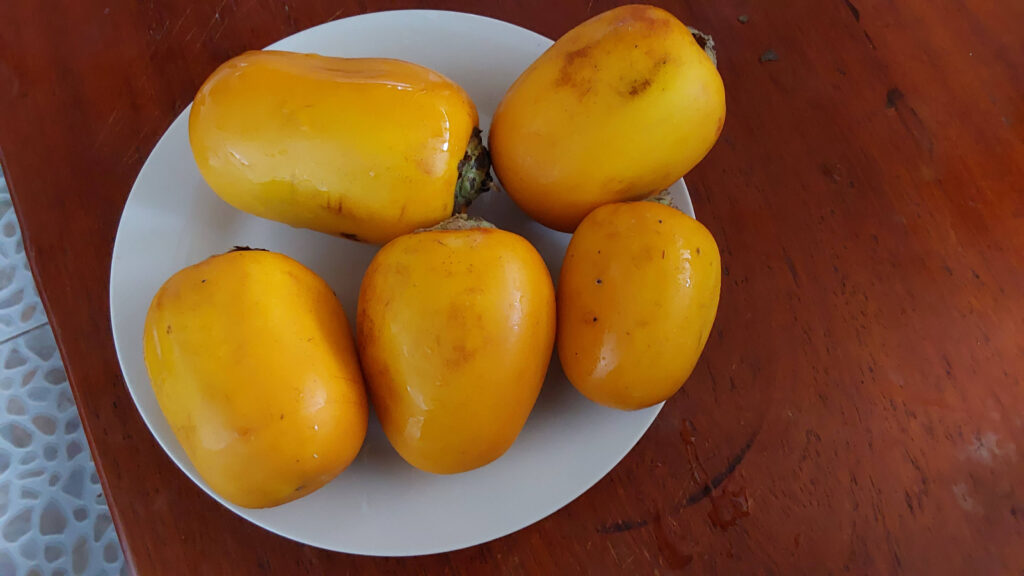
Cocona (pronounced koh-KOH-nah) is a popular fruit throughout the Amazon and many parts of South America. Roughly the size of a small tomato, it has a smooth, shiny skin that turns from green to bright yellow or orange as it ripens. Fresh cocona can be peeled and eaten as a snack, but it’s more commonly used to make juices, jams, and refreshing sweet-and-tangy drinks.
One of my favorite ways to enjoy cocona is as a spicy Amazonian sauce. Made by blending the fruit with ají chilies and other seasonings, it has a delicious balance of fruity acidity and gentle heat that pairs perfectly with grilled meats, fish, rice dishes, or even roasted vegetables.
If you’re looking for a unique Peruvian souvenir, I highly recommend picking up a small bottle of cocona sauce. You’ll find it in many supermarkets and local markets, especially in the Amazon region. It’s an easy way to bring a taste of the Peruvian jungle home with you.
Papaya
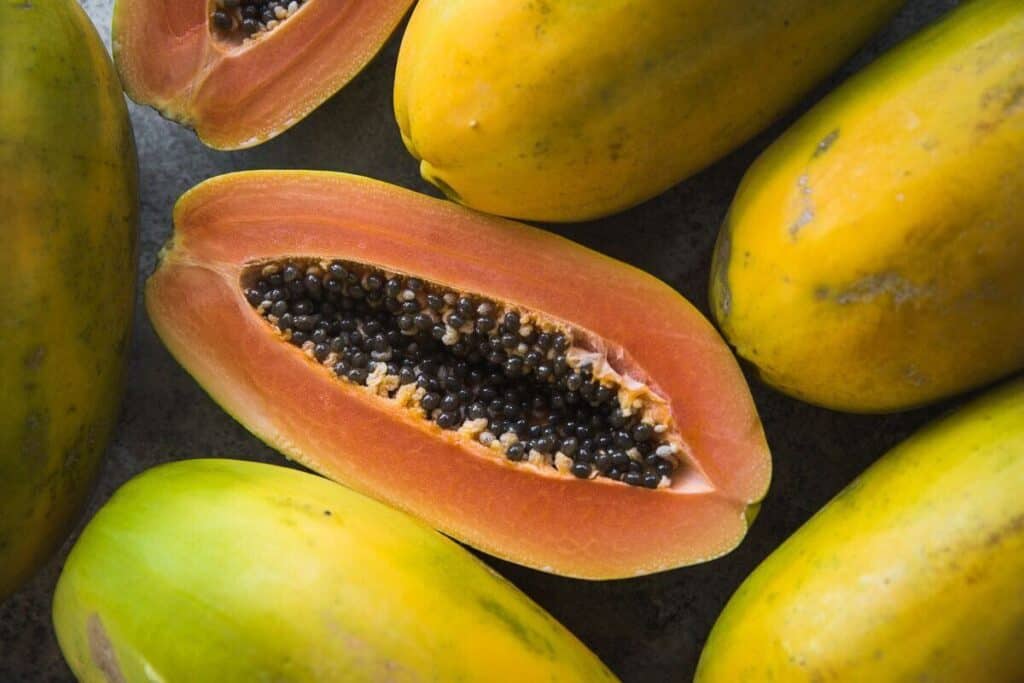
Papaya is one of the most widely enjoyed tropical fruits in Peru and grows abundantly in the Amazon and other warm regions of the country. Its large, oval-shaped fruits have smooth green skin that turns yellow or orange when ripe. Inside, you’ll find vibrant orange flesh that is soft, juicy, and naturally sweet, with a flavor somewhere between melon and mango.
Papaya is delicious eaten fresh, blended into smoothies and juices, or added to fruit salads. It’s also rich in vitamin C, beta-carotene (which the body converts into vitamin A), and digestive enzymes such as papain, which help break down proteins.
Many visitors are surprised to learn that the black papaya seeds are edible as well. The edible seeds have a crunchy texture and a peppery, slightly bitter and spicy flavor that makes them an interesting addition to salads or smoothies in small amounts. In Peru and other tropical countries, papaya seeds have long been used as a traditional natural remedy against intestinal parasites, although scientific evidence supporting this use in humans is still limited.
To be honest, papaya isn’t my favorite tropical fruit – Peru has so many incredible fruits that I usually reach for something else. However, I absolutely love starting the day with a fresh papaya juice mixed with a splash of orange juice.
Mango
Mangoes in Peru are really tasty and loved for their delicious flavor and juicy sweetness. They grow well in Peru’s warm weather and come in lots of different kinds, colors, and flavors. Some mangoes are small and great for eating as a snack, while bigger ones are better for making juice and fruit compote.
Where to Find the Best Peruvian Fruits
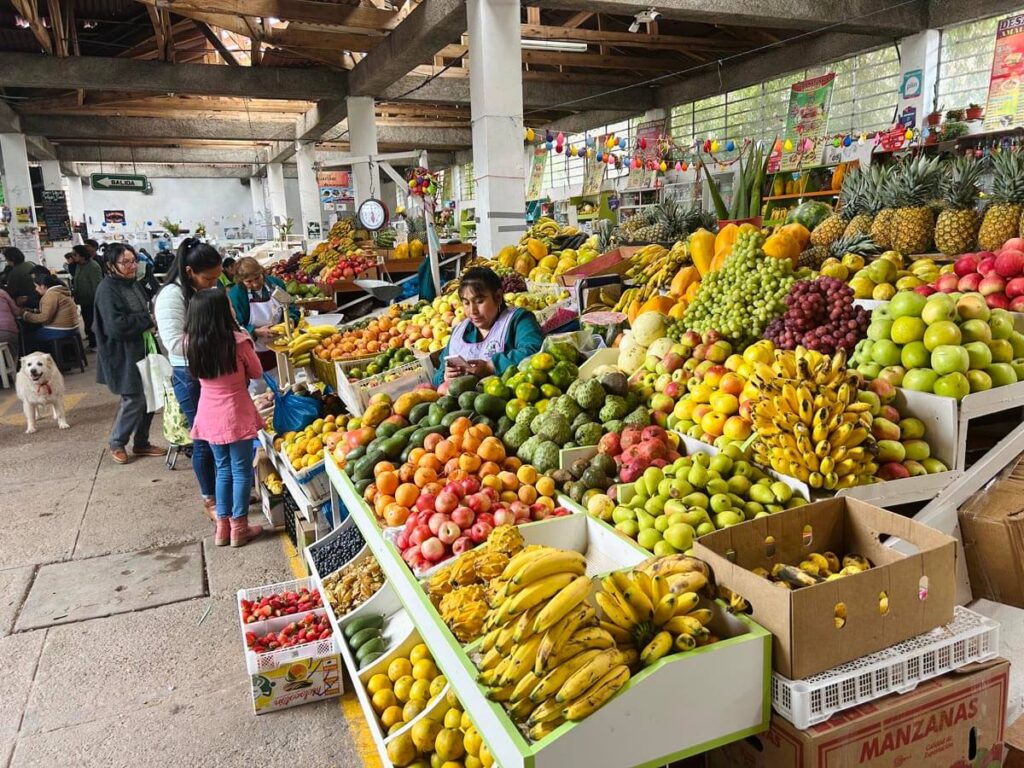
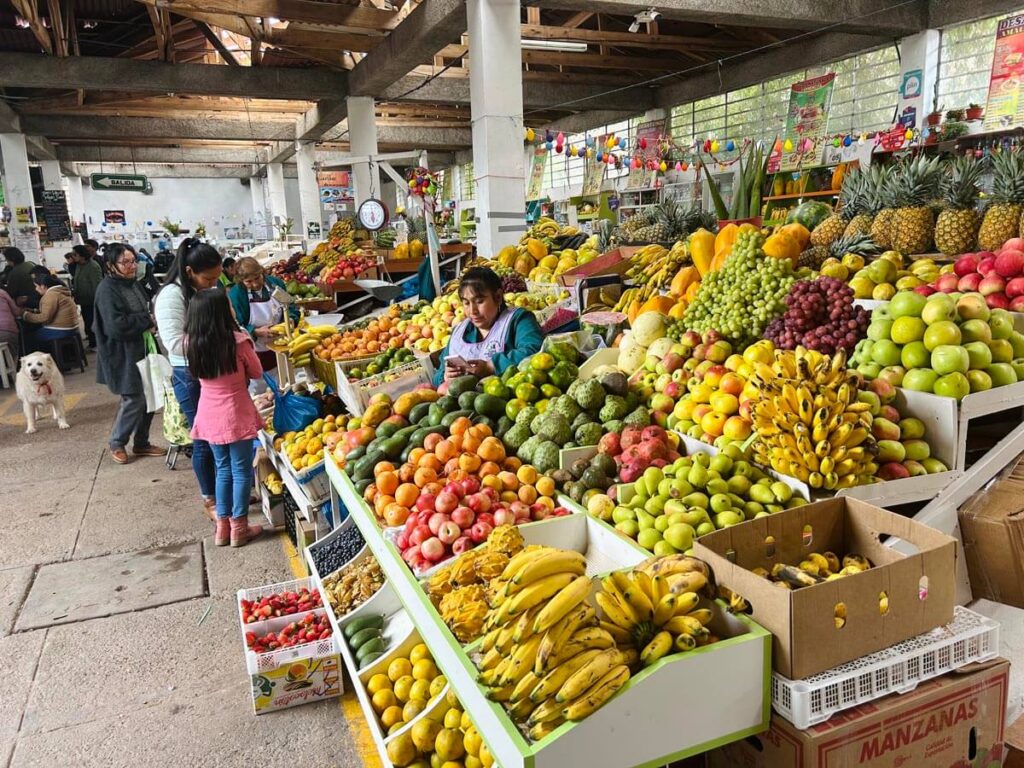
If you’re on the hunt for delicious Peruvian fruits like the ones mentioned above, be sure to visit one of the country’s bustling local markets. Stroll through the colorful fruit stalls, where you’ll find an incredible selection of fresh tropical and Andean fruits, from familiar favorites to unique varieties you’ve probably never seen before.
These lively markets are a wonderful place to experience Peru’s rich culinary culture and sample the freshest produce the country has to offer.
If you want to try authentic Peruvian food while traveling through Peru, don’t miss the chance to enjoy a traditional menú del día at the local markets. These affordable set lunches usually include a starter, a main dish, and a drink, offering a delicious way to experience everyday Peruvian cuisine at a very reasonable price.
In Cusco, you should visit these local markets:
- Cusco’s San Pedro Market: the largest market
- San Blas Market: known for being the cleanest, although slightly pricier
- Mercado Ttio: located a 15-minute taxi drive away, this market offers a wide variety of fruits and is one of my favorites.
- Rosaspata Market: a 25-minute walk from the center, offering a truly local experience.
By the way, while Peru offers some of the finest fruits, there are certain ones I wouldn’t recommend buying, such as strawberries! If you do decide to purchase them, be sure to opt for the smaller, less attractive ones. The larger strawberries are often loaded with pesticides, which you can detect even when they’re used in juices. Not ideal at all!
If you are interested in exploring the best restaurants in Cusco or top restaurants in Lima, check out our blog posts!
Explore the Best Fruits of Peru!
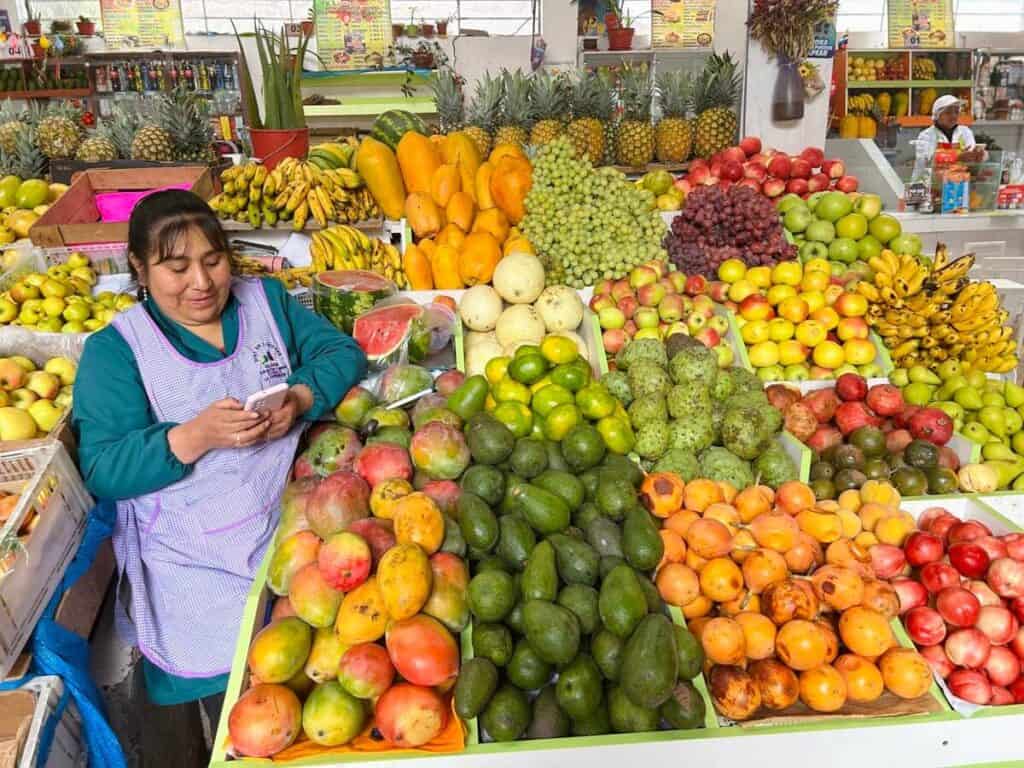
As you can tell, Peru is home to some of the most unique and diverse fruit in the world! f you’re eager to taste Peru’s fruits in their natural environment, a trip is a must! Reach out to us, and our travel experts will assist you in planning your ideal Cusco itinerary with visits to the Sacred Valley, Machu Picchu, and more.
For more insights into Peruvian culture and Peruvian gastronomy, explore our blog posts on Peruvian streetfood, Andean tubers, Peruvian corn, Coca leaves, and Peruvian potatoes.